

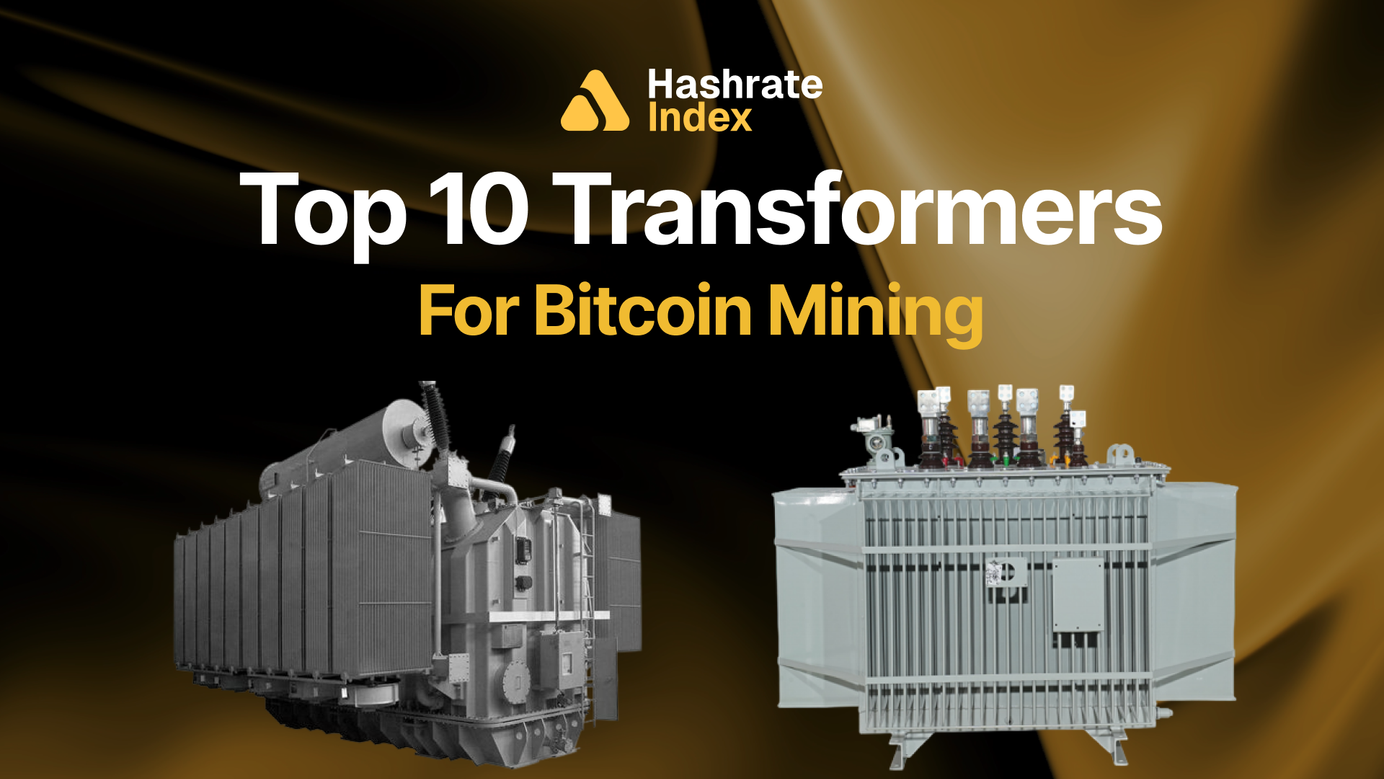
Every compute operation relies on a critical piece of infrastructure: the transformer. Whether deploying a single MW container or constructing a multi-hundred MW industrial site, transformers are essential for converting medium-voltage grid power into the low-voltage required to supply ASIC and GPU fleets. Proper specification ensures operational continuity, while errors can lead to outages, breaker trips, overheating, and hardware damage.
Despite their crucial role, transformers are often overlooked in discussions about compute infrastructure. Most deployments necessitate custom engineering due to variations in grid voltage, site location, total load, and cooling configurations, all influencing transformer specifications. Custom builds typically have lead times of 12–18 weeks when working with manufacturers possessing strong supply chain connections, but can extend significantly without a robust sourcing network. Mismatched specifications are a frequent and costly issue. As operators increasingly utilize the latest generation of ASICs, such as the Antminer S21 and Whatsminer M70 series, or power dense GPU AI inference racks, the demand on electrical infrastructure has reached unprecedented levels.
This article outlines the premier transformer suppliers catering to Bitcoin mining and data center operators.
Key Takeaways
- Transformers are the most critical and least understood component of compute infrastructure. Specification mismatches and unexpected lead times present the primary challenges for operators of both Bitcoin mining sites and AI/HPC data centers.
- Transformers should be sized to operate at no more than 80% of their rated kVA capacity. Unlike utility transformers that experience daily fluctuations, mining operations run at full load 24/7, and sustained near-maximum operation reduces transformer lifespan.
- The standard winding configuration for Bitcoin mining is Delta-Wye (Dyn11). This configuration effectively cancels triplen harmonics generated by switching power supplies before they reach the grid. Always verify this with your supplier.
- For all compute loads, specify transformers with a K-13 rating or higher for harmonic tolerance. Both ASIC miners and GPU clusters generate non-sinusoidal current that standard transformers cannot continuously handle.
- The default output voltage for most Bitcoin mining sites is 415Y/240V. Use 480Y/277V only if miners are rated for 277V input and the transformer is correctly wired for all connected loads. The majority of miners still ship with 240V PSUs.
- Through Luxor’s partner network, typical lead times are approximately 12–18 weeks, with 15 weeks being a reliable planning estimate. Ensure your specifications (grid voltage, total load, output voltage, cooling configuration) are readily available before contacting suppliers. Direct inquiries to [email protected].
Transformer Types Utilized in Bitcoin Mining and Data Centers
Prior to examining suppliers, let’s review the transformer types most commonly deployed in compute operations:
- Padmount Transformers: These are the primary units for containerized mining operations. They are three-phase, oil-filled, ground-level transformers that reduce medium voltage (12.47 kV–34.5 kV) to low voltage for ASIC power supplies. The correct output voltage is crucial: 415Y/240V is the industry standard and is compatible with nearly all miner models from the S9 series to current generations. 240V is widely supported by approximately 99% of ASIC miners; exceptions include three-phase units like the T21 and specific 380–415V hydro-cooled variants. 480Y/277V is only suitable for miners equipped with 277V input-rated PSUs, such as the APW171215 found in S19J XP and most current S21 models. Operating 240V-rated miners at 277V can lead to hardware malfunctions and potentially void warranties. Transformer configuration must also accommodate the cooling system. In a 415Y/240V setup, miners connect to phase-to-neutral (240V), while fans and other three-phase equipment connect to phase-to-phase (415V), all from the same transformer. Most mining containers are designed to pair with 1,000–2,500 kVA padmount units.
- Substation / Skid-Mounted Transformers: These are engineered for large-scale deployments (5MW+), accommodating higher kVA ratings and integrating with switchgear in prefabricated skid packages. They are recommended for industrial-scale sites undergoing complete power infrastructure construction.
- Dry-Type Transformers: These air-cooled units require less maintenance and are suitable for indoor or enclosed installations. While less efficient than oil-filled units under high loads, they are utilized in smaller deployments or in regions with restrictions on oil-filled equipment. Cooling configurations include AN (natural air convection) and AF (forced air via fans). Oil-filled transformers offer various cooling methods: ONAN (oil natural, air natural — self-cooled), ONAF (oil natural, air forced — fan-assisted), OFAF (oil forced, air forced), and OFWF (oil forced, water forced), the latter used for high-capacity or space-constrained applications. Most padmount transformers in Bitcoin mining employ ONAN or ONAF cooling.
- Power Transformers (High Voltage): Required for operations connecting directly to transmission-level grids (66 kV–230 kV), these are necessary for very large sites with dedicated utility interconnections. They involve extended lead times and significant cost, necessitating 12–18 months of advance planning.
- Winding Configurations: The manner in which voltage is introduced and extracted is determined by the winding configuration. Delta-Wye (Delta primary, Wye secondary, designated Dyn11 or similar) is standard for Bitcoin mining. This configuration isolates and circulates triplen harmonics from switching power supplies within the primary delta, preventing them from returning to the grid, thereby enhancing power quality and reducing stress on both the transformer and upstream equipment. When procuring transformers for mining or compute, confirm Delta-Wye winding and request the vector group designation from the supplier.
A key sizing consideration: applying the 80% rule, a 20MW site requires approximately 25 MVA of transformer capacity, typically achieved with ten 2,500 kVA padmount transformers. Utilizing multiple smaller units mitigates fault exposure and simplifies breaker sizing compared to a single large transformer.
Top Transformer Suppliers for Bitcoin Mining and Data Centers
This list is curated based on experience in the Bitcoin mining sector, product offerings, lead times, geographic availability, and industry certifications.
1. EAC Global
📍 United States
EAC Global is a US-based transformer specialist with extensive experience supplying power equipment for industrial, Bitcoin mining, and data center applications. Their product range includes padmount and substation transformers suitable for mid-to-large scale compute deployments, emphasizing custom specifications and prompt quoting. EAC’s engineering-centric approach is particularly beneficial for operators with unique grid interconnection requirements or non-standard voltage configurations.
- Key Products/Specialties: Power transformers, padmount transformers, substation transformers, custom builds
2. Maddox Transformer
📍 United States (multiple locations)
Maddox is a prominent transformer supplier in the North American Bitcoin mining and data center market, with a documented history of successful deployments in mining operations and a strong community presence. Their offerings encompass a wide spectrum of compute site needs, from low-voltage dry-type units to three-phase padmount and substation transformers. Maddox provides specific guidance on sizing and derating for Bitcoin mining loads and offers rental and repair services, crucial for operators requiring temporary power solutions or rapid replacements during equipment failures.
- Key Products/Specialties: Padmount (single and three-phase), substation transformers, dry-type, switchgear, rentals, repair
3. Journey Advisors
📍 United States
Journey Advisors is a key infrastructure partner for Luxor, specializing in sourcing and procurement advisory for transformers, substations, and switchgear for Bitcoin mining and data center operators. By leveraging a network of vetted Asian manufacturing partners, they offer competitive pricing, reduced lead times, and spec-matched sourcing for diverse project types. Journey Advisors provides hands-on support throughout the custom transformer procurement process, from specification development to delivery, serving as a knowledgeable intermediary.
- Key Products/Specialties: Transformer sourcing advisory, Asian supply chain procurement, custom spec development, project logistics
4. D-Volt
📍 North America
D-Volt provides a focused range of distribution transformers suitable for Bitcoin mining container deployments and modular data center builds. Their three-phase padmount transformers meet standard configurations for container operations, and their catalog includes single-phase and polemount variants for distributed or off-grid applications. D-Volt is a solid choice for operators sourcing padmount units for modular compute deployments.
- Key Products/Specialties: Three-phase padmount, single-phase padmount, single-phase polemount, power transformers, panel boards, auto reclosers
5. JS Yawei Transformer
📍 China (global supply)
JS Yawei, a Chinese transformer manufacturer, possesses global export capabilities and strong manufacturing connections that facilitate competitive lead times. For large-scale operations requiring cost-effective transformer infrastructure, such as padmount and oil-immersed units for extensive container mining sites or data center campuses, Yawei offers competitive pricing and substantial manufacturing capacity.
- Key Products/Specialties: Oil-immersed transformers, padmount transformers, substation transformers, custom builds
6. Kerun Power (Kerun Intelligent Control Co., Ltd.)
📍 China (Shenzhen-based, North American coverage)
Kerun is a publicly traded Chinese transformer manufacturer (stock code: 920062) with a dedicated division for data center and energy infrastructure solutions. Their product line includes oil-immersed transformers (10 kV to 220 kV), dry-type transformers (10–35 kV), and complete skid-mounted substation solutions, suitable for Bitcoin mining sites and high-density data centers seeking integrated power delivery packages. Kerun’s US presence simplifies procurement for North American clients, and their data center solutions practice provides relevant expertise across both compute segments.
- Key Products/Specialties: Oil-immersed power transformers (10 kV–220 kV), dry-type transformers, box-type substations, switchgear, data center and energy storage solutions
7. Daelim Transformer
📍 China (manufacturing), US stock in Houston, CA & Florida
Daelim is a leading transformer supplier serving both the Bitcoin mining market and large-scale data centers in North America. Their notable deployments include significant quantities of transformers to Texas mining sites and data centers, as well as substation transformers for major mining projects. All units are UL-listed, comply with IEEE C57.12.34, and are stocked in the US for reduced lead times. Daelim’s expertise covers standard North American grid voltages and output configurations essential for both ASIC mining equipment and modern data center power supplies.
- Key Products/Specialties: Padmount transformers (three-phase and single-phase), substation transformers, power transformers (up to 230 kV / 300 MVA), pole-mounted, distribution transformers, rental transformers
8. JSHP Transformer (JiangSu HuaPeng Transformer Co., Ltd.)
📍 China (manufacturing), US office in San Jose, CA
With over 50 years of experience (established 1967), JSHP is a veteran Chinese transformer manufacturer with a global track record in critical power infrastructure. Their production capabilities extend up to 750 kV / 1,000 MVA, and they have supplied over 11,000 units of high-voltage transformers and shunt reactors worldwide. Their portfolio includes dry-type units up to 110 kV, with documented data center deployments, including a significant dry-type unit in Shanghai. JSHP is actively supplying UL-listed 2,500 kVA padmount transformers to US Bitcoin mining clients and has delivered 138kV substation transformers to US mining operators. Their manufacturing efficiency is notable, with rapid delivery times for large transformer units. JSHP’s US entity in San Jose, CA, supports North American procurement and on-site services.
- Key Products/Specialties: High-voltage power transformers (up to 750 kV / 1,000 MVA), dry-type transformers (up to 110 kV), padmount distribution transformers (UL-listed, 2,500 kVA), generator step-up (GSU) transformers, solar/wind step-up transformers, skid/container solutions
9. JCL Energy
📍 United States
JCL Energy has established a strong reputation in the Bitcoin mining market, particularly for addressing lead time challenges. They claim the largest inventory of new three-phase padmount transformers in the US, providing a significant advantage for operators facing tight deadlines. JCL’s specialized mining sales team and commitment to rapid delivery make them a practical choice for time-sensitive projects.
- Key Products/Specialties: Three-phase padmount transformers (in-stock inventory), substation transformers, custom builds, rentals
10. Meta Power Solutions (MPS)
📍 United Kingdom / International
MPS offers a specialized transformer product designed to mitigate common capital cost issues in high-density buildouts by integrating switchgear directly into their padmount units, thereby reducing both cost and installation complexity. Their documentation on optimal kVA sizing reflects extensive deployment experience in both mining and data center applications. Output voltage options include 415Y/240V, suitable for ASIC and GPU power supply inputs.
- Key Products/Specialties: Three-phase padmount distribution transformers with integrated switchgear, custom mining and data center configurations (1,000–5,000 kVA), aluminum and copper winding options
How to Select a Transformer for Your Compute Site
The optimal transformer for your operation is determined by four primary factors. Given that most builds are custom, it is advantageous to have these details finalized before contacting a supplier:
- Total Site Load (kW/MW): Calculate the aggregate load from all ASIC miners, cooling systems, and auxiliary equipment. A critical operational guideline is to never operate a transformer at 100% capacity. Size the transformer to run at no more than 80% of its rated kVA. This 20% buffer accounts for the continuous thermal and harmonic stress inherent in mining loads. Unlike utility transformers that experience diurnal load cycles, mining transformers operate near full capacity 24/7, and sustained maximum operation significantly reduces transformer lifespan. For containerized sites, the container specification (e.g., a 1.2MW FBOX A40) dictates the load requirement. Size the transformer so the load does not exceed 80% of its rating. A 1.2MW container necessitates a minimum 1,500 kVA transformer (1,200 ÷ 0.8 = 1,500 kVA).
- Grid Voltage (Primary): Confirm the voltage level of your utility interconnection. Common North American configurations include 12.47 kV, 13.2 kV, 13.8 kV, 24.94 kV, and 34.5 kV. The transformer’s primary voltage must precisely match this.
- Output Voltage (Secondary): The standard for most Bitcoin mining deployments is 415Y/240V. The 240V secondary voltage falls within the rated input range of virtually all ASIC PSUs from the S9 generation through most current models. 480Y/277V is appropriate only if your miners are rated for 277V input, and the transformer configuration correctly accommodates all connected loads. In a 480Y/277V system, miners connect to phase-to-neutral (277V), while three-phase cooling systems connect to phase-to-phase (480V), both originating from the same transformer. Each load must be wired to the correct terminals. Most miners currently shipped use 240V PSUs; however, newer models, such as those found on current S21 units, include PSUs (e.g., APW171215) rated for 277V, though this is not universal. Operating a 240V-rated miner at 277V is outside the manufacturer’s specifications and can cause significant operational issues. Verify the exact PSU rating of your miner model before specifying the transformer’s output voltage.
- Lead Time vs. Deployment Schedule: Custom transformer builds can range from 12 to 40 weeks. If you have a fixed site readiness date, work backward from that deadline when selecting a supplier. Suppliers with existing inventory can substantially shorten project timelines.
Additionally, consider harmonic derating and K-rating. High-density compute loads, encompassing both ASIC fleets and GPU clusters, draw non-sinusoidal current due to switching power supplies, generating triplen harmonics. This phenomenon increases heat within transformer windings. Transformers are rated for harmonic tolerance using a K-rating system. For Bitcoin mining and high-performance compute loads, a K-13 rating or higher is recommended. A K-13 rated transformer is engineered to manage the harmonic content typical of these loads without accelerated thermal degradation. Collaborate with your supplier to confirm both the K-rating and appropriate derating factors. Inadequate sizing or neglecting harmonic tolerance are frequent causes of premature transformer failure in mining and data center installations.
Need Assistance Sourcing Transformers?
Luxor maintains active relationships with many of the suppliers listed above and can provide support for transformer sourcing, specification review, logistics, and site planning for Bitcoin mining and data center infrastructure. Whether you are deploying a single container or scaling to 100MW+, our hardware team is available to assist you.
For further information on Luxor’s comprehensive suite of Bitcoin mining services, please contact [email protected] or visit https://luxor.tech.
About Luxor Technology Corporation
Luxor delivers hardware, software, and financial services powering the global compute and energy industry. Its integrated product suite includes Bitcoin Mining Pools, ASIC Firmware, Hardware trading, Hashrate Derivatives, Energy services, and the Bitcoin mining data platform, Hashrate Index.
Based on materials from : hashrateindex.com