

Legislators Push for Clarity on Insider Trading in Prediction Markets
A significant group of over 40 Democratic members of the U.S. Senate and House of Representatives has formally requested guidance from federal regulators, specifically the Commodity Futures Trading Commission (CFTC) and the U.S. Office of Government Ethics (OGE). The lawmakers are seeking explicit warnings to government officials that engaging in insider trading, particularly within prediction markets, is illegal.
Key Takeaways
- Dozens of U.S. Senators and House Representatives have urged the CFTC and the U.S. Office of Government Ethics to issue directives clarifying that insider trading on prediction markets by government officials is unlawful.
- The request stems from recent observations of potentially suspicious trading activity on prediction platforms, linked to events involving government or military actions, raising concerns about the use of non-public information.
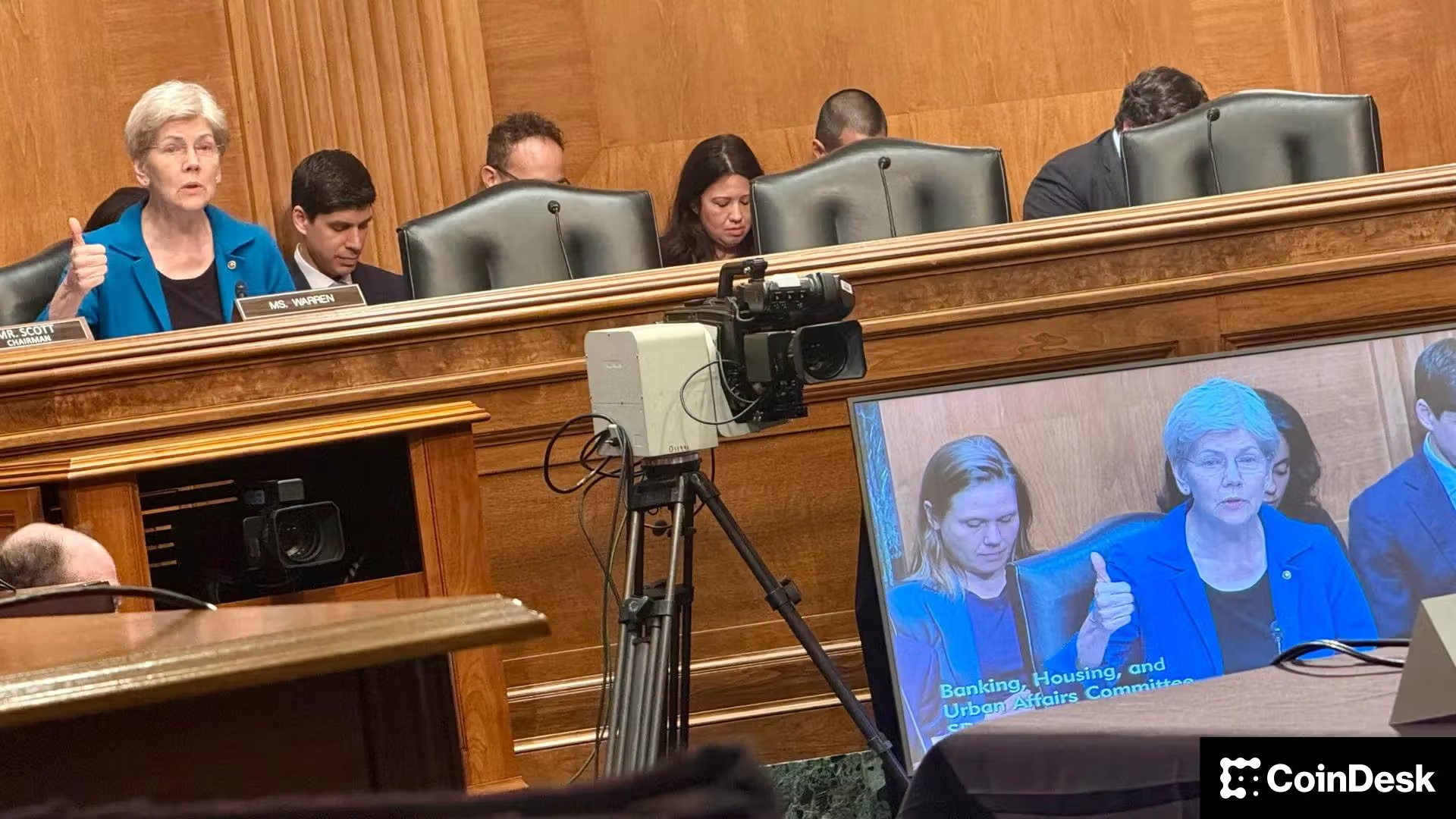
The legislative appeal, dated March 29, specifically targets derivative contracts traded on platforms such as Polymarket and Kalshi. The signatories, including prominent figures like Senator Elizabeth Warren and Senator Cory Booker, are asking CFTC Chair Mike Selig and OGE Director Emory Rounds III to disseminate comprehensive guidance across the executive branch. This guidance should clearly articulate that federal employees are prohibited from utilizing insider information obtained through their official duties for trading on these prediction markets.
The impetus behind this congressional inquiry appears to be a series of recent incidents where contracts related to sensitive governmental or military events saw notable trading volumes. Analysts have raised concerns that individuals with privileged, non-public information might have been leveraging this knowledge to place bets, thereby violating existing insider trading laws. U.S. regulations strictly forbid government officials from trading on material non-public information acquired in their official capacity. As the CFTC classifies contracts on such platforms as regulated derivatives, the lawmakers argue that existing prohibitions must apply.
The letter cited specific examples of potentially problematic trading, including contracts related to military operations in Venezuela and Iran, the duration of a White House press briefing, and the dismissal of a former Secretary of Homeland Security. These instances, according to the legislators, suggest a potential disregard for the ethical and legal boundaries surrounding the use of inside information.
The request carries weight due to the signatories, which include key Democratic leaders on the House Agriculture Committee, Representative Angie Craig, and the House Financial Services Committee, Representative Maxine Waters. Both Agriculture Committees hold direct oversight authority over the CFTC’s operations.
Regulatory Precedent and the CFTC’s Role
This legislative push highlights a growing concern regarding the intersection of emerging financial markets and governmental ethics. The CFTC, under Chair Selig’s leadership, is currently in the process of developing new policy frameworks for the regulation of prediction markets. These platforms, often closely linked to the broader cryptocurrency industry, are increasingly drawing the attention of lawmakers who are also involved in efforts like the stalled Digital Asset Market Clarity Act.
Furthermore, recent reports indicate that federal prosecutors have reportedly engaged with prediction market companies to explore whether certain trading activities could constitute insider trading violations. This suggests a proactive stance from law enforcement agencies in scrutinizing these relatively new financial arenas for potential illicit activities. The coordinated action by legislators and the implied interest from prosecutors signal a critical juncture for the regulation of prediction markets and the enforcement of insider trading laws in this evolving landscape.
Based on materials from : www.coindesk.com