

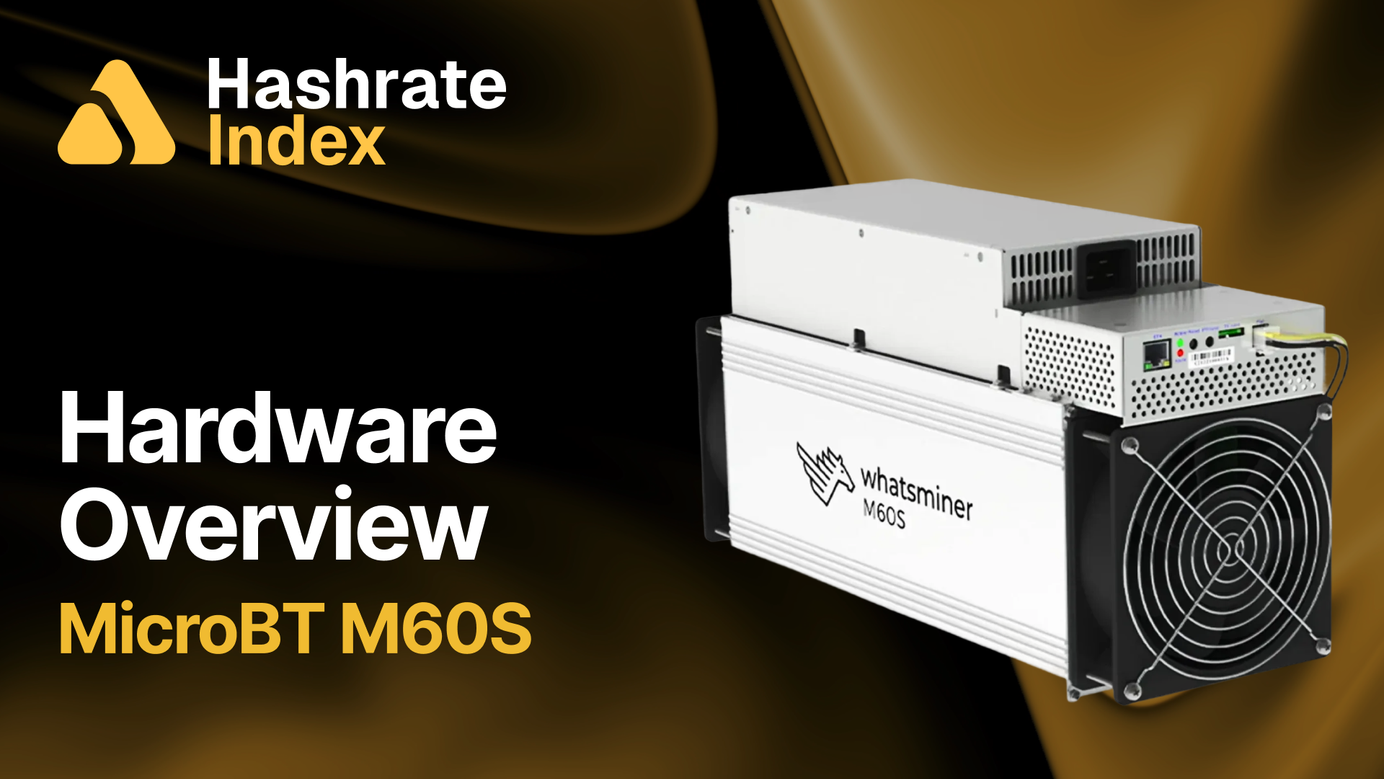
The secondary market for Bitcoin mining hardware is experiencing increased activity with the introduction of Bitmain’s Antminer S21 Pro. This air-cooled SHA-256 miner, released between March and April 2024, is notable for its efficiency, achieving a consistent 15.0 Joules per Terahash (J/TH) across its various configurations. This performance metric is critical for assessing the operational expenditure, particularly electricity costs, which remain a dominant factor in mining profitability.
Key Takeaways
- The Antminer S21 Pro offers exceptional energy efficiency at 15.0 J/TH.
- Its SHA-256 algorithm targets Bitcoin mining.
- The air-cooled design simplifies deployment compared to immersion-cooled systems.
- Market positioning suggests it competes in the high-performance segment.
- Efficiency directly impacts miner ROI and operational viability.
Antminer S21 Pro Specifications and Market Context
Bitmain’s Antminer S21 Pro series is engineered for the SHA-256 algorithm, the hashing standard for Bitcoin. Its air-cooled design is a significant advantage for many mining operations, offering a more straightforward infrastructure setup and maintenance routine compared to liquid or immersion-cooled units. The stated efficiency of 15.0 J/TH places it among the leading available hardware in terms of power consumption per unit of hashing power. This level of efficiency is paramount for profitability, especially in competitive mining environments where energy costs can constitute a substantial portion of the total operational expenditure.
The availability of the S21 Pro on the secondary market indicates a dynamic hardware landscape. As newer, more efficient models are released, older generations tend to see price adjustments and increased circulation. For industrial-scale mining farms, the S21 Pro represents a potential upgrade path to improve their overall hash rate while managing or even reducing energy consumption, assuming electricity prices are favorable. The consistency in its efficiency rating suggests reliable performance, a key consideration for large-scale deployments where downtime or underperformance can lead to significant financial losses.
Impact on Network Security and Miner ROI
Analyzing the Economic Viability for Miners
The introduction and secondary market availability of highly efficient ASICs like the Antminer S21 Pro have profound implications for both network security and individual miner Return on Investment (ROI). From a network security perspective, increased efficiency often correlates with a higher potential hash rate being deployed. As more computational power is added to the network through these advanced machines, the overall network hash rate increases. This makes the network more resistant to 51% attacks, as a malicious actor would require an exponentially larger amount of hashing power to gain control. The competitive nature of mining incentivizes the adoption of the most efficient hardware, thereby continuously strengthening the network’s security.
For individual miners, the S21 Pro’s efficiency is a direct driver of profitability. ROI is calculated based on the hash rate generated, the cost of electricity, the mining difficulty, and the value of the mined cryptocurrency. An efficiency of 15.0 J/TH means that for every unit of hashing power (Terahash), the machine consumes less electricity compared to less efficient models. This translates to lower operating costs per Bitcoin mined. Small-scale miners, often operating with less favorable electricity rates and smaller capital budgets, can find it challenging to compete with industrial farms that benefit from economies of scale and bulk energy purchases. However, highly efficient hardware like the S21 Pro can narrow this gap, making mining more accessible and potentially profitable even for smaller entities, provided they can secure affordable power. Conversely, older, less efficient hardware becomes increasingly unprofitable as network difficulty rises and energy prices remain stable or increase. This hardware obsolescence cycle is accelerated by the release of energy-efficient machines, pushing miners to continually invest in or upgrade their equipment to maintain profitability.
Learn more at : hashrateindex.com