


The US stock market experienced a slight downturn today, reflecting a mixed economic picture influenced by inflation data and sector-specific rallies. While headline inflation figures presented a challenge, core inflation remained subdued, and a robust performance in AI-related semiconductor stocks provided a notable boost to the Nasdaq.
Key Takeaways
- March CPI registered at 3.3% year-over-year, primarily driven by a significant increase in gasoline prices.
- Core CPI showed moderation, rising only 0.2% month-over-month, which helped to temper concerns about persistent inflation and supported expectations for potential Federal Reserve rate cuts.
- The technology sector, particularly AI semiconductor stocks like Broadcom and Nvidia, saw substantial gains, lifting the Nasdaq Composite into positive territory.
The market’s dynamics today were shaped by three key factors. The primary question investors are considering is whether the geopolitical-induced surge in energy prices will define the inflationary environment for the upcoming month, or if underlying price stability will prevail.
March CPI Reaches 3.3% Amidst Energy Price Surge
The Bureau of Labor Statistics reported that the headline Consumer Price Index (CPI) increased by 0.9% on a monthly basis and reached 3.3% year-over-year. This marks the highest annual inflation rate recorded since May 2024. A significant contributing factor was a 21.2% spike in gasoline prices within a single month, largely attributed to disruptions in the Strait of Hormuz which impacted fuel costs.
The U.S. Consumer Price Index jumped from 2.4%/yr in February to 3.3%/yr in March. That didn’t surprise me. The three-month annualized CPI back in February was precisely 3.3%/yr. As I’ve been saying, the Fed is not going to be able to put the inflation genie back in the bottle.
BIG SURGE IN ENERGY PRICES Energy inflation has jumped +10.9% in just one month because of the US-Iran war. This is the biggest monthly jump since 2005. Here’s what’s driving it: – Gasoline: +21.2% – Fuel oil: +30.7% This is a pure commodity shock driven by oil and energy…
Conversely, core CPI, which excludes volatile food and energy prices, rose by a more modest 0.2% month-over-month and 2.6% year-over-year. This figure met market expectations and contributed to stable Treasury yields, suggesting that market participants interpreted the headline inflation increase as a consequence of specific commodity shocks rather than a sign of widespread inflationary pressures.
AI and Semiconductor Strength Propels Nasdaq
Despite declines in the S&P 500 and Dow Jones Industrial Average, the Nasdaq Composite managed to post a gain of 0.38%. This positive performance was predominantly driven by companies in the Artificial Intelligence (AI) and semiconductor sectors. Taiwan Semiconductor Manufacturing Company (TSMC) reported record first-quarter revenue, demonstrating resilience in its operations despite prevailing geopolitical uncertainties.
TSMC posts record Q1 revenue of NT$1.13 trillion ($35.6B), up 35% YoY, beating consensus. March alone surged 45% as AI chip orders from Apple and NVIDIA stayed resilient through the Iran war — stock up 2%+ pre-market
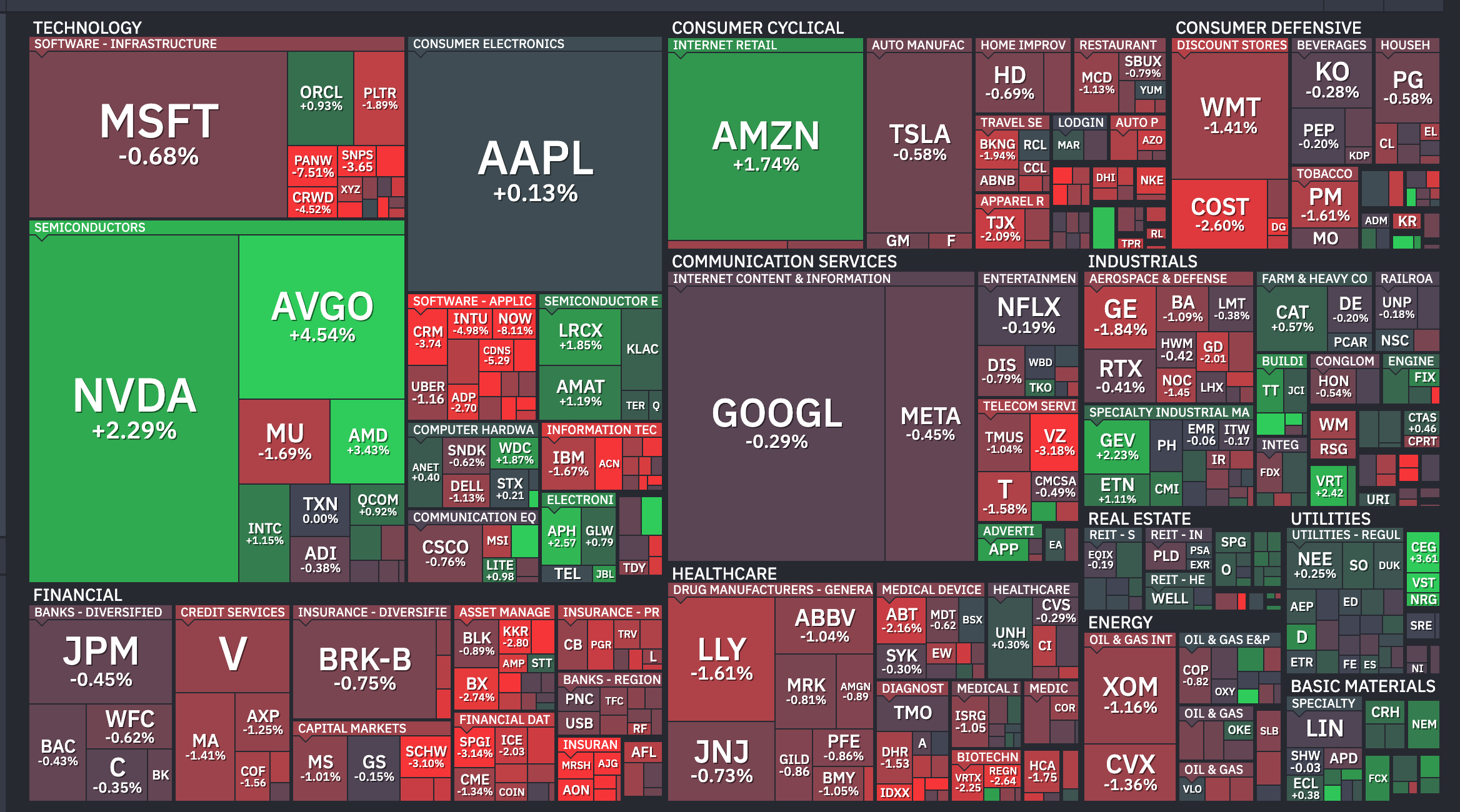
Notable stock movements included Broadcom (AVGO) which increased by 4.54%, and Nvidia (NVDA) which saw a gain of 2.29%. AMD (AMD) also performed well, rising by 3.43%. Additionally, CoreWeave (CRWV) experienced a significant jump following announcements of multi-year cloud deals with AI companies Anthropic and Meta.
Narrow Market Breadth Indicates Rotation, Not Widespread Confidence
The market exhibited narrow breadth, with only approximately 42% of listed stocks advancing. The gains were largely concentrated within large-cap technology and materials companies. In contrast, sectors such as Healthcare, Financials, and Consumer Defensive stocks experienced declines, contributing to the downward pressure on the S&P 500 and Dow, while the Nasdaq’s performance masked this broader weakness.
What Happened to Major US Indexes?
As of the latest reporting, three of the four major US stock market indexes were trading in negative territory.
- The Russell 2000 decreased by 0.96 points (−0.37%) to close at 261.00.
- The S&P 500 saw a slight dip of 1.78 points (−0.03%) to settle at 6,822.88.
- The Dow Jones Industrial Average fell by 229.48 points (−0.48%) to 47,956.30.
The Nasdaq Composite was the sole index to finish in positive territory, gaining 85.65 points (+0.38%) to reach 22,908.10, suggesting a rotation of capital into technology stocks.

US Stock Market Screener: FinViz
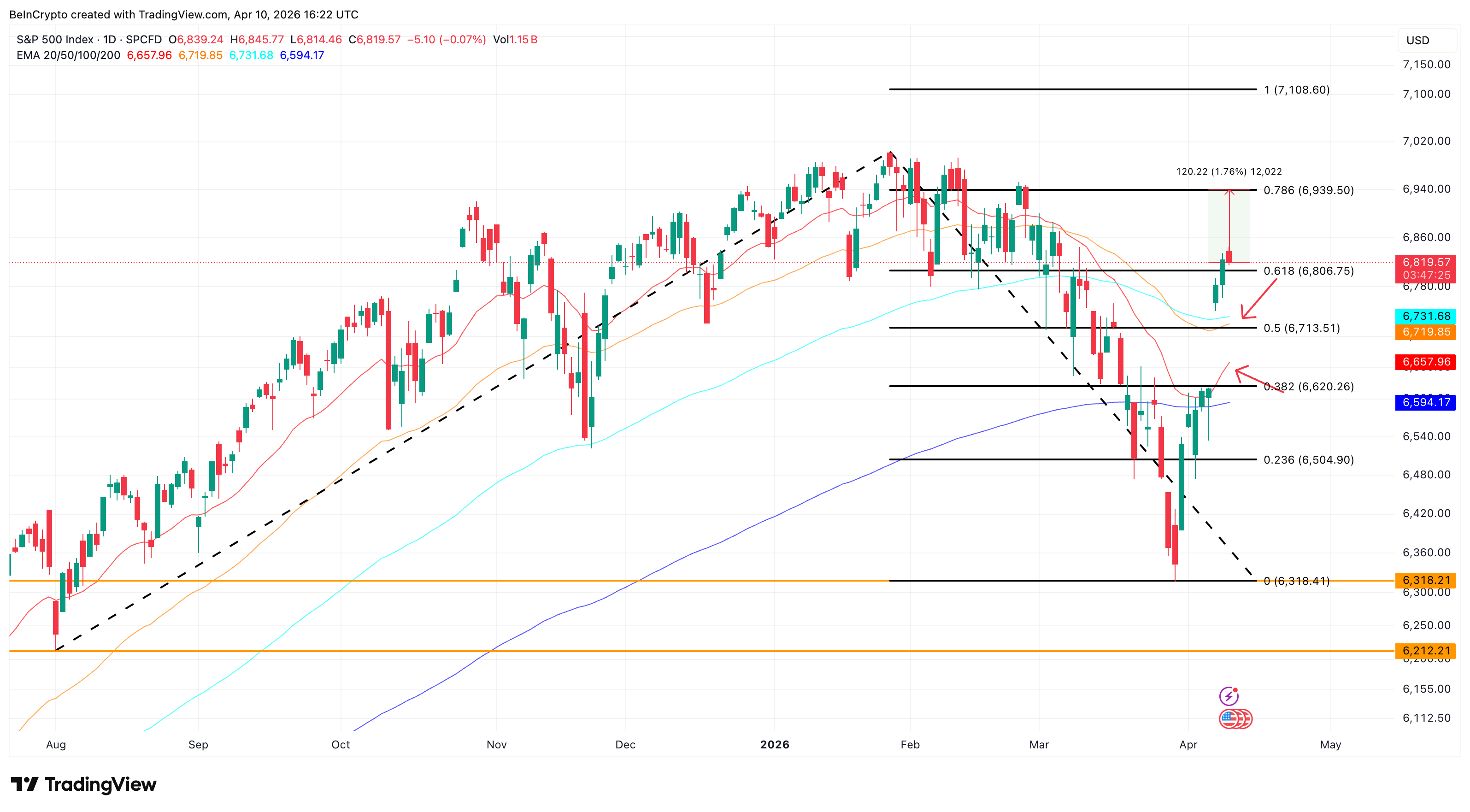
The S&P 500 is currently trading above all four of its Exponential Moving Averages (EMAs), a technical indicator reflecting recent price action. This alignment of the index above key EMAs has not occurred since February. The 20-day EMA at 6,657 is approaching the 50-day EMA at 6,719, and the 50-day EMA is nearing the 100-day EMA at 6,731, indicating potential bullish crossover signals.
S&P 500 Analysis: TradingView
Since reaching a potential low of 6,318 on March 30, the S&P 500 has experienced a notable recovery, reclaiming levels last observed in mid-March. The 0.618 Fibonacci retracement level at 6,806 remains a critical resistance point. Sustaining levels above this threshold could pave the way for further gains towards 6,939 and 7,108. However, a failure to hold above 6,806 might lead to a pullback towards the EMA cluster between 6,719 and 6,731, with 6,713 serving as the next significant support level.
Which Sectors Are Performing Well?
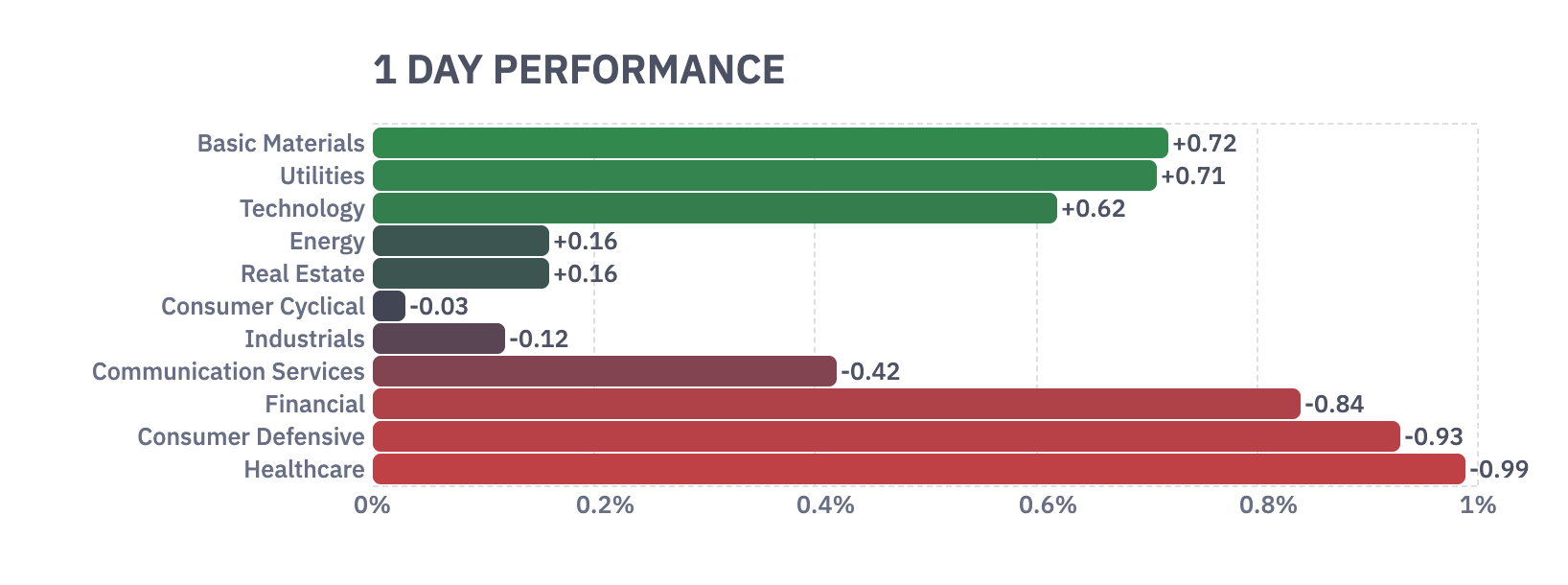
The Basic Materials sector led the market with a gain of +0.72%. Increased demand for gold and silver, often seen as inflation hedges, supported this sector amid rising CPI figures. Utilities also saw a positive performance, adding +0.71%, as yield-bearing stocks attracted capital in an inflationary environment. The Technology sector recorded a gain of +0.62%, primarily fueled by the AI semiconductor segment following positive news from TSMC.
US Stock Market Sectors: FinViz
Which Sectors Are Declining?
The Healthcare sector experienced the most significant losses, declining by −0.99%. Major pharmaceutical companies like Eli Lilly (LLY) fell 1.61%, and AbbVie (ABBV) dropped 1.04%. One potential factor contributing to this decline could be the impact of higher inflation on the input costs for drug manufacturers.
Consumer Defensive stocks also registered a notable decrease of −0.93%. Retail giants such as Costco (COST) saw a 1.61% drop, and Walmart (WMT) declined by 1.41%. Despite their typical positioning as safe-haven assets, rising fuel costs can negatively affect the profit margins of these retailers.
Stocks Heatmap:FinViz
The Financial sector also faced headwinds, falling by −0.84%. Major banking institutions like JPMorgan (JPM) dropped 0.45%, and Goldman Sachs (GS) slipped 0.15%. Higher headline inflation typically reduces the likelihood of imminent interest rate cuts, which can limit the net interest margin expansion crucial for banks’ earnings growth.
Key Stock News for Investors
- Broadcom (AVGO) shares surged by 4.54%. This rise was bolstered by TSMC’s record first-quarter financial results, which underscored the sustained strong demand for AI chips despite macroeconomic challenges.
- CoreWeave (CRWV) experienced a significant price increase of over 12%. This surge followed the company’s announcement of an upsized $3.5 billion convertible note offering. Furthermore, CoreWeave expanded its AI deal with Meta, increasing its commitment to $21 billion, and secured a multi-year agreement to support Anthropic’s Claude AI models.
$CRWV CAN’T STOP! CoreWeave is on a TEAR this morning, trading as much as 15% higher after announcing that it has struck a deal with Anthropic! The company, who claims to service nine out of the ten largest AI providers, will be powering Anthropic’s Claude AI models through this…
Palantir (PLTR) saw a decline of 1.89%. This dip occurred subsequent to public criticism from investor Michael Burry regarding the company’s competitive standing in the AI market.
Michael Burry is sticking with his bearish wager against Palantir, even after a public endorsement from President Trump helped lift the stock. $PLTR
Upcoming Market Watch Points for Investors
The outcome of ceasefire negotiations between the United States and Iran over the weekend will be a critical determinant for the direction of oil prices. A failure to reach an agreement could lead to a renewed increase in energy costs, reinforcing the inflationary pressures observed today.
Bloomberg reports while the Strait of Hormuz remains effectively closed to tanker traffic, other aspects of the ceasefire between the U.S. and Iran appear to be holding ahead of discussions this weekend. WTI crude oil is up slightly this morning, trading around the…
Looking ahead, the Federal Open Market Committee (FOMC) meeting scheduled for April 29 represents the next significant event for potential interest rate decisions.
While core inflation figures remained subdued, the surge in headline inflation presents a complex scenario. The market will be closely monitoring whether the Federal Reserve interprets this as a transient energy shock or a more persistent inflationary trend, which will shape market sentiment through May.
According to the portal: beincrypto.com