


On-Chain Data Suggests Hidden Accumulation Amidst Geopolitical Sell-Off
Bitcoin (BTC) experienced a price dip of approximately 3% over the weekend, coinciding with the collapse of US-Iran ceasefire talks. The cryptocurrency fell below the $71,000 mark, trading around $70,960 at the time of reporting. Despite this short-term downturn driven by geopolitical anxieties, on-chain data indicates a significant underlying accumulation trend, suggesting a potential wealth transfer from retail to institutional investors.
Key Takeaways
- Bitcoin experienced a price decline linked to failed US-Iran peace talks, dropping below $71,000.
- On-chain metrics reveal substantial outflows from exchanges, indicating coins moving to colder storage.
- Short-term holder behavior suggests capitulation, providing liquidity for long-term accumulators.
- Reduced whale inflows to major exchanges signal a decreased intent to sell among large holders.
- Long-term holder accumulation has intensified, counterbalancing short-term holder distribution.
Analysis of On-Chain Indicators
Beneath the surface of market volatility, several on-chain metrics point towards a strategic accumulation phase. An analyst suggests that while retail investors may have been spooked by the geopolitical tensions, institutional capital continued to acquire Bitcoin. Five key indicators support this interpretation.
Exchange Netflow and Reserves
Firstly, Bitcoin’s Total Netflow on Binance, smoothed over a 30-day period (SMA-30), has averaged approximately -1,350 BTC per day, equating to roughly $96 million. This negative netflow signifies a consistent outflow of Bitcoin from the exchange, moving into private wallets, often referred to as cold storage.
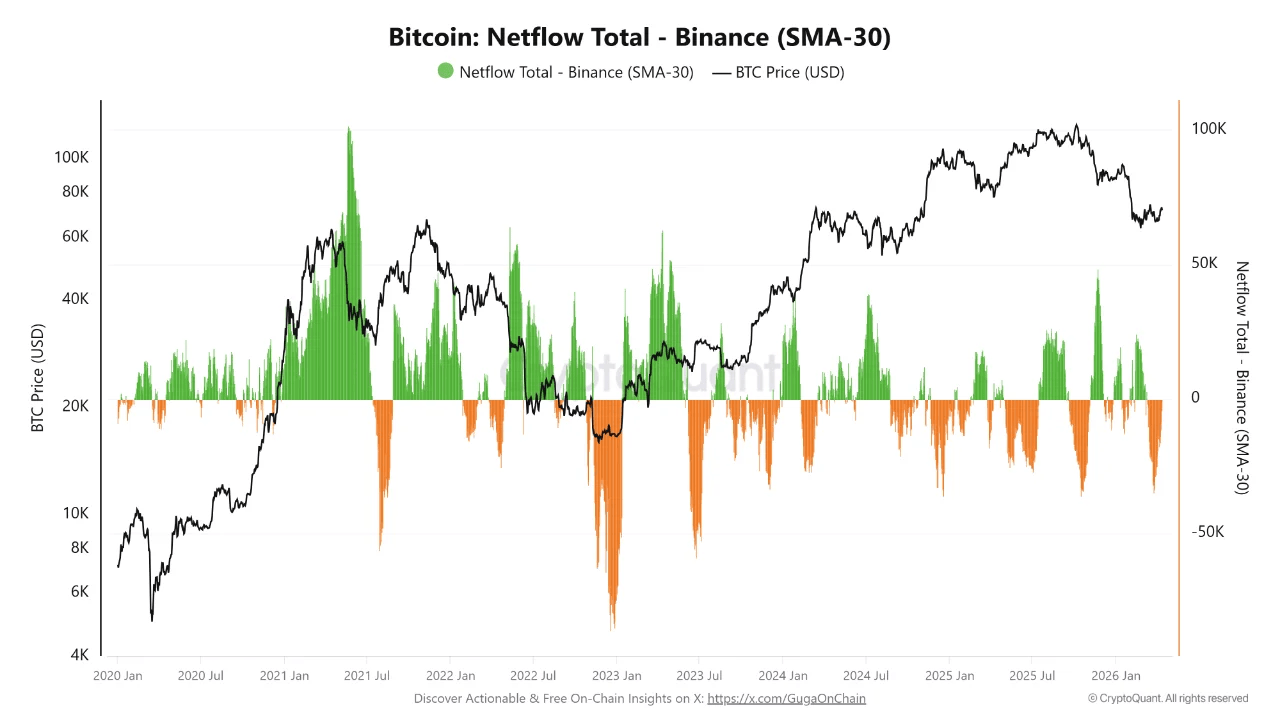
Secondly, global exchange reserves have decreased to around 2.69 million BTC. This level is below the seven-day moving average, indicating a significant withdrawal of approximately 4,500 BTC, valued at about $316 million, into cold storage during this period of heightened geopolitical uncertainty.
Short-Term Holder Behavior
Thirdly, the Short-Term Holder Spent Output Profit Ratio (SOPR) across all exchanges is hovering at 1.0018. This metric indicates that investors who acquired Bitcoin within the last 182 days are largely selling at or near their purchase price. An analyst commented:
“The mathematical verdict is irrefutable: realizing losses predominated over the last 182 days, of which 148 (81.32%) were below 1.00. Today, these investors liquidate their positions practically at ‘breakeven’ to escape the volatility, delivering cheap liquidity into the hands of those who dictate the rules of the game.”
This behavior suggests that short-term traders are exiting their positions, driven by fear, thereby providing liquidity for more established market participants.
Bitcoin Whale Activity and Long-Term Holder Accumulation
Further reinforcing the narrative of a strategic wealth transfer, whale activity analysis reveals a significant shift. The 30-day inflow of Bitcoin to Binance from whales has fallen to $2.96 billion, marking the first time this metric has dipped below $3 billion since June 2025. This decline in large investor inflows suggests a reduced intention to sell among major holders.
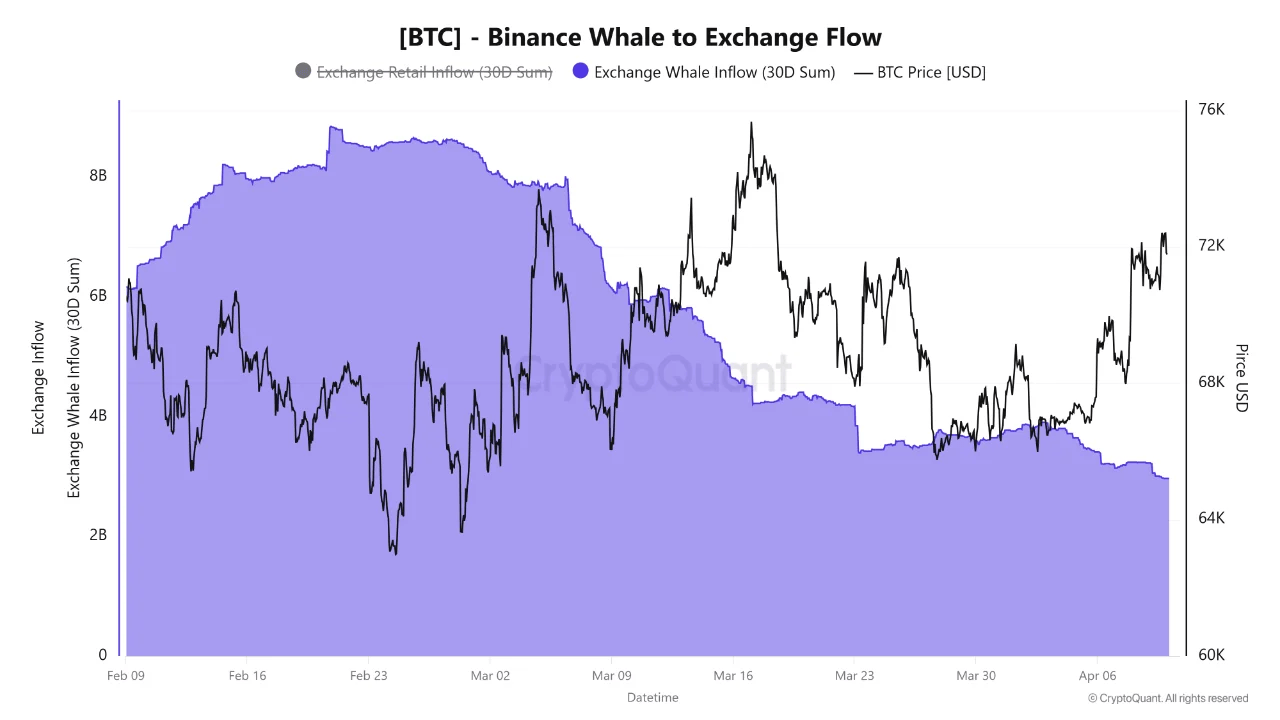
Concurrently, the Long-Term Holder (LTH) Realized Cap Change over a 30-day period surged to $49 billion on April 9th. This level has been reached for the second time since late March. In contrast, the Short-Term Holder (STH) Realized Cap Change has decreased to -$54 billion, a threshold breached for the third time since early March. This dynamic indicates that while weaker holders are distributing their assets, long-term holders are actively absorbing the available supply.
The ultimate price trajectory for Bitcoin will likely depend on the future developments in the US-Iran geopolitical situation. A de-escalation could foster positive market sentiment, while further escalation might trigger additional volatility, potentially accelerating the ongoing accumulation phase if geopolitical risks persist.
Learn more at : beincrypto.com