

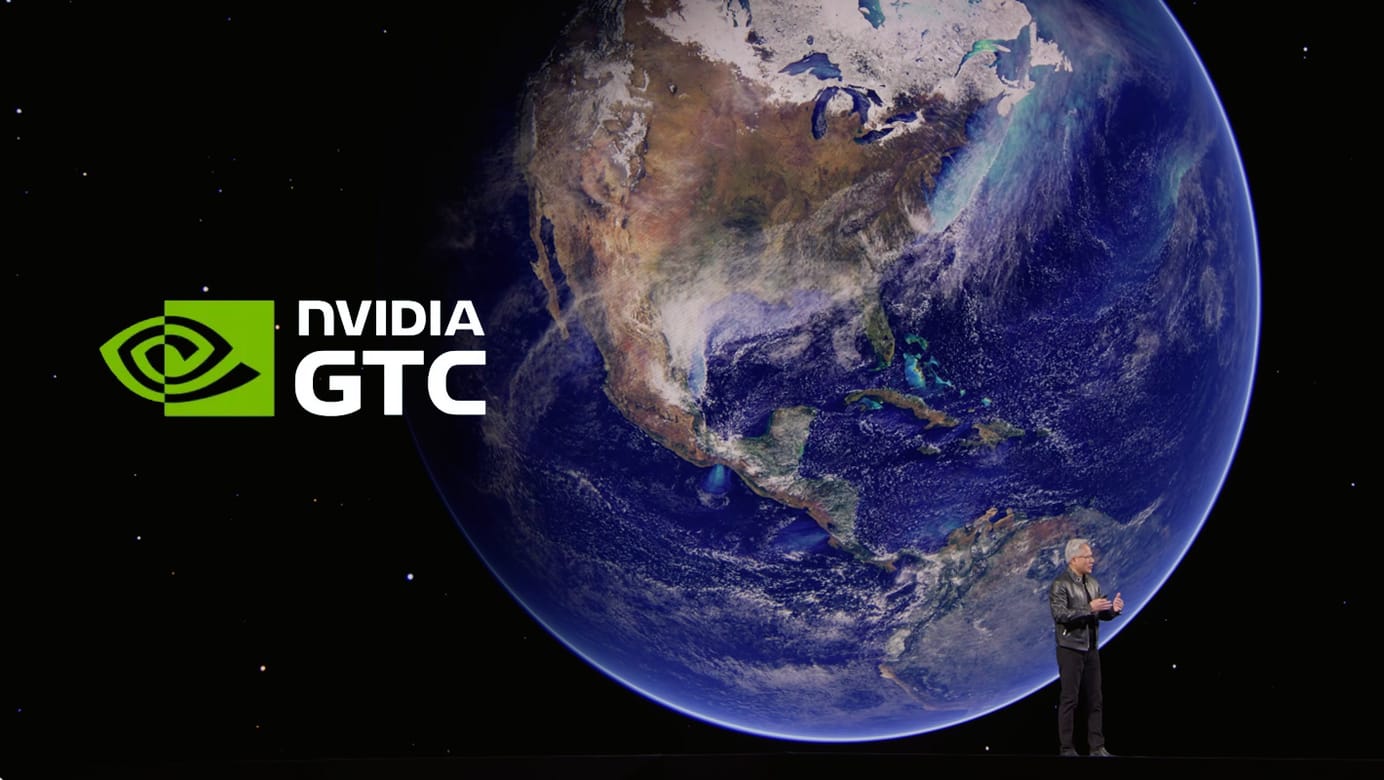
NVIDIA’s GTC 2026 event in San Jose attracted over 30,000 participants, focusing on the future trajectory of AI infrastructure through keynotes, panels, and product introductions.
Discussions encompassed capital markets, energy sectors, enterprise AI applications, and hardware architecture. While many analyses center on chips and AI models, this review highlights aspects critical for entities involved in the construction, financing, and operation of physical infrastructure.
Key Takeaways
- AI data centers are evolving from storage facilities into “factories” producing tokens, with profitability increasingly measured by tokens per watt.
- NVIDIA’s new “Vera Rubin” system emphasizes a vertically integrated, liquid-cooled supercomputer design, reducing installation time and complexity.
- A significant capital supercycle is underway for AI infrastructure, with estimated costs in the trillions, facing constraints in skilled labor and grid interconnection rather than just capital.
- The operational lifespan of data center GPUs may extend to 8-10 years due to inference workload disaggregation, impacting the resale and utilization value of older hardware.
- Energy procurement and grid flexibility are identified as critical bottlenecks and opportunities, with AI data centers exploring demand-response models similar to those used by cryptocurrency miners.
- The rise of agentic AI is shifting infrastructure requirements towards systems capable of disaggregated inference, heterogeneous hardware integration, and advanced networking.
Tokens Are the New Commodity
NVIDIA CEO Jensen Huang recontextualized the AI infrastructure paradigm, stating, “Compute is your revenue now.” This perspective posits that data centers are now production facilities where the output is tokens, generated through inference workloads. The primary metric for assessing efficiency and profitability is tokens per watt.
Huang emphasized the critical importance of architecture, noting, “If you have the wrong architecture, even if it’s free, it’s not cheap enough.” NVIDIA has significantly increased its cumulative demand forecast for AI infrastructure, projecting over $1 trillion through 2027, with revenue split between major hyperscalers and a growing sector of smaller cloud providers, sovereign AI initiatives, and enterprises.
For cryptocurrency mining operators accustomed to metrics like Joules per Terahash (J/TH) and dollars per megawatt-hour ($/MWh), the “tokens per watt” metric represents a parallel optimization challenge in the AI infrastructure landscape. The core question for these operators is whether they will focus on building these AI “factories,” supplying the necessary power and sites, or engaging in both.
Vera Rubin: A System, Not a Chip
A pivotal hardware development from GTC is not a single chip but a comprehensive design philosophy embodied by the “Vera Rubin” system. This represents a fully integrated supercomputer comprising seven chips across five rack-scale computers, engineered as a unified platform for agentic AI applications.
Key features relevant to deployment economics include mandatory 100% liquid cooling, which utilizes 45°C hot water, thereby reducing facility cooling expenditures. Installation time has been drastically reduced from two days to two hours, accelerating deployment schedules and lowering labor costs. The “Rubin Ultra,” integrated into the new Kyber rack, supports up to 144 GPUs within a single NVLink domain.
The Infrastructure Capital Supercycle
Discussions during the capital markets panel at GTC revealed the immense scale of the AI infrastructure buildout. Projections indicated that hyperscale campuses requiring shell construction and power could cost $20–25 billion, with an additional $25 billion or more allocated for compute hardware. The overall capacity requirements are expected to triple, translating into trillions of dollars in debt-financed, long-duration capital investments contingent on utilization rates.
However, the primary constraints identified were not power availability but rather the shortage of skilled labor and the backlog in grid interconnection queues. Skilled labor represents the most acute bottleneck, with a single gigawatt campus potentially requiring over 9,000 workers. The issue of power scarcity is exacerbated by non-viable projects clogging interconnection queues, and the rapid evolution of technology stacks leads to cost overruns and mid-construction design modifications.
For mining operators, this capital supercycle presents opportunities for site acquisition, power provision, and leveraging their existing operational expertise. Participation, however, requires adherence to the expectations of infrastructure capital, including long-term contracts, high utilization rates, and demonstrated execution capabilities.
Older GPUs Get a Second Life
A significant announcement for the GPU hardware market came from Michael Intrator, CEO of CoreWeave. He proposed that as inference workloads become disaggregated—with tasks like prefill and decode handled separately and model layers distributed across various hardware—it enables the routing of specific computational tasks to suitable GPUs. This allows older hardware to manage appropriate workloads while leading-edge GPUs focus on more demanding tasks.
The implication is that the typical 4–5 year operational lifespan for data center GPUs could potentially extend to 8–10 years. This suggests that older hardware, when effectively utilized for specific inference tasks, can retain value longer than current depreciation models anticipate. It also supports the strategy of employing older GPUs for inference revenue generation while newer hardware is utilized for intensive training workloads.
This extended lifespan thesis is contingent on the widespread adoption of inference disaggregation and robust software support for heterogeneous hardware configurations. While the direction appears promising, the precise timeline for realizing these benefits remains uncertain.
Energy: The Binding Constraint and the Biggest Opportunity
The energy-related sessions at GTC highlighted an exponential growth in demand. ERCOT’s CTO, Venkat Tirupati, presented data indicating approximately 230 GW of large load applications in the interconnection queue, with data centers comprising roughly 70% (around 160 GW). This figure significantly surpasses the current system peak load of 85 GW.
Tirupati characterized the issue as a “timing problem,” where load interconnections typically take 6–18 months, generation requires 1–2 years, and transmission infrastructure development spans 3–6 years. The solution proposed involves grid flexibility, where data centers can structure large power requests as a combination of firm and flexible capacity. This flexible capacity can be curtailed during periods of grid stress in exchange for demand-response compensation, enabling faster interconnection for large loads while supporting grid stability.
Similar challenges and solutions were discussed by Southwest Power Pool (SPP), which is accelerating its interconnection process through AI-driven simulations in partnership with NVIDIA, aiming for reduced planning study times. Chris Dolan of Crusoe Energy discussed a bridging strategy involving on-site power generation, such as gas turbines, to supplement grid power until interconnection is complete. This approach positions AI data centers as potentially flexible grid assets that can adapt to power availability.
For cryptocurrency miners, these dynamics are familiar, involving power procurement, curtailment economics, grid engagement, and site selection. The demand-response models being developed for AI data centers share structural similarities with how Bitcoin miners currently interact with energy grids.
Agentic AI Is Rewriting Infrastructure Requirements
A recurring theme throughout GTC was the transformation of AI workloads, which in turn is reshaping infrastructure demands. Sachin Katti, Head of Industrial Compute at OpenAI, detailed the progression from chatbots with small prompts and single-shot inference to reasoning models requiring context across dialogue turns, and finally to agents that necessitate larger working sets, complex exploration, extensive tool usage, persistent state management, and orchestration of sub-agents. The success metric is shifting from response quality to the speed of task completion.
This evolution imposes significant infrastructure requirements, including disaggregated inference across multiple nodes, heterogeneous hardware incorporating GPUs, CPUs, and specialized accelerators, multi-tier storage solutions, and networking capabilities supporting simultaneous scale-up, scale-across, and scale-out operations. This represents a fundamental departure from the design profile of traditional training clusters.
NVIDIA announced NemoClaw, an enterprise platform for agent deployment featuring security sandboxes, privacy controls, and policy enforcement engines. This development points towards a future where nearly every Software-as-a-Service (SaaS) company may offer Agent-as-a-Service (AgaaS). Regardless of the precise timeline, the trend indicates that infrastructure planning must extend beyond GPU counts to encompass holistic system design for the next 3–5 years.
What GTC 2026 Means for Operators on the Mining Side
GTC 2026 has underscored that the expansion of AI infrastructure is an ongoing capital cycle, measured in trillions of dollars. This buildout is constrained by the availability of skilled labor and energy resources, and its pace of technological evolution outstrips many existing planning horizons.
For operators engaged in cryptocurrency mining, transferable skills such as power procurement, grid flexibility management, site operations, cooling system expertise, and hardware lifecycle management are directly applicable and highly valued in the current AI infrastructure market. The potential extension of GPU operational lifespans suggests that the used hardware market may offer greater longevity than standard depreciation models predict. Furthermore, the energy constraints represent a significant opportunity for operators with established experience in navigating energy market economics.
The current market conditions present a viable window of opportunity, driven by tangible demand, where the existing skill sets of mining operators are proving more valuable in the broader AI infrastructure sector than is often recognized.
Information compiled from materials : hashrateindex.com