

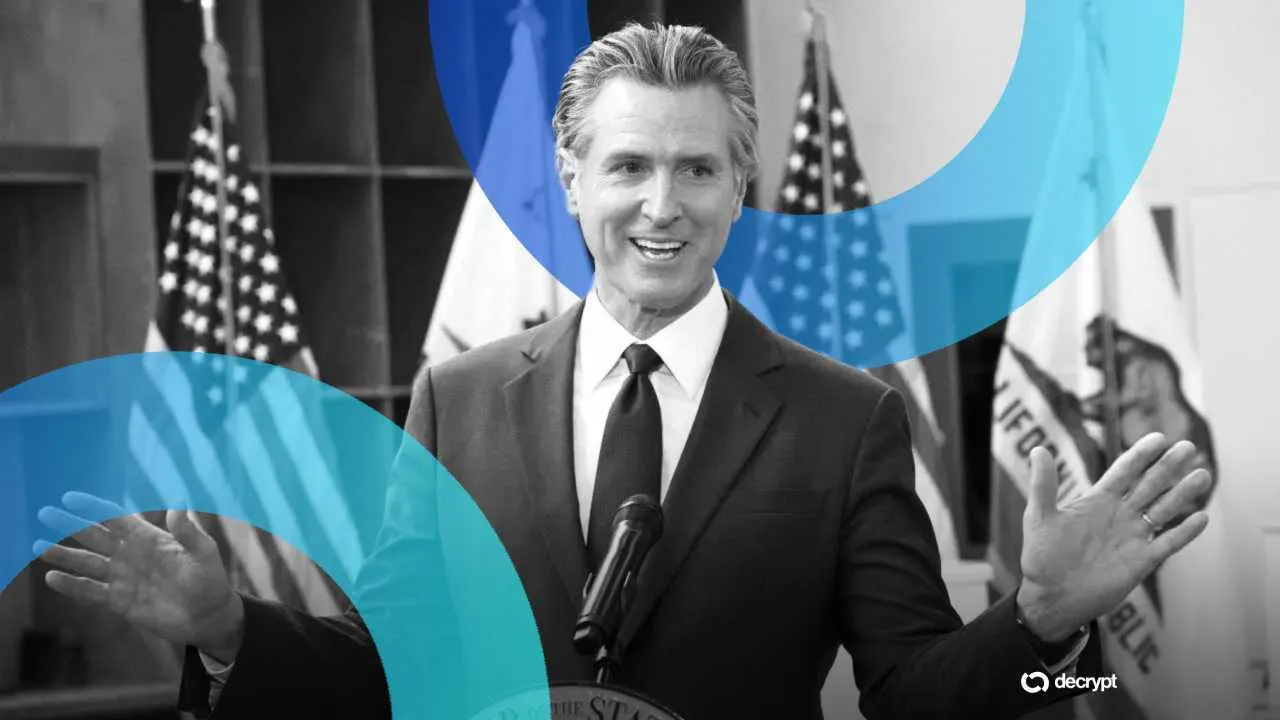
California is implementing stricter requirements for artificial intelligence companies seeking to secure state contracts, a move that intensifies the ongoing debate around AI regulation. Governor Gavin Newsom has signed an executive order mandating that vendors demonstrate robust safeguards against the misuse of AI, protection of privacy, and the upholding of civil rights. This initiative sets California apart from the federal government’s approach, which advocates for a more unified national standard.
- California’s executive order mandates enhanced safeguards for AI companies bidding on state contracts.
- This state-level action contrasts with the federal administration’s push for national AI standards.
- Procurement rules will be developed to address AI-related risks such as bias and misuse, prioritizing civil rights.
The executive order, signed by Governor Newsom, requires AI companies to present policies that actively prevent the misuse of their technologies, safeguard user privacy, ensure data security, and protect civil liberties. This directive aims to ensure that technological advancement in AI aligns with ethical considerations and the protection of citizens.
“California’s always been the birthplace of innovation. But we also understand the flip side: in the wrong hands, innovation can be misused in ways that put people at risk,” Governor Newsom stated. “California leads in AI, and we’re going to use every tool we have to ensure companies protect people’s rights, not exploit them or put them in harm’s way. While others in Washington are designing policy and creating contracts in the shadow of misuse, we’re focused on doing this the right way.”
The California Department of Government Operations is tasked with creating procurement standards for AI vendors. These standards will specifically target issues such as the generation of illegal content, inherent biases within AI models, and potential risks to civil rights and freedom of speech. Additionally, the California Department of Technology will explore recommendations for watermarking AI-generated images and manipulated videos to enhance transparency and accountability.
This development places California at odds with the federal government’s strategy, spearheaded by the Trump administration, to establish overarching national AI regulations and limit state-specific oversight. The federal administration recently proposed a national AI policy framework, encouraging Congress to enact federal standards to prevent a fragmented regulatory landscape across states.
Experts note that this situation highlights a perennial tension between state and federal authority in regulating new technologies. Kevin Frazier, an adjunct research fellow at the Cato Institute, commented on this dynamic, stating, “Every technological breakthrough—from the steamboat to superintelligence—raises key questions about how to allocate regulatory authority between the states and the federal government. The Constitution provides a clear answer: the federal government must lead on matters of economic and national security as well as those demanding a uniform response; states can exercise their traditional police powers within their borders.”
Frazier views Newsom’s executive order as a manifestation of federalism in action, where companies unwilling to comply with California’s requirements have the option to refrain from doing business with the state. He added, “Meanwhile, Congress is still in a position to set the terms of the pace and direction of the country’s AI ambitions.”
The significant market size and purchasing power of California mean its procurement requirements could substantially influence how AI systems are developed and tested by companies aiming to secure state contracts. Quinn Anex-Reis, a senior policy analyst at the Center for Democracy and Technology, explained, “Government contracting is very valuable to companies. It’s a huge part of business for technology developers generally, and a growing avenue of business for AI developers specifically.”
Anex-Reis emphasized that procurement processes represent a powerful governmental lever for shaping the development and evaluation of AI systems. “The procurement process is a really important place to pay attention to. Because that’s really the most important place the state can look to set protections and expectations about how vendors develop their tools.”
Governor Newsom, a prominent figure in national Democratic politics and a potential presidential candidate for 2028, finds himself in a direct policy confrontation with the Trump administration. This clash occurs as national discussions intensify regarding the appropriate governance structures for AI technology. Last summer, the Trump administration directed federal agencies to scrutinize AI contracts, specifically advising against systems perceived as ideologically biased and favoring those demonstrating neutrality.
Despite the political undertones, Anex-Reis suggests that the core issue of AI regulation transcends partisan politics. “This really shouldn’t be a political issue. This is really about making sure taxpayer dollars aren’t wasted and that the tools that our government buys works.”
Long-Term Technological Impact: A Foundation for Responsible AI Development
The divergence in regulatory approaches between California and the federal government regarding AI has significant implications for the future of blockchain, AI integration, Layer 2 solutions, and Web3 development. California’s proactive stance on mandating ethical safeguards and risk mitigation for AI companies, particularly within its substantial government procurement market, could establish a de facto standard for AI development. This emphasis on bias mitigation, misuse prevention, and civil rights protection aligns with the core principles of decentralized technologies and secure data handling inherent in blockchain and robust Web3 architectures.
For AI integration, this means that future AI models developed for or by California-facing entities will likely be designed with greater attention to transparency and accountability. This could foster the development of more explainable AI (XAI) systems, which are crucial for building trust in complex AI applications. The focus on preventing misuse could also spur innovation in areas like federated learning and privacy-preserving AI techniques, technologies that can be integrated into blockchain solutions to process data without compromising individual privacy.
Layer 2 scaling solutions, often employed to enhance the efficiency and reduce the cost of blockchain transactions, could benefit from the rigorous testing and validation requirements imposed by California. If AI is used to optimize these Layer 2 protocols or to manage decentralized applications (dApps), the demand for auditable and non-discriminatory AI components will increase. This might drive the development of AI tools specifically designed to operate within the constraints and security models of Layer 2 networks, potentially leading to more sophisticated and secure decentralized infrastructure.
In the broader Web3 ecosystem, the demand for verifiable and ethically sound AI could accelerate the integration of AI with decentralized identity solutions and robust smart contract auditing. Companies in this space will likely need to demonstrate that their AI components, whether for content generation, moderation, or network management, adhere to the stringent standards being set. This could lead to novel hybrid models where AI-driven intelligence is seamlessly and securely incorporated into decentralized autonomous organizations (DAOs) and other Web3 platforms, ensuring that the future of the decentralized internet is built on a foundation of responsible and trustworthy AI.
Details can be found on the website : decrypt.co