

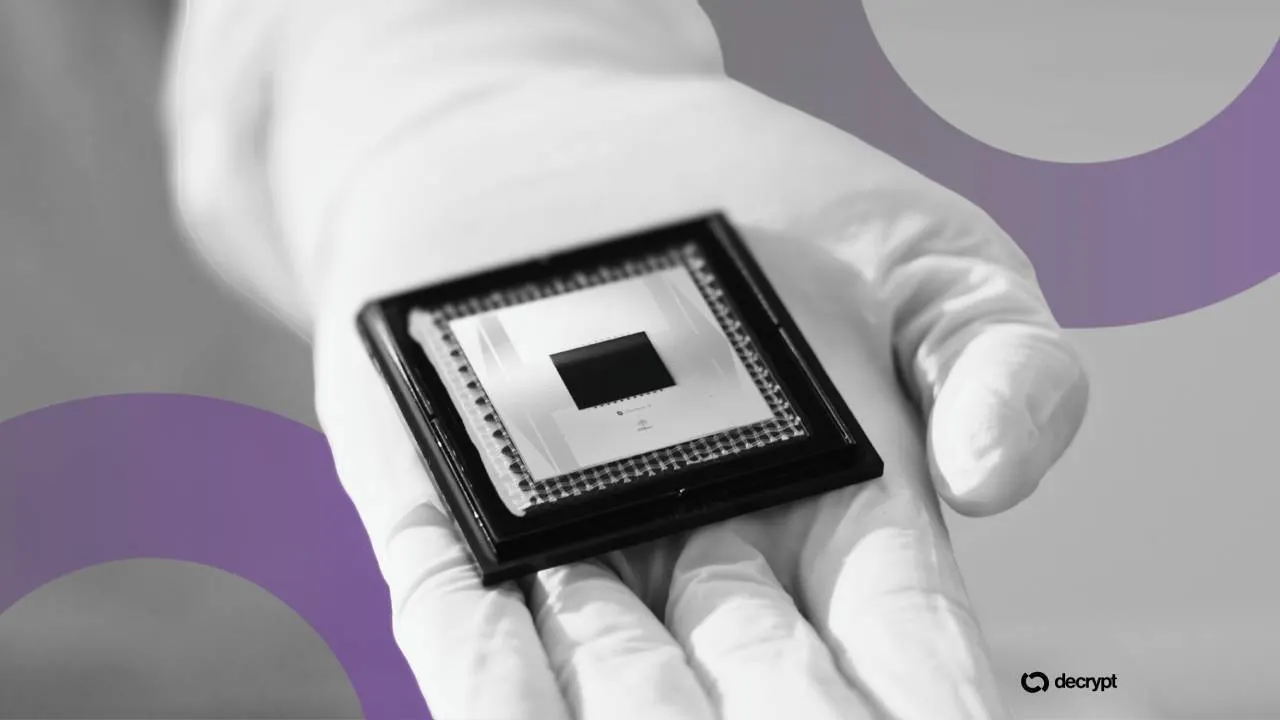
New research from the California Institute of Technology (Caltech) suggests that the number of qubits required for fault-tolerant quantum computers capable of breaking current cryptographic standards may be significantly lower than previously estimated. This development accelerates the timeline for potential threats to the security of widely used encryption, including that underpinning major cryptocurrencies like Bitcoin and Ethereum.
The study, conducted in collaboration with quantum computing startup Oratomic, details a novel approach utilizing neutral-atom systems. In these systems, individual atoms are precisely controlled by lasers, serving as qubits. The researchers posit that with as few as 10,000 reconfigurable atomic qubits, a fault-tolerant quantum computer could execute Shor’s algorithm, a powerful tool capable of deriving private cryptographic keys from public ones.
Key Takeaways
- Quantum computers may require as few as 10,000–20,000 qubits to compromise modern cryptography, according to Caltech researchers.
- A new error-correction approach for neutral-atom quantum computers has been outlined in the study.
- This advancement could hasten the development of machines capable of running Shor’s algorithm, posing a direct threat to existing encryption protocols.
Dolev Bluvstein, co-founder and CEO of Oratomic and a visiting associate in physics at Caltech, highlighted the accelerating pace of quantum computing advancements. He noted that the perception of quantum computers always being a decade away is shifting, especially when considering the exponential growth in qubit counts and control capabilities over the past ten years. He stated that initial estimates for running Shor’s algorithm required around one billion qubits, a stark contrast to the current estimates and the capabilities of early lab systems with only a handful of qubits.
Current error-correction methodologies often demand a substantial overhead, requiring approximately 1,000 physical qubits to create a single stable logical qubit. This has historically pushed projections for practical, fault-tolerant quantum systems into the millions of qubits, seemingly deferring the threat to cryptography. However, the new research suggests this paradigm may be changing.
Bluvstein pointed out that existing laboratory systems are already approaching or exceeding 6,000 physical qubits, indicating that the timeline for realizing cryptography-breaking quantum computers might be much shorter than anticipated. He emphasized the continuous improvement in system size and controllability, which directly correlates with a reduction in the required system size for complex computations.
Earlier this year, Caltech researchers demonstrated a neutral-atom quantum computer operating with 6,100 qubits, achieving remarkable accuracy and coherence times. This milestone further fueled concerns about the eventual impact of Shor’s algorithm on blockchain security.
In response to these evolving threats, governments and technology companies are actively exploring and beginning to implement post-quantum cryptography (PQC) – encryption methods designed to resist quantum attacks. However, significant engineering hurdles remain in scaling quantum systems while maintaining the exceptionally low error rates necessary for reliable operation.
Bluvstein cautioned that while achieving 10,000 physical qubits might be feasible within a year, this is not the sole determinant of a functional quantum computer. The process of building and implementing such a system is extraordinarily complex and far from trivial.
Despite these challenges, Bluvstein expressed optimism that a practical quantum computer could emerge before the end of this decade.
Adding to the urgency, Google researchers recently published findings indicating that future quantum computers might break elliptic curve cryptography with fewer resources than previously thought. This adds further impetus to the transition towards PQC before these advanced machines become a reality.
While the cryptocurrency industry is increasingly focused on quantum risk, Bluvstein stressed that the implications extend far beyond blockchain. He described the potential threat as encompassing the entire global digital infrastructure, including the Internet of Things (IoT), internet communications, routers, and satellites, underscoring the pervasive and complex nature of the challenge.
Long-Term Technological Impact
This research signifies a critical inflection point in the quantum computing landscape, directly impacting the future of digital security and blockchain innovation. The potential for fault-tolerant quantum computers to emerge sooner than expected necessitates a fundamental re-evaluation of cryptographic standards across all digital systems. For blockchain, this means an accelerated push towards quantum-resistant ledger technologies. We may see increased development and adoption of PQC algorithms integrated into Layer 2 scaling solutions and next-generation blockchain architectures, aiming to preemptively secure decentralized networks against future quantum threats. Furthermore, this advancement in quantum error correction could spur innovation in AI and machine learning algorithms that run on quantum hardware, potentially unlocking new computational paradigms for Web3 development and decentralized applications (dApps) by enabling complex simulations and optimizations previously out of reach.
According to the portal: decrypt.co