


Wall Street’s engagement with digital assets has reached unprecedented levels, with significant capital flowing into cryptocurrency through various investment vehicles. However, the sheer volume of assets managed or influenced by financial institutions masks a complex ownership structure and diverse investment rationales.
Key Takeaways
- Wall Street’s exposure to cryptocurrencies, primarily Bitcoin, totals over 1.6 million BTC, distributed across ETFs and corporate treasuries.
- A substantial portion of this exposure is linked to trading strategies like the basis trade, rather than long-term investment conviction.
- Custodial services, particularly by Coinbase, represent a critical point of centralization within the institutional crypto ecosystem.
- Significant holdings remain “shadow holdings,” managed by entities like family offices and sovereign funds that are not subject to public disclosure requirements.
- The tokenization of real-world assets (RWAs) signifies a growing trend of traditional finance integrating with blockchain infrastructure, though not always involving direct cryptocurrency ownership.
SEC 13F Filings Reveal ETF Holdings and Trading Strategies
Despite market fluctuations, including a 23% price decline in Q4 2025, Bitcoin ETFs continued to attract net positive flows, totaling $3.7 billion for the quarter. Professional ETF ownership saw a notable increase of 32% over the year, outpacing the broader investor base’s 18% growth. Institutions collectively held over 513,000 BTC through these ETFs, although the number of filers decreased from 2,173 to 1,867.
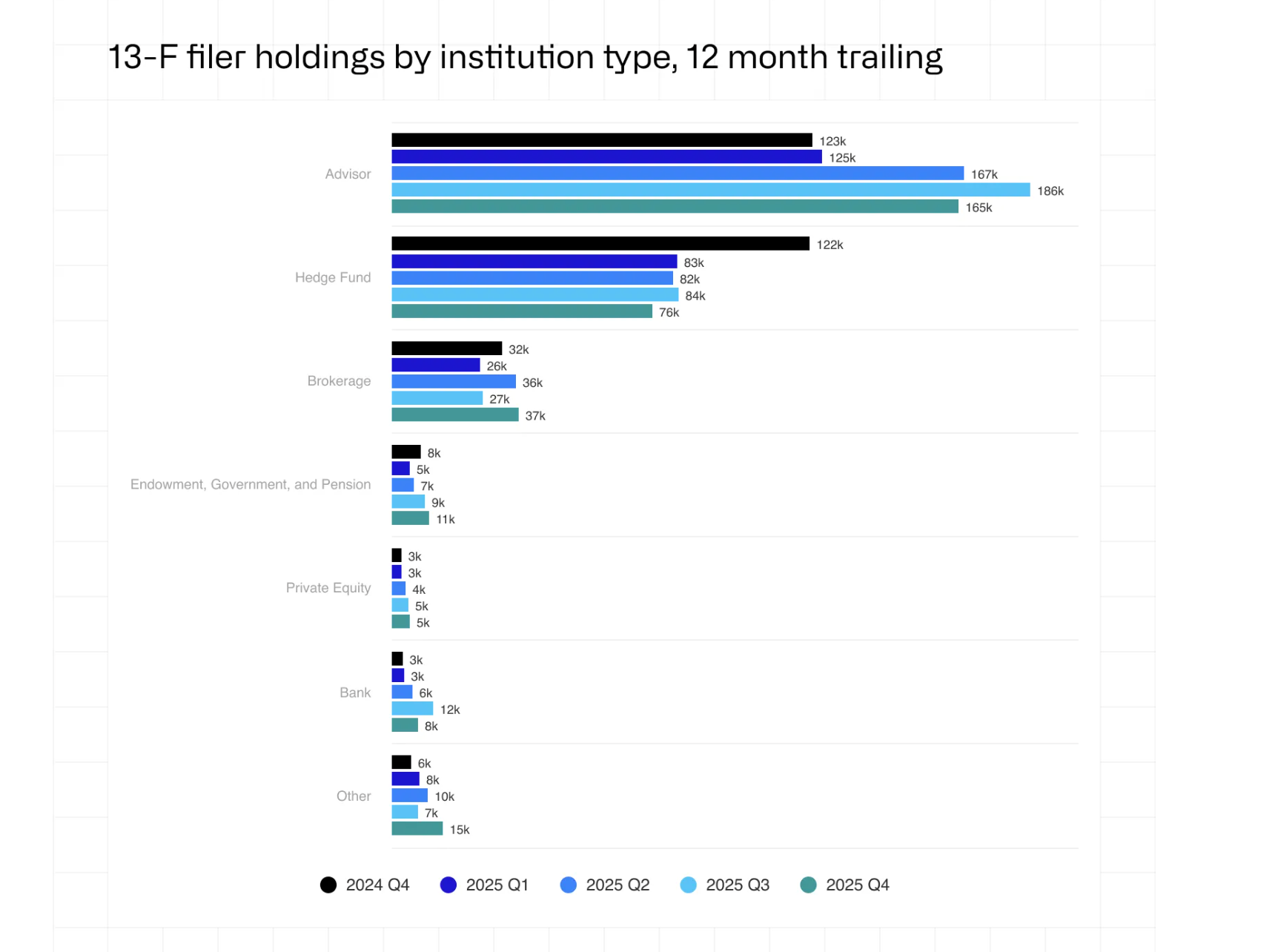
A significant portion of these institutional holdings is not driven by long-term conviction but by strategies such as the basis trade, which involves holding a spot ETF position against a short futures contract. This strategy’s prevalence contributed to a nearly 10% decline in hedge fund exposure during Q4 as leverage was reduced and the basis spread narrowed.
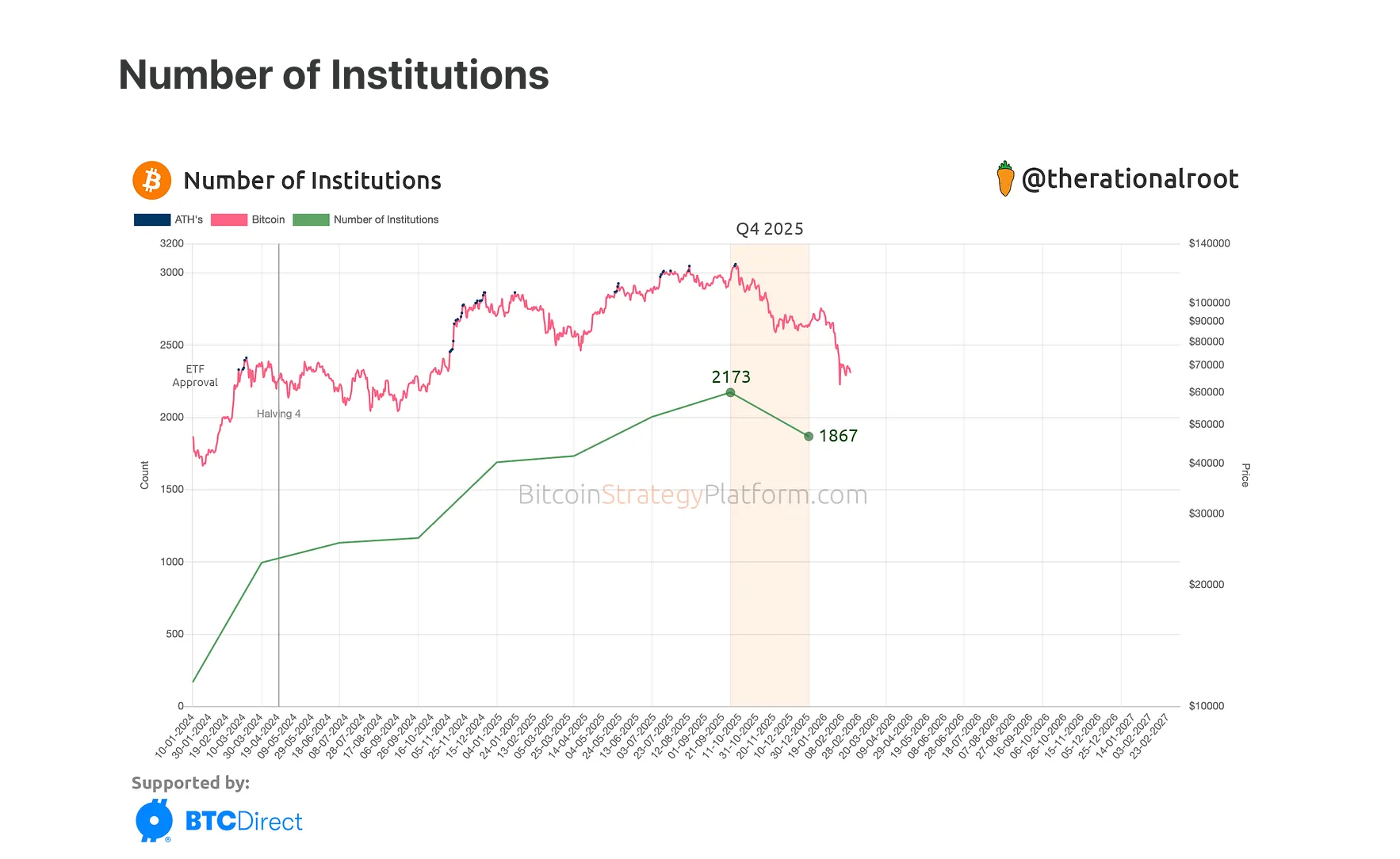
The composition of ETF holders showed rotation rather than capitulation. For instance, Millennium increased its holdings by 8,100 BTC, Mubadala added 2,300 BTC, and Morgan Stanley acquired 1,900 BTC. Dartmouth became the fourth Ivy League endowment to enter the market. Conversely, Brevan Howard reduced its holdings by 17,700 BTC, Harvard trimmed approximately 20%, and the Royal Bank of Canada exited its positions entirely, according to CoinShares’ Q4 2025 report.
Aggregate crypto holdings for pension funds and endowments reached a peak of $1.48 billion in Q3 2025, subsequently falling to $965 million in Q4. While ETFs offer insight into wrapper ownership, direct asset holdings present a different narrative.
Corporate Treasuries: Direct Bitcoin Ownership
Publicly traded companies are increasingly incorporating Bitcoin directly into their balance sheets as a treasury reserve asset. As of March 31, 2026, these companies reported holding a combined total of 1,134,324 BTC.
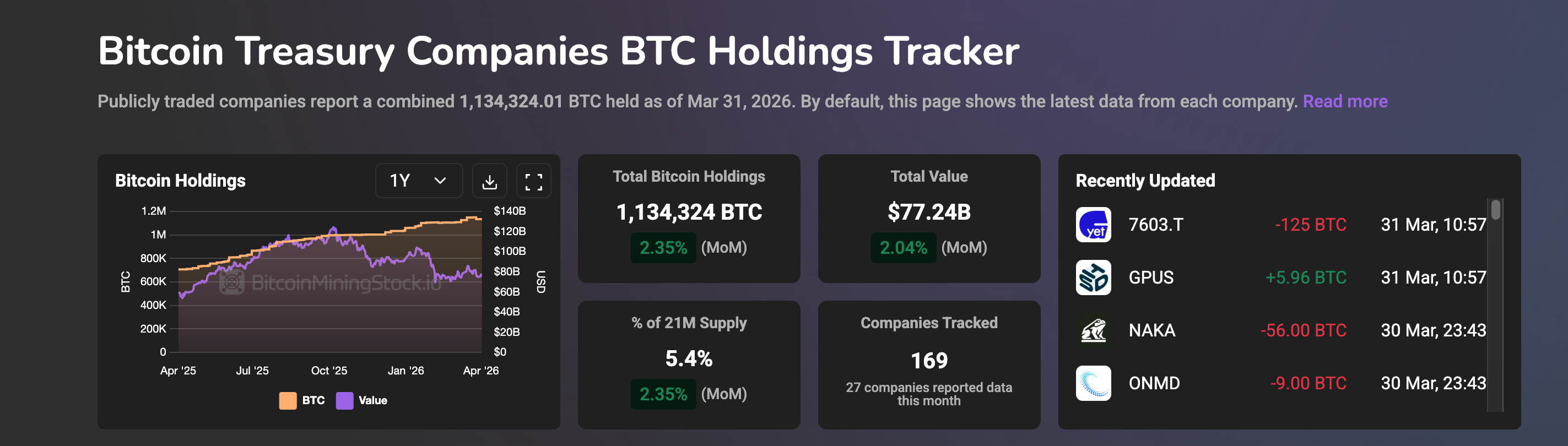
The concentration of this direct ownership is notable, with Strategy Inc. (formerly MicroStrategy) holding 762,000 BTC as of April 2, 2026. Other significant holders include Twenty One Capital, MARA Holdings, and Japan’s Metaplanet.

Recent developments have impacted corporate holdings. Trump Media (DJT) initially held 11,542 BTC, but pledged 2,000 BTC as collateral, reducing its on-balance-sheet holdings to 9,542 BTC. MARA Holdings sold 15,133 BTC in March 2026 to manage debt obligations, incurring a loss.
Arkham Analyst Corrects: Trump Media Didn’t Sell 2000 BTC, It Was Transferred as Collateral
Arkham analyst Emmett Gallic has corrected his previous statement regarding Trump Media & Technology Group (TMTG) selling 2000 BTC. Gallic has deleted the original tweet and clarified that the BTC was transferred as collateral.
— 0xzx (@0xzxcom) February 28, 2026
While corporate treasuries represent direct spot ownership, larger Wall Street players are increasingly accessing crypto exposure through alternative mechanisms that do not involve direct token holdings.
Tokenized Funds and Real-World Assets: The Intersection of TradFi and DeFi
A growing number of major financial institutions are gaining exposure to crypto-related markets not by holding cryptocurrencies directly, but by tokenizing traditional assets. BlackRock’s BUIDL fund, a tokenized U.S. Treasury money market product, has accumulated $2.85 billion in assets, with $2.17 billion at the time of reporting.
In February 2026, BlackRock initiated trading of BUIDL on Uniswap’s decentralized exchange and acquired UNI governance tokens, marking its first direct interaction with DeFi trading infrastructure. The firm’s 2026 chairman’s letter reported significant figures, including $65 billion in stablecoin reserves, $80 billion in digital asset ETPs, and nearly $150 billion in total digital asset-linked AUM.
The broader tokenized asset market is expanding rapidly. Data from RWA.xyz as of April 2026 indicates that on-chain U.S. Treasury debt represents $12.67 billion, constituting approximately 46% of the total $27.59 billion in tokenized real-world assets. This RWA market experienced a 31.61% growth in the preceding 30 days, with 708,377 asset holders across the ecosystem.
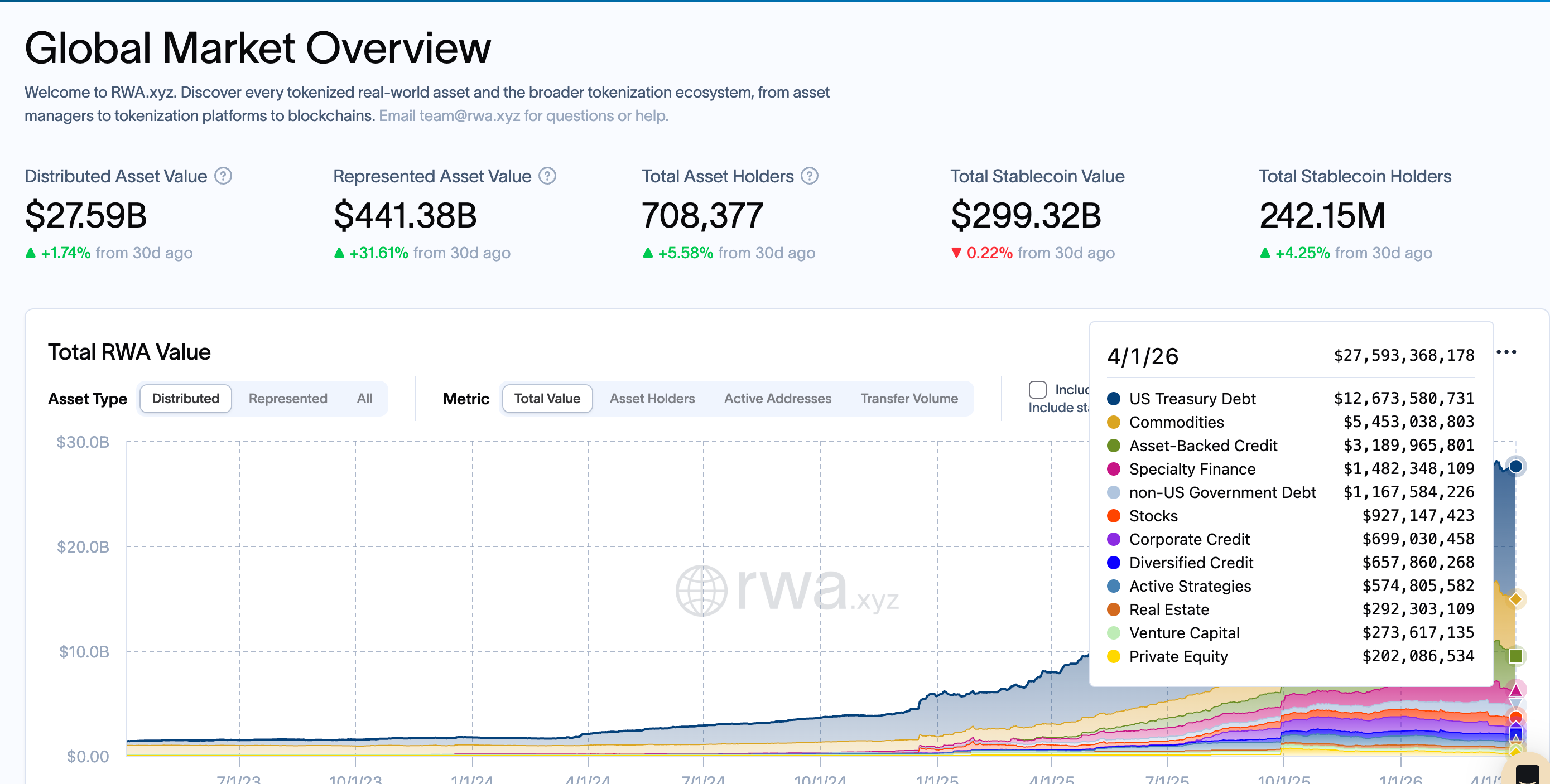
This trend represents Wall Street’s engagement with crypto infrastructure rather than direct asset ownership. However, the security of these operations hinges on the underlying custody solutions.
The Custody Landscape: Centralization Risks
Understanding who holds custody of institutional crypto assets is as critical as knowing who owns them. Coinbase is reported to custody over 80% of U.S. Bitcoin and Ethereum ETF assets, according to CEO Brian Armstrong. At the launch of the spot Bitcoin ETFs, Coinbase served as custodian for eight out of the eleven available products. Only Fidelity chose self-custody, while VanEck partnered with Gemini.
This concentration creates a significant single point of failure. A cyberattack, service disruption, or governance issue affecting a primary custodian could have widespread repercussions on ETF creation, redemption, and trading liquidity across multiple funds.
In the realm of tokenized assets, Bank of New York Mellon acts as the cash and securities custodian for BUIDL, with support from Anchorage Digital, BitGo, Copper, and Fireblocks for BUIDL subscribers. While discussions around multi-party computation custody and multi-custodian mandates are emerging to mitigate risk, concrete structural changes have yet to materialize.
The current custody map highlights a paradox: a decentralized asset class being managed through increasingly centralized infrastructure. Furthermore, this structure obscures the holdings of major players who are not subject to public disclosure requirements.
Shadow Holders: Unseen Demand and Concentration Risks
SEC 13F filings are mandated only for U.S. institutional managers overseeing more than $100 million in qualifying assets. Family offices, offshore entities, and sovereign wealth funds operating through intermediaries are exempt from these disclosure obligations, creating a significant blind spot in tracking Wall Street’s crypto ownership.
On-chain data provides a crucial lens into these otherwise hidden activities. Cumberland DRW, a prominent Wall Street OTC desk, has processed approximately $123.58 billion in deposits and $97.71 billion in withdrawals across major exchanges since 2018.

An analysis of Cumberland’s outflows reveals substantial capital directed towards entities like Binance ($17 billion) and Coinbase Prime ($14.53 billion, likely for ETF creations), as well as Block Inc. ($10.12 billion).
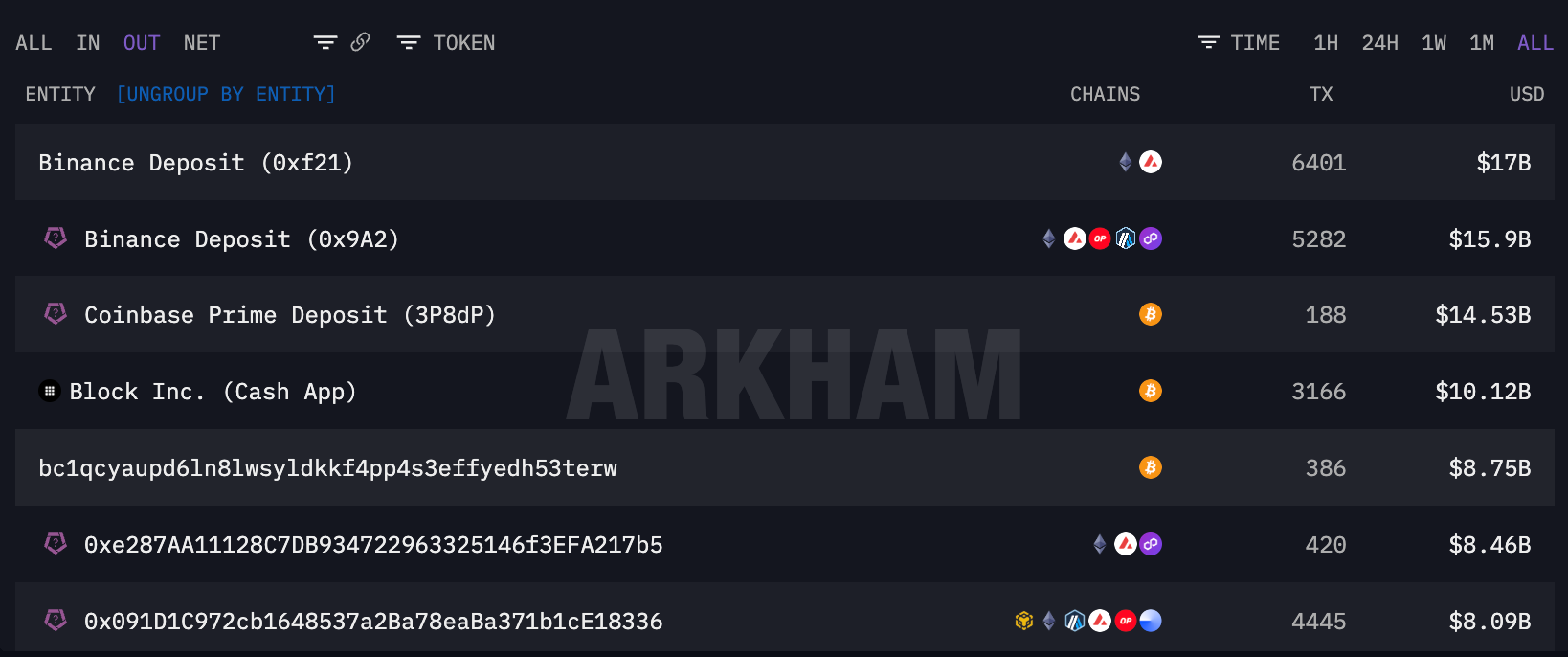
Further examination of counterparty data shows significant inflows into Fidelity’s FBTC ETF, amounting to $7.28 billion across 171 transactions. These labeled flows coexist with billions directed to unlabeled wallets.
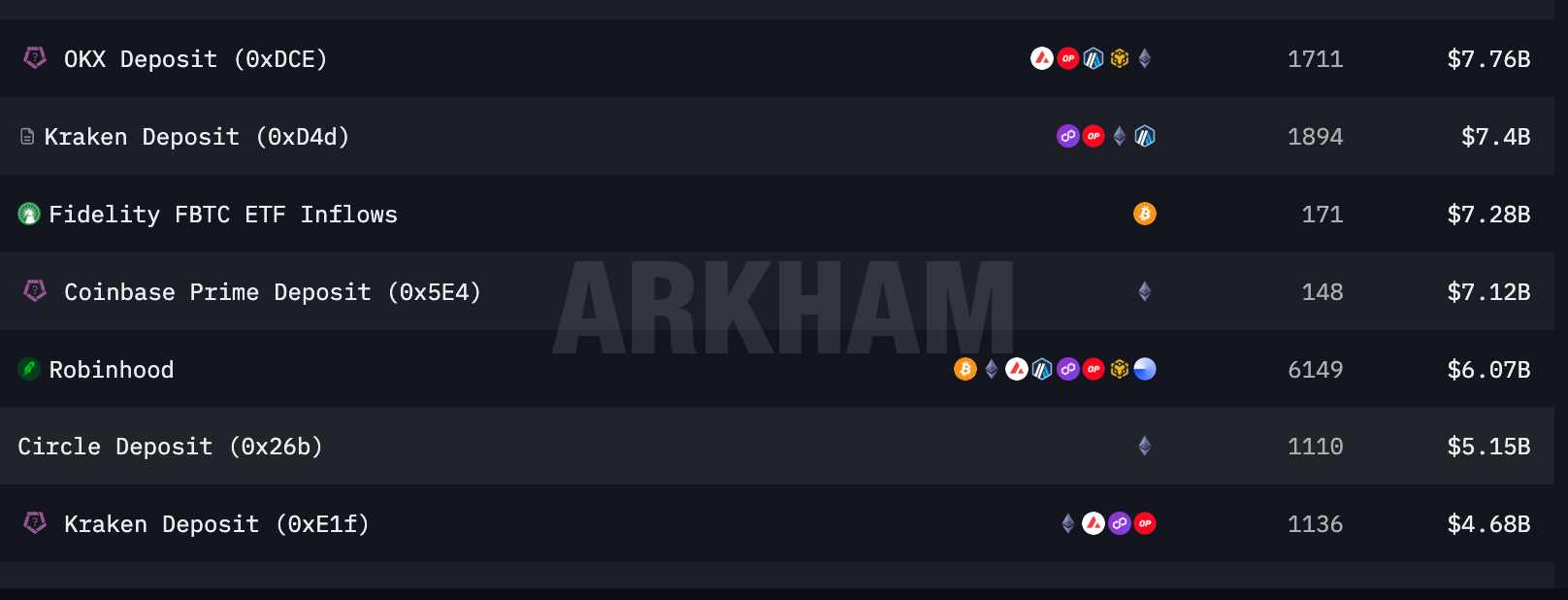
One particularly large unlabeled recipient, wallet bc1qcyau…, received $8.75 billion across 386 transactions and currently holds 593 BTC, utilizing Copper’s institutional prime brokerage for custody. This pattern—large OTC sourcing via a Wall Street firm coupled with institutional-grade prime brokerage custody—strongly suggests the profile of a family office or sovereign entity operating through the same infrastructure as ETF issuers, but without the disclosure requirements.

While public filings provide a partial view of ownership, on-chain data reveals the remainder. The discrepancy between reported and actual holdings exposes the demand from “shadow holders” who have accumulated assets through drawdowns and continue to hold them via institutional custody. This suggests a more robust and durable demand base than publicly tracked ETF flows indicate. Conversely, this same opaque concentration poses a potential risk to market stability.
Learn more at : beincrypto.com