

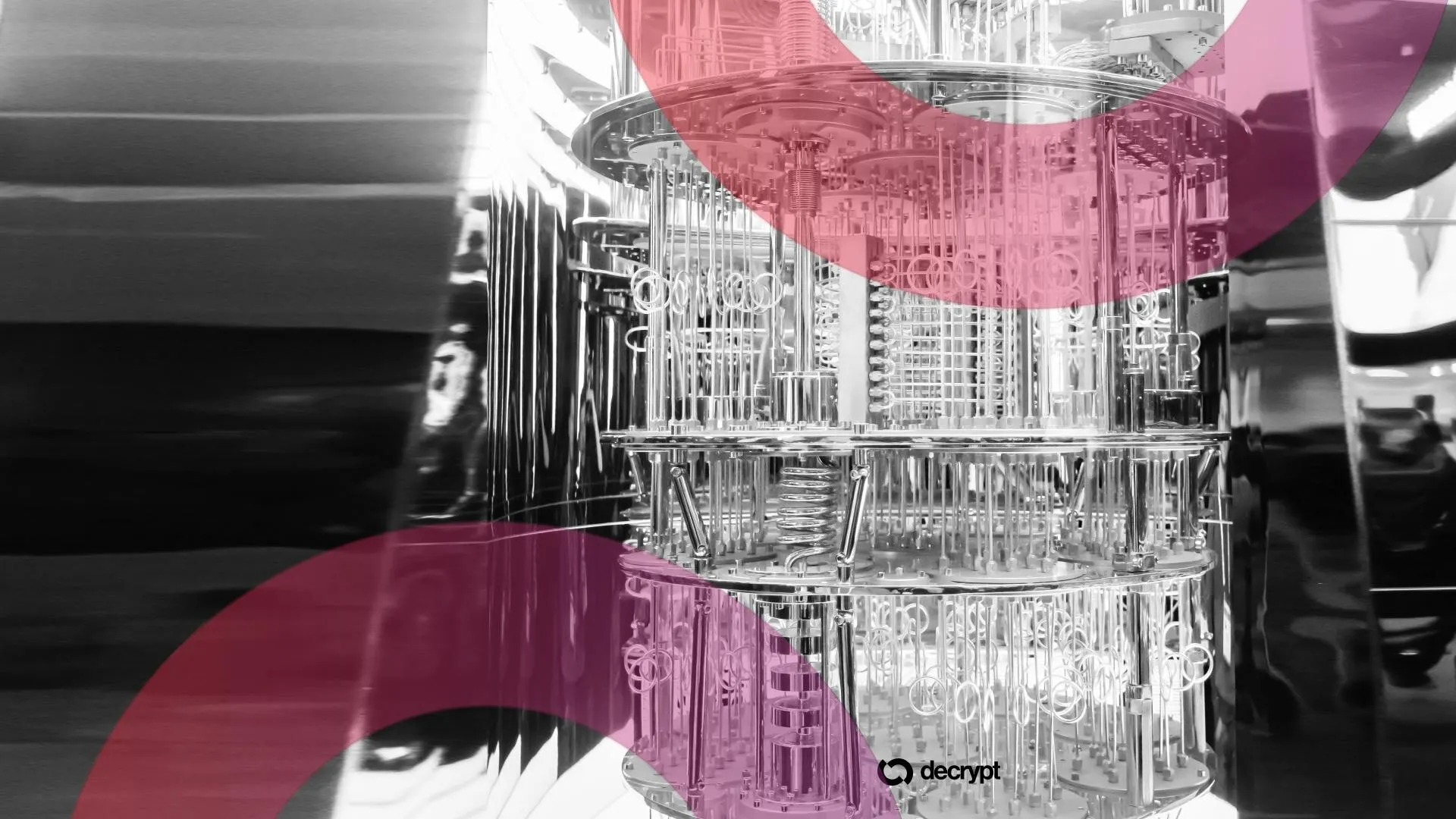
Recent research from Google has sounded an alarm for the digital asset and broader internet security landscape, indicating that advancements in quantum computing could pose a threat to current cryptographic standards sooner than previously anticipated. The findings suggest that future quantum machines might be capable of breaking elliptic curve cryptography, a foundational element of modern digital security, with significantly fewer resources than earlier estimates indicated.
Key Takeaways
- Google’s research indicates that advanced quantum computers may break elliptic curve cryptography with reduced computational requirements.
- This poses a potential threat to blockchain networks, digital wallets, and other internet infrastructure relying on current cryptographic methods.
- Experts are urging a proactive transition to post-quantum cryptography (PQC) as the timeline for such quantum capabilities potentially shortens.
- While the risk is real, there is a consensus that building a fault-tolerant quantum computer remains a significant engineering challenge, and immediate panic is unwarranted.
- The focus is shifting towards implementing PQC solutions and adopting best practices to mitigate future quantum risks.
This development carries significant implications for the cryptocurrency industry, where elliptic curve cryptography, particularly ECDSA over the secp256k1 curve, secures the vast majority of blockchain networks and digital wallets. The potential exploitation of these vulnerabilities by quantum systems, an event colloquially termed “Q-Day,” could lead to the exposure of encrypted data, financial assets, and sensitive identities.
Google researchers emphasized the importance of raising awareness within the cryptocurrency community, offering recommendations to bolster security and stability. A key suggestion is the transition of blockchains to post-quantum cryptography (PQC), which is specifically designed to resist attacks from quantum computers.
Long-Term Technological Impact: A Paradigm Shift in Digital Security
The prospect of quantum computers breaking current encryption standards represents a fundamental challenge to the established paradigms of digital security and Web3 development. The core issue lies in Shor’s algorithm, which, when executed on a sufficiently powerful quantum computer, can solve the mathematical problems that underpin public-key cryptography today, such as the elliptic curve discrete logarithm problem (ECDLP). While the theoretical possibility has long been known, recent research suggests that the practical requirements—in terms of qubit count and operational complexity—might be lower than previously assumed, accelerating the potential timeline for such an event.
This has spurred a renewed focus on post-quantum cryptography (PQC), a field dedicated to developing new cryptographic algorithms resistant to quantum attacks. The development and integration of PQC are becoming critical for the long-term viability of blockchain technology, AI-driven decentralized applications, and the broader Layer 2 scaling solutions that aim to enhance efficiency and security. The transition will likely involve significant upgrades to blockchain protocols, key management systems, and wallet infrastructure. This cryptographic upgrade could also drive innovation in areas like zero-knowledge proofs, which offer enhanced privacy and security, potentially becoming a central component of the next generation of internet infrastructure.
The research highlights that PQC is a well-understood and deployable field, although implementing it across complex, decentralized systems at scale presents a substantial engineering undertaking. Recommended mitigation strategies include transitioning blockchain systems, implementing robust key rotation policies, and carefully managing the exposure of public keys.
Bitcoin security researcher Justin Drake described the new findings as a “breakthrough,” significantly increasing his confidence in the possibility of “Q-Day” occurring by 2032. He noted a potential 10% chance that a quantum computer could recover a secp256k1 private key from an exposed public key by that date, stressing that while a cryptographically-relevant quantum computer before 2030 still seems unlikely, preparation is essential.
Today is a monumentous day for quantum computing and cryptography. Two breakthrough papers just landed (links in next tweet). Both papers improve Shor's algorithm, infamous for cracking RSA and elliptic curve cryptography. The two results compound, optimising separate layers of…
— Justin Drake (@drakefjustin) March 31, 2026
Despite the urgency conveyed by these findings, the discussion around quantum risk is also characterized by a distinction between genuine technical concerns and the propagation of “FUD” (fear, uncertainty, and doubt). Building a fully fault-tolerant quantum computer capable of executing these complex cryptographic attacks remains an immense engineering hurdle.
Shiv Shankar, CEO of Boundless, advised a contextualized view, stating that while the risk is increasing, it was an expected progression. He reassured that the problem is being addressed by leading experts and that the ongoing development of PQC instills confidence in the transition timeline. Shankar also pointed out that this is not solely a cryptocurrency issue; the entire internet faces potential risks, which could accelerate the adoption of advanced cryptographic solutions like zero-knowledge proofs.
Analysts at Bitfinex characterized the quantum threat as a long-term engineering challenge rather than an immediate existential crisis for the cryptocurrency industry. They noted that the finite lifespan of current cryptographic foundations has always been acknowledged, and the industry’s movement towards solutions is a sign of proactive engagement.
While acknowledging Drake’s warning as serious, the analysts suggest it should not be interpreted as an imminent danger. They agreed that a 10% probability of “Q-Day” by 2032 is a compelling call for “appropriate urgency” and that now is indeed the opportune time to begin preparing for the transition to quantum-resistant cryptography.
Source: : decrypt.co