

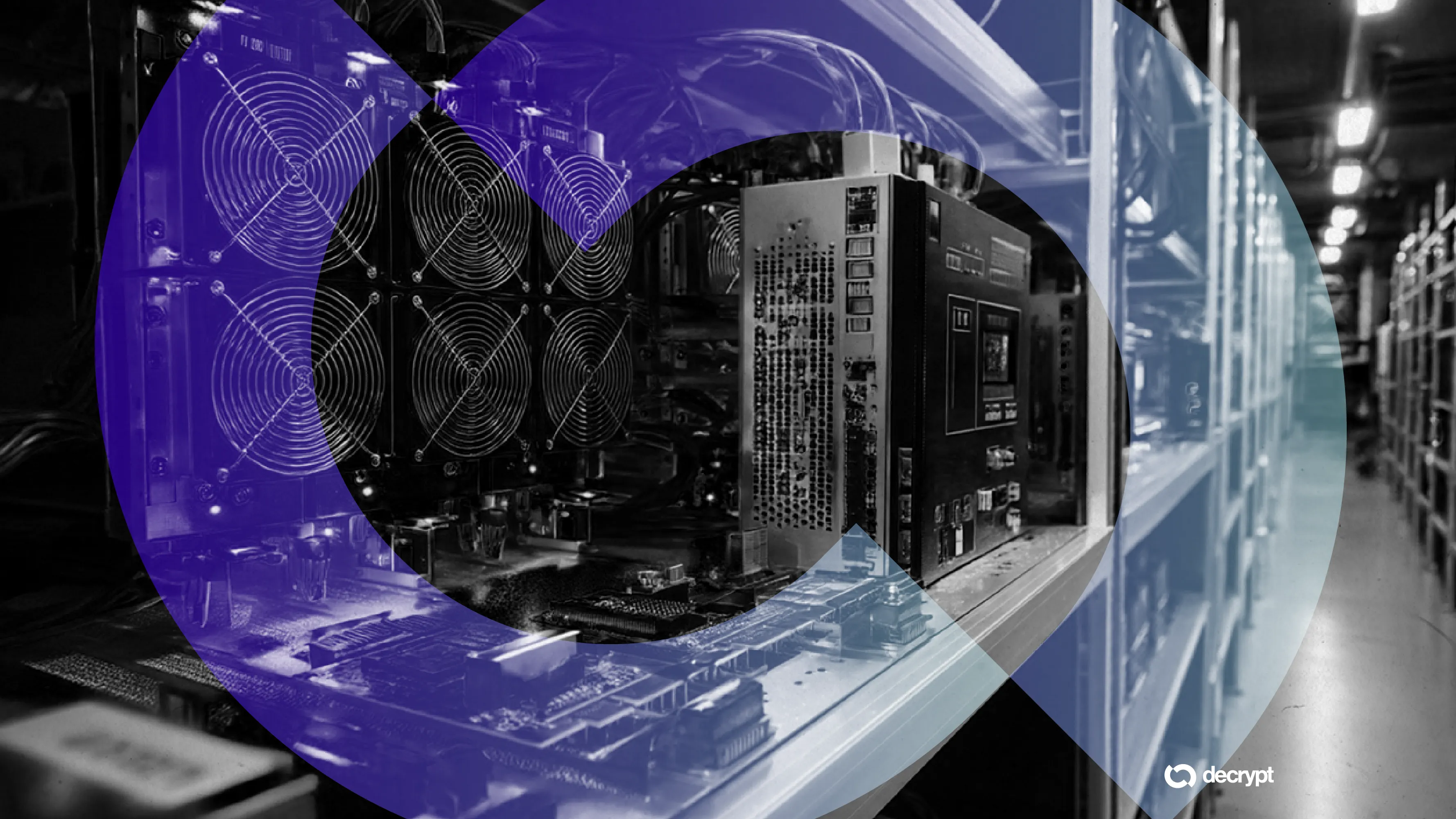
Postquant Labs, in collaboration with quantum computing firm D-Wave, has unveiled a novel blockchain testnet named Quip Network. This development marks a significant departure from traditional blockchain mining paradigms, introducing a system designed to be compatible with both quantum and classical computing hardware. Unlike Bitcoin’s proof-of-work, which relies on solving computationally intensive hashing problems, Quip Network utilizes optimization challenges based on the Ising model, a framework well-suited for quantum computation.
Key Takeaways
- Postquant Labs has launched Quip Network, a testnet that permits mining via quantum computers alongside conventional CPUs and GPUs.
- The network replaces Bitcoin-style hashing with optimization problems derived from the Ising model, which quantum computers can solve more efficiently.
- Successful miners are rewarded with QUIP tokens, intended for use in renting time on connected quantum computers, drawing parallels to Bittensor’s reward model for AI contributions.
- The project aims to demonstrate a potentially more energy-efficient mining process compared to Bitcoin’s energy-intensive hashing.
- Quip Network could also serve as a platform to track advancements in quantum computing’s ability to break current cryptographic standards, such as those used by Bitcoin.
The Quip Network’s innovative approach replaces the energy-demanding hashcash problem, central to Bitcoin mining, with the task of finding a specific Ising model that matches a target energy level. This type of optimization problem is inherently more challenging for classical computers but is anticipated to be significantly faster for quantum processors. Richard Carback, CTO and co-founder of Postquant Labs, explained that this shift makes the mining process more amenable to quantum hardware.
Our testnet is now live, with the first quantum subnet built in consultation with @dwavequantum, leveraging their advanced Advantage2™ annealing quantum computers.
Open source and open to everyone. Participate and earn rewards.
Learn more ↓https://t.co/sBINDRUDdB pic.twitter.com/ovlmHI1wPC
— Quip Network (@quipnetwork) April 2, 2026
Postquant Labs, established in 2024, focuses on developing quantum computing software and protocols. Their partnership with D-Wave Quantum Inc. allows parts of Quip Network’s proof-of-work to be executed on D-Wave’s Advantage2 annealing quantum computers. The Ising model optimization problem involves mapping a computational challenge to an energy function, where the solution corresponds to finding the lowest energy state within a system of interacting binary variables.
Miners who successfully solve these optimization problems are rewarded with QUIP tokens. These tokens are designed to facilitate access to quantum computing resources on the network. Colton Dillion, CEO and co-founder of Postquant Labs, likened this model to Bittensor’s TAO network, which incentivizes users for contributing AI models and computational power. Dillion elaborated that QUIP tokens would ultimately be used to rent processing time on quantum computers within the network.
Furthermore, Postquant Labs suggests that this new mining model could lead to substantial reductions in energy consumption per mined block. Bitcoin mining, notorious for its high electricity usage due to continuous computational effort, has faced significant criticism. Dillion estimates that mining a block on Quip Network using a quantum computer would consume approximately 13 watts, a figure comparable to the energy usage of a standard light bulb over an hour.
However, the widespread adoption of quantum mining faces immediate practical barriers. Quantum hardware remains far less accessible and more specialized than conventional mining equipment like GPUs, which are readily available for a variety of applications, including gaming and traditional cryptocurrency mining. Access to quantum computing systems is currently largely confined to research institutions and specialized corporate environments.
Trevor Lanting, Chief Development Officer at D-Wave Systems, characterized quantum processors as accelerators for specific, complex workloads rather than outright replacements for classical hardware. He highlighted existing commercial applications of D-Wave’s quantum computers in business operations and logistics, indicating that the integration of quantum technology into mainstream industries will likely be gradual, with different technologies commercializing at varying paces.
Beyond the current accessibility and cost factors, quantum computing presents profound long-term security implications for the digital landscape. Experts have been increasingly vocal about “Q-Day,” the hypothetical future point at which quantum computers will possess the capability to break current public-key cryptography. This poses a direct threat to systems like Bitcoin and Ethereum, which rely on elliptic curve cryptography, as quantum machines could potentially derive private keys from public ones, compromising wallet security.
Postquant Labs also intends to leverage a future iteration of its network to benchmark the progress of quantum computers towards breaking elliptic curve cryptography, the cryptographic foundation of Bitcoin’s security. Carback advised Bitcoin users to adopt post-quantum secure wallets and stay informed about the evolving quantum threat landscape.
Long-Term Technological Impact
The introduction of Quip Network and its quantum-resistant mining paradigm signifies a critical step in the evolution of blockchain technology, directly addressing the impending threat posed by quantum computing. By shifting from energy-intensive hash-based proofs-of-work to optimization problems solvable by quantum computers, this development not only explores more energy-efficient consensus mechanisms but also proactively prepares the ecosystem for a post-quantum future. The Ising model-based approach demonstrates the potential for blockchains to harness quantum advantages, moving beyond mere theoretical resilience to practical application. This research could pave the way for new Layer 2 solutions and Web3 infrastructure that are inherently resistant to quantum attacks, fostering greater security and sustainability in decentralized systems. Furthermore, the ability to benchmark quantum progress against cryptographic standards within the Quip Network provides valuable data for the broader cybersecurity and blockchain communities, accelerating the transition to quantum-safe cryptography and influencing the design of future AI integrations within blockchain, making them more robust against advanced computational threats.
Information compiled from materials : decrypt.co