


- Circle states that sanctioned entities avoid USDC due to the immediate asset freezing capabilities.
- The company seeks “safe harbor” provisions in the CLARITY Act for preemptive freezes without law enforcement orders.
- Circle argues criticism regarding the Drift hack delay is disproportionate, emphasizing adherence to legal processes.
Circle CEO Jeremy Allaire has addressed concerns that USDC might be utilized by Iran for transit tolls through the Strait of Hormuz, asserting that such a scenario is improbable.
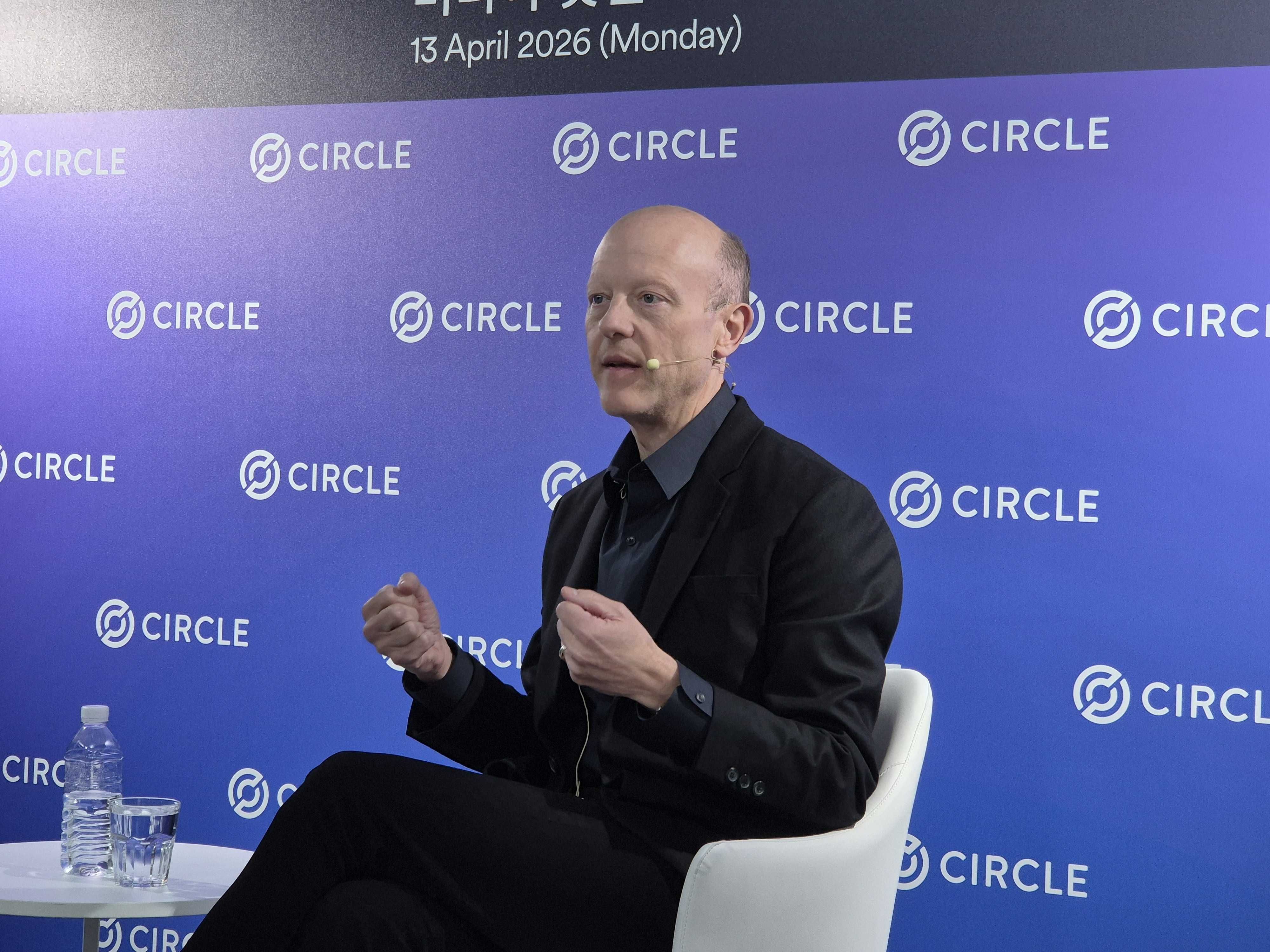
Allaire shared these views during a press conference in Seoul on April 13, which was attended by BeInCrypto East Asia Editor-In-Chief, Oihyun Kim. His visit to South Korea this week included meetings with various exchanges, banking institutions, and regulatory bodies.
Hormuz Tolls: ‘Highly Unlikely’ for USDC
When questioned about the possibility of Iran’s Revolutionary Guards accepting USDC for passage fees at the Strait of Hormuz, Allaire expressed skepticism.
“Circle operates a highly compliant infrastructure,” he stated.
He highlighted Circle’s close collaboration with law enforcement and sanctions enforcement agencies.
Referencing public research from the United Nations and forensic analysis firms, Allaire noted that sanctioned entities typically opt for stablecoins other than USDC. He did not identify specific alternative tokens.
“It’s highly unlikely that a regime under sanctions would attempt something where the likelihood of the assets being immediately frozen is extremely high,” he remarked.
Drift Hack: Circle Defends Freeze Delay
The recent $285 million exploit of the Drift Protocol on April 1 led to significant criticism directed at Circle. The attackers transferred over $230 million in stolen USDC from Solana to Ethereum over a six-hour period, during which Circle did not immediately freeze the funds.
Allaire explained that the company adheres to stringent legal mandates, which permit the freezing of wallets only upon the directive of law enforcement or judicial bodies.
“We do not as a company decide what is the right path,” he commented, cautioning that empowering private firms with such decision-making authority presents “a very significant moral quandary.”
He acknowledged the existing regulatory gaps and indicated Circle’s support for the CLARITY Act, advocating for “safe harbor” provisions that would enable issuers to preemptively freeze funds under exceptional circumstances.
“We need that to be in the law, not just what we decide on our own,” he emphasized.
Clarity Act: Yield Ban Won’t Hurt Circle
Allaire also addressed the CLARITY Act’s proposal to prohibit passive stablecoin yield generation, which would prevent platforms from offering interest simply for holding stablecoins.
He stated that this proposed change would not directly impact Circle, as the GENIUS Act already prohibits stablecoin issuers from paying interest to holders.
The primary effect would be on intermediaries such as exchanges and wallet providers. While these entities could still offer rewards based on user activity, they would be restricted from marketing stablecoin holdings as substitutes for bank deposits.
Allaire characterized the debate surrounding stablecoin yields as “overblown,” pointing out that the majority of stablecoin holders globally do not receive any rewards. He noted that approximately half of the $120 trillion global M2 money supply is held in physical currency or non-interest-bearing accounts.
Korea Visit: Exchanges, Banks, and Regulation
Allaire’s visit to Seoul involved meetings with prominent exchanges, financial conglomerates, and regulatory authorities. The operator of Upbit, Dunamu, and Bithumb both entered into Memorandums of Understanding (MOUs) with Circle on the same day. He also held discussions with executives from financial institutions including Shinhan, Hana, and KB Financial.
Allaire indicated that Circle does not intend to issue a Korean won-denominated stablecoin itself. He anticipates that South Korean regulations will likely necessitate domestic banking consortia to fulfill this role. Circle’s contribution would be to provide its technological infrastructure to local issuers.
Source: : beincrypto.com