

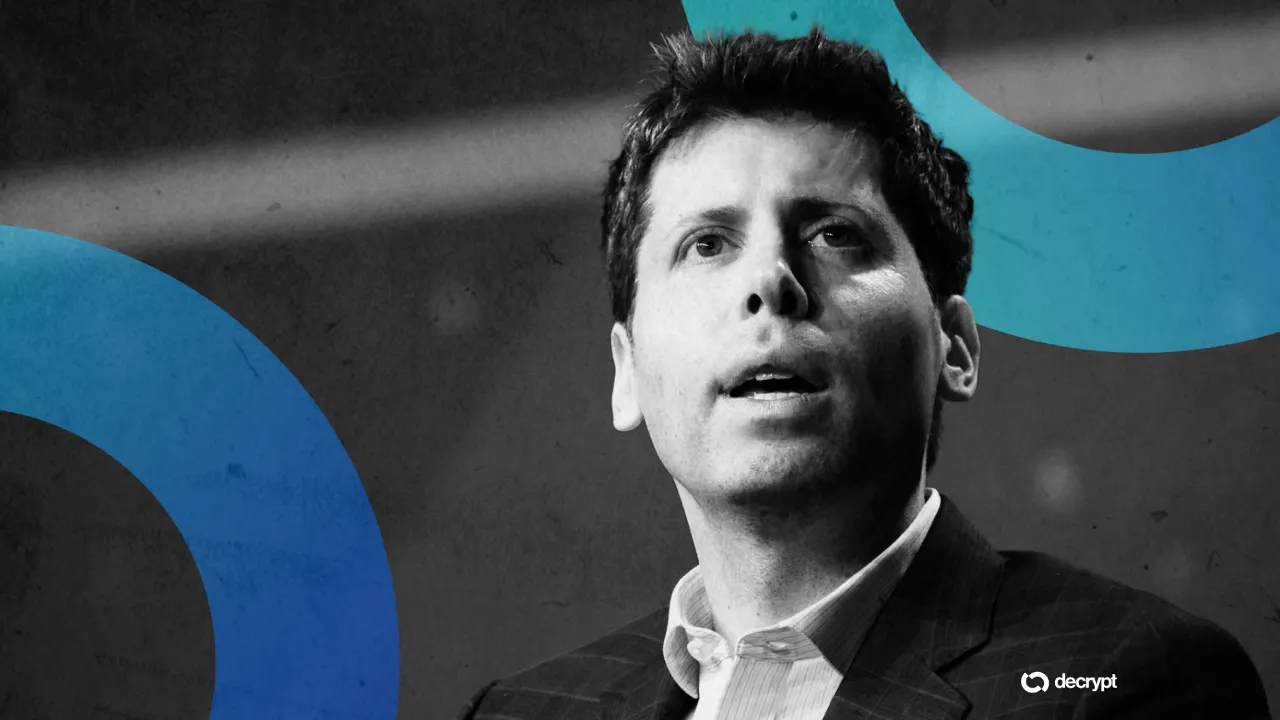
OpenAI is confronting significant financial and operational scrutiny following reports that the company has missed key internal targets for ChatGPT’s user growth and revenue. Chief Financial Officer Sarah Friar has privately expressed concerns that the company’s substantial investment in computing power might outstrip its revenue generation capabilities. This situation has led to increased questioning from board members regarding the aggressive data-center spending strategy championed by CEO Sam Altman, particularly in light of slowing adoption rates for generative AI tools.
Key Takeaways
- OpenAI reportedly missed internal targets for both weekly active users and annual revenue for ChatGPT.
- CFO Sarah Friar has warned of potential difficulties in funding future computing contracts due to revenue shortfalls.
- The company has committed to approximately $600 billion in future data-center spending.
- Experts are divided on whether these setbacks indicate a broader AI market correction or a temporary industry recalibration.
- Anthropic has reportedly surpassed OpenAI in valuation on the Forge Global trading platform.
The current pressures facing OpenAI are viewed by some industry observers as an internal sector adjustment rather than a harbinger of a wider economic downturn. Alice Li, Investment Partner at Foresight Ventures, suggests that the inherent need for human judgment, collaboration, and contextual understanding, which AI currently cannot fully replicate, will continue to be a crucial factor in the technology’s integration.
OpenAI’s Compute Strategy Under the Microscope
OpenAI’s ambitious strategy, centered on the belief that compute scarcity is the primary bottleneck for AI advancement, has resulted in commitments for roughly $600 billion in future data-center expenditures. This aggressive approach, however, is now facing internal challenges as revenue growth fails to align with projections. Friar’s private concerns highlight the delicate balance between scaling infrastructure and generating sufficient income to sustain these commitments. The board’s increased scrutiny of these data-center deals underscores a growing concern about the long-term financial viability of Altman’s high-compute-demand thesis.
Adding to the financial narrative, Anthropic, a competitor, has reportedly overtaken OpenAI in valuation on the Forge Global platform, trading at approximately $1 trillion compared to OpenAI’s $880 billion. This shift suggests a potential re-evaluation of market leadership and operational efficiency within the generative AI space.
Markus Levin, co-founder of DePIN network XYO, cautions against interpreting these figures as indicators of an imminent market crash. He points to data showing that a significant majority of the working-age population has yet to engage with generative AI tools, and the number of paying AI subscribers remains relatively low globally. Levin argues that the current disruptions are more reflective of sector-specific overhiring and cost-correction cycles within the tech industry, rather than a widespread economic contraction caused by automation.
Li echoes this sentiment, suggesting that current market valuations may be ahead of fundamental performance, necessitating a period of recalibration. She believes that if AI capabilities continue to advance as anticipated, the underlying fundamentals will eventually catch up to these elevated expectations.
Pavel Bezhin, CFO at Napoleon IT, draws parallels to historical technological cycles, emphasizing that while transformative technologies have often preceded economic challenges, they have rarely been the direct cause. He cites the dot-com bubble as a lesson, where the failure to adapt economic models, rather than the technology itself, led to collapse. Bezhin believes that lessons learned from past cycles, particularly the dot-com era, should prevent discussions of systemic collapse from becoming a reality if financial institutions adapt effectively.
OpenAI’s potential Initial Public Offering (IPO) is a significant factor in these discussions. While Altman is reportedly pushing for a public listing by the end of the year, concerns have been raised about the company’s internal controls and readiness for the stringent reporting standards of public markets. Prediction markets suggest a greater likelihood of Anthropic completing its IPO before OpenAI.
Information compiled from materials : decrypt.co