

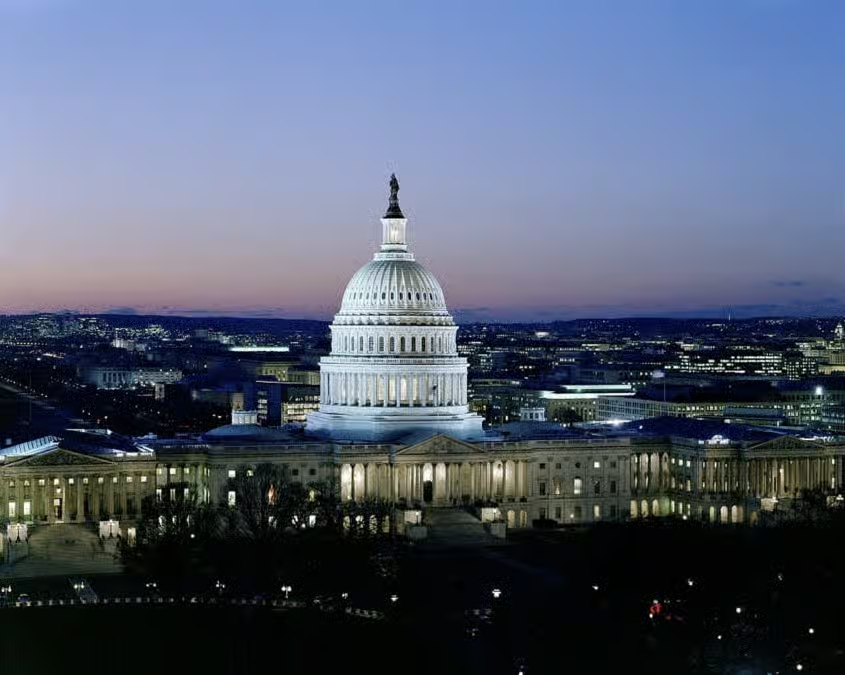
The cryptocurrency industry is experiencing a mix of celebration and concern following a significant advancement in Senate legislative efforts. The Senate Banking Committee has voted to advance a comprehensive crypto market structure bill, a move some industry leaders are hailing as a “decisive turning point,” while others express reservations about concessions made to secure bipartisan support, particularly concerning decentralized finance (DeFi) protections.
Key Takeaways
- The Senate Banking Committee voted 15-9 to advance its version of a crypto market structure bill.
- Bipartisan support was bolstered by Democratic Senators who advocated for stricter ethics rules regarding federal officials’ crypto use.
- Concerns have been raised regarding a potential removal of non-custodial developer protections from a section addressing DeFi regulations.
- Industry figures like the CEO of the Crypto Council for Innovation have labeled the vote a “historic” and “defining moment.”
- Banking industry groups remain concerned about stablecoin reward provisions and advocate for stricter regulations to prevent deposit flight.
The Regulatory Landscape: Ethics and DeFi Under Scrutiny
The committee vote, initially anticipated to be along strict party lines, saw support from key Democratic negotiators, Senators Ruben Gallego and Angela Alsobrooks. Their approval, however, was contingent on resolving issues related to law enforcement, financial crimes, and importantly, the ethical use of digital assets by federal officials and their families. Senator Gallego explicitly stated his future opposition if the ethics provisions, intended to curb specific financial transactions involving digital assets by high-ranking officials, are not adequately addressed before a full Senate vote.
Senator Alsobrooks echoed the sentiment, framing her vote as an endorsement of continued good-faith negotiations rather than a definitive approval of the CLARITY Act’s final passage. Discussions around ethics have been intense, with participants noting positive, albeit last-minute, conversations aimed at resolving these concerns. The Digital Chamber noted ongoing dialogues between negotiators and the White House Crypto Council.
Beyond ethics, the Blockchain Regulatory Certainty Act (BRCA) has been a focal point, aiming to clarify that non-custodial developers are not classified as money transmitters. While industry advocates acknowledge the bill as a step forward, a significant concession reportedly made by the Senate Banking Committee to gain Democratic votes involves the removal of non-custodial developer protections from Section 301, which is tasked with establishing Bank Secrecy Act-type rules for DeFi. This alteration has drawn criticism from groups focused on DeFi development.
Setting a Regulatory Precedent
The recent Senate Banking Committee vote on crypto legislation could establish significant regulatory precedents for the digital asset sector. The successful navigation of ethical concerns tied to federal officials’ involvement with cryptocurrencies, if codified, could set a global standard for transparency and conflict-of-interest mitigation in emerging financial technologies. This development is particularly relevant as jurisdictions worldwide, such as the European Union with its Markets in Financial Instruments Regulation (MiCA), are actively shaping their crypto regulatory frameworks.
Furthermore, the debate surrounding the treatment of non-custodial developers within DeFi, and the potential stripping of their protections, raises critical questions about the future of decentralized innovation versus regulatory oversight. If this concession becomes part of the final legislation, it may signal a more cautious approach to DeFi regulation in the United States, potentially impacting how similar frameworks are developed internationally. The ongoing tension between the crypto industry’s push for innovation and traditional financial institutions’ demands for consumer protection, exemplified by the stablecoin rewards debate, also highlights the complex balancing act regulators face. The resolution of these issues will likely influence future legislative efforts and enforcement actions by bodies like the Securities and Exchange Commission (SEC) globally.
Industry leaders, including Ji Kim, CEO of the Crypto Council for Innovation, have described the vote as a “historic day” and a “defining moment,” emphasizing the potential for durable, bipartisan digital asset policy. Coinbase CEO Brian Armstrong noted improvements in areas such as stablecoin rewards, tokenization, DeFi, and the Commodity Futures Trading Commission (CFTC) authority compared to earlier legislative attempts. However, traditional banking groups have expressed ongoing reservations, particularly concerning stablecoin rewards, warning of potential disruptions to bank deposits and local lending activities, and have vowed to continue advocating for enhanced safeguards.
Original article : www.theblock.co