

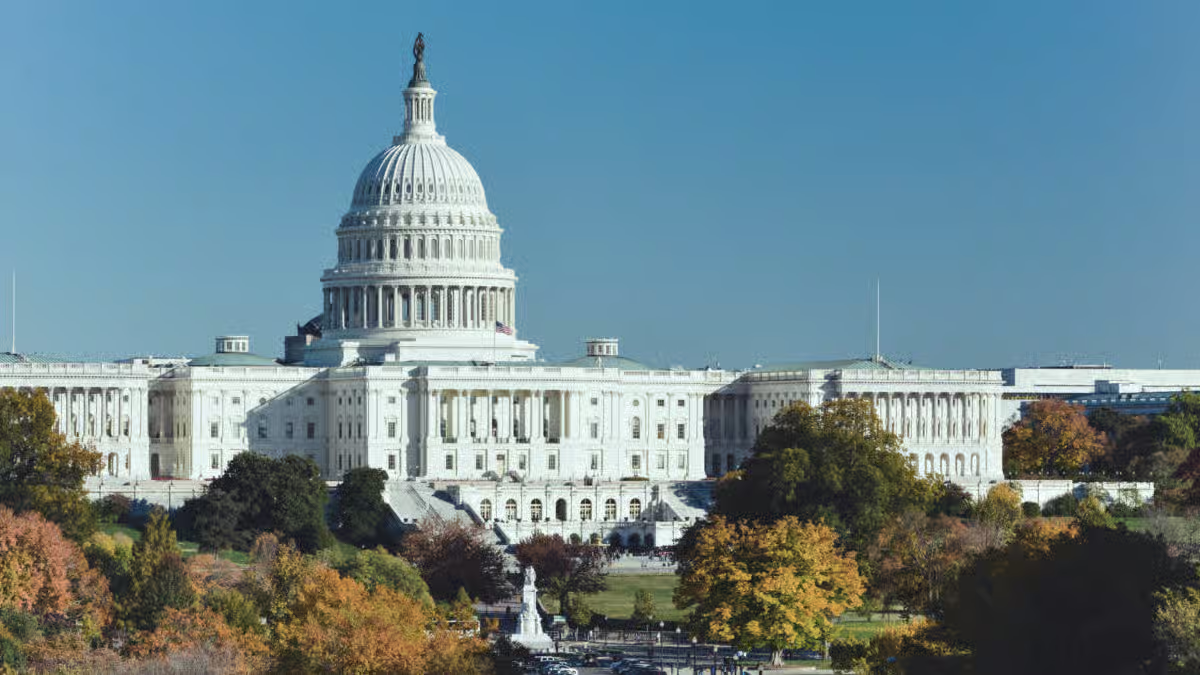
The recent advancement of the Clarity Act through the Senate Banking Committee has generated optimism within the digital asset sector, yet analysts caution that significant legislative hurdles remain before it can be enacted into law. While the committee’s 15-9 vote to advance its version of the crypto market structure bill marks progress, the path to federal regulation is complex and contingent on broader political consensus.
Key Takeaways
- The Clarity Act has advanced through the Senate Banking Committee, increasing its legislative momentum.
- Analysts suggest the bill still requires substantial bipartisan support, particularly from Democrats, to overcome potential filibusters.
- Key sticking points, including stablecoin regulations and conflict-of-interest provisions, continue to be debated.
- The timeline for passing the legislation before the 2026 midterm elections is a significant factor.
TD Cowen analysts have marginally increased their probability assessment for the bill’s passage to 40%, up from an earlier estimate of one-in-three, citing indications of Democratic interest in supporting the legislation. However, they acknowledge that substantial obstacles persist, and the recent committee hearing highlighted the ongoing challenges in surmounting them.
The Clarity Act, designed to establish a federal regulatory framework for the cryptocurrency industry, has been a subject of prolonged deliberation involving the White House, lawmakers, industry advocates, and influential banking lobbyists. Discussions have centered on critical issues such as stablecoin remuneration and concerns regarding conflicts of interest.
Benchmark analyst Mark Palmer emphasized that for the legislation to be codified, it will need to be integrated with a parallel market structure bill advanced by the Senate Agriculture Committee. He noted that securing the 60 votes necessary to prevent a filibuster on the Senate floor will necessitate considerably more Democratic backing than was evident in the recent committee vote. The involvement of just two Democratic senators in the vote underscores this requirement.
The potential impact of political timelines, specifically the approaching 2026 midterm elections, on the bill’s passage is also a considerable factor. Prior to the Senate Banking Committee vote, assessments of the Clarity Act’s likelihood of reaching the President’s desk varied significantly, with some projecting odds below 50% while others expressed confidence in its passage within the summer legislative session.
A key area of contention remains the potential inclusion of an amendment that would apply conflict-of-interest standards to the President and other high-ranking federal officials, including their families, concerning cryptocurrency transactions. TD Cowen suggests that Republican opposition to a vote on such an amendment could impede progress, particularly given the upcoming election cycle and the desire to avoid perceptions of endorsing specific familial involvement in the digital asset space.
The stance of Senator Ruben Gallego, who has indicated he would vote against the bill on the Senate floor if the ethics provisions are not adequately addressed, highlights the sensitivity and complexity of these conflict-of-interest discussions. This positions the resolution of these ethical considerations as a critical determinant for the bill’s ultimate legislative success.
Potential Regulatory Precedent
The protracted debate and eventual committee advancement of the Clarity Act, particularly with its focus on market structure and conflict-of-interest provisions, could set a significant regulatory precedent for the digital asset industry globally. Should the bill pass, it would represent a comprehensive federal attempt to delineate the regulatory authority over various digital assets and market participants, potentially influencing how other jurisdictions, such as those operating under frameworks like Europe’s MiCA (Markets in Crypto-Assets), approach comprehensive digital asset legislation. The inclusion and resolution of conflict-of-interest clauses, especially concerning public officials, could also introduce novel compliance requirements that extend beyond traditional financial regulations, establishing a new benchmark for integrity and transparency in the evolving crypto landscape.
Information compiled from materials : www.theblock.co