


Firefox Reimagines User Control with Project Nova, Prioritizing Privacy Amidst AI Integration
In a significant move that acknowledges growing user concerns about artificial intelligence integration, Mozilla has unveiled “Project Nova,” a comprehensive redesign of the Firefox browser set to roll out later this year. This initiative introduces a cleaner interface, a revived compact mode, and a highly anticipated toggle allowing users to disable all AI features with a single setting. This development signals a shift in the browser landscape, moving away from aggressive AI adoption towards enhanced user agency and privacy.
This strategic pivot addresses a burgeoning trend where users are increasingly seeking more control over their digital environments. As AI capabilities become more prevalent in software, the demand for transparent and opt-in features, rather than mandatory integrations, is on the rise. Project Nova’s core principle appears to be empowering users with clear choices, a stark contrast to some competitors who have faced criticism for less transparent AI implementations.
Key Takeaways
- Mozilla’s Project Nova redesign includes a straightforward setting to completely disable AI functionalities within Firefox.
- The update features a modernized interface with rounded tabs, a new color palette, and the return of compact mode.
- This move by Mozilla comes amidst increasing user scrutiny of AI integration in browsers, including recent controversies surrounding Chrome’s Gemini Nano data handling.
- Brave has also tapped into this market with Brave Origin, a paid version that completely removes AI, rewards, wallet features, and telemetry.
- Firefox is positioning its emphasis on user control and privacy as a key differentiator in the competitive browser market.
Project Nova’s announcement on May 21 detailed a visual overhaul designed to be “cleaner, warmer, and faster.” Beyond the aesthetic enhancements, the most impactful feature for a segment of the user base is the introduction of easily accessible privacy controls. Mozilla has committed to a plain-language approach in its settings, ensuring that users can readily manage AI features without navigating complex menus or encountering “dark patterns.” This direct “off button” for AI functionalities underscores a commitment to user autonomy.
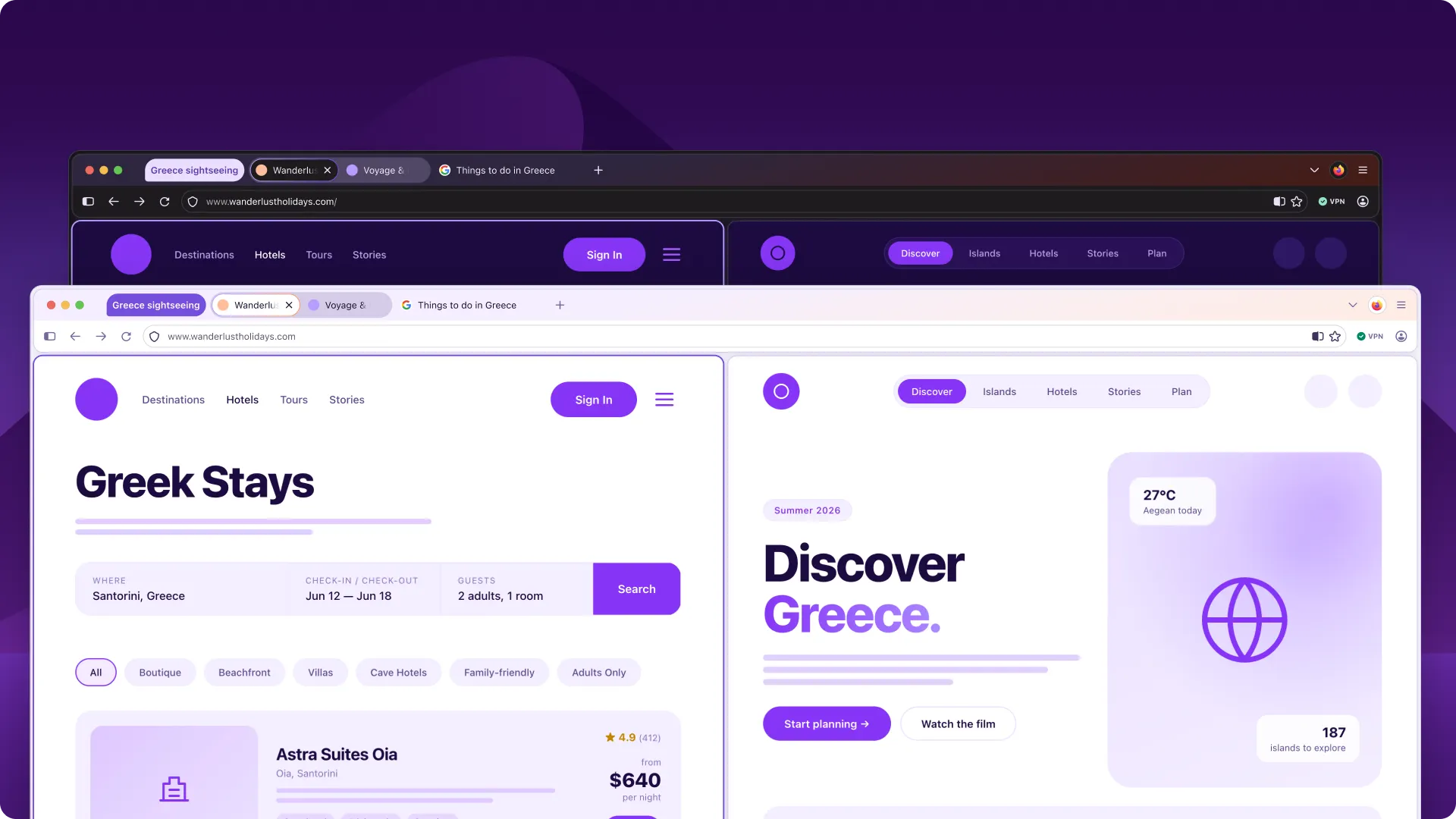
This approach contrasts sharply with the recent actions of other major browsers. Google Chrome’s undisclosed changes regarding Gemini Nano data handling and the quiet installation of large AI models have fueled a backlash among privacy-conscious users. Simultaneously, browsers like Opera Neon and Comet have been aggressively promoting AI-first experiences, aiming to automate browsing tasks and integrate conversational AI. Firefox’s strategy appears to be a direct response to this trend, offering an alternative that prioritizes user choice over feature saturation.
The market validation for a privacy-focused browser experience is evident. Brave’s launch of Brave Origin, a premium version that meticulously removes all AI, rewards programs, wallet functionalities, and telemetry, demonstrates a clear demand for a “bloat-free” browsing experience. The success of community-driven tutorials on manually stripping down browsers further highlights this user preference. By packaging these functionalities into a paid product, Brave acknowledged and catered to this significant user desire for a streamlined and private web experience.
While Firefox is not eliminating AI features entirely, offering options like its built-in VPN and summarization tools, Project Nova’s emphasis on a user-controlled “off switch” positions it as a potentially disruptive force. Mozilla’s assertion that “Firefox is still the only browser built for people, not platforms,” directly challenges the data-centric models of larger competitors. This framing suggests a strategic alignment with users who are increasingly wary of how their data is utilized by tech giants.
Given Firefox’s historical market share challenges, this bold stance on user control could be a critical factor in regaining relevance. By making the explicit choice to disable AI features readily available and prominent, Firefox is not just updating its interface; it is potentially redefining the value proposition of a web browser in an era dominated by AI integration. This approach offers an honest and transparent alternative, potentially resonating with a broad audience seeking more control over their online interactions.
Long-Term Technological Impact: Redefining Browser Architecture and User Trust
Project Nova’s emphasis on user-controlled AI deactivation and Brave’s success with a stripped-down browser build portend significant shifts in how browsers are designed and perceived. We are likely to see a bifurcation in browser development: one path driven by AI feature integration and data utilization, and another centered on modularity, user privacy, and explicit consent. This could spur innovation in Layer 2 solutions for browser functionalities, allowing users to selectively add or remove features and AI modules without compromising core performance or privacy. Blockchain technology may also play a role in decentralized identity and data management, enabling users to truly own and control their online presence, further enhancing privacy. The long-term impact could be a more decentralized and user-centric web ecosystem, where transparency and control are paramount, challenging the current dominance of centralized tech platforms and fostering a new era of trust in digital tools.
Based on materials from : decrypt.co