

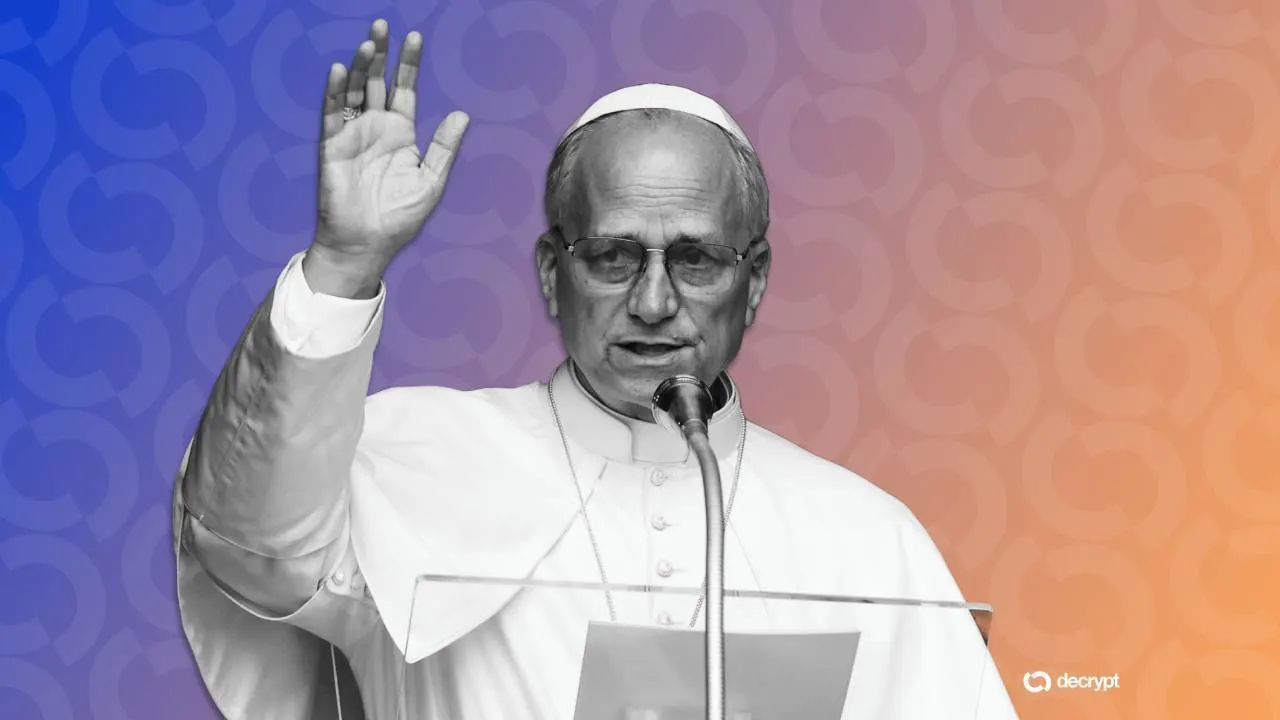
The Vatican Establishes Ethical Framework for AI, Emphasizing Common Goods and Decentralized Governance
Pope Leo XIV has formally addressed the profound implications of artificial intelligence with his latest encyclical, “Magnifica Humanitas.” This landmark 245-paragraph document, the first papal encyclical dedicated solely to AI, sets forth a robust ethical framework, classifying algorithms, data, and digital platforms as essential “common goods.” The encyclical argues against their monopolization by private entities and stresses that technology inherently carries the values and biases of its creators, asserting that “technology is never neutral.” The release was accompanied by insights from Anthropic co-founder Christopher Olah, who underscored the critical need for societal oversight of AI development.
Key Takeaways
- The encyclical “Magnifica Humanitas” is the first papal document exclusively focused on artificial intelligence.
- It posits that AI algorithms, data, and digital platforms should be considered common goods, not subject to private monopolies.
- The document emphasizes that AI systems reflect the biases and values of their developers.
- Anthropic co-founder Christopher Olah highlighted the immense ethical challenge posed by potential large-scale AI-driven job displacement.
- The Vatican is advocating for transparent algorithms, community audits, and decentralized governance of AI systems.
“Magnifica Humanitas,” released on May 25th, builds upon the foundational principles of Catholic social teaching, drawing a parallel to Pope Leo XIII’s 1891 encyclical “Rerum Novarum” which established modern labor rights. Pope Leo XIV frames AI as a defining moral challenge of his pontificate, comparable in its societal impact to the Industrial Revolution. The encyclical broadly addresses critical AI concerns, including its use in warfare, potential for dehumanization, technocratic overreach, data colonialism, online child safety, mass unemployment, disinformation, autonomous weapons, and transhumanist ideologies. The core argument posits that algorithms are inherently shaped by the intentions and economic drivers of their creators, and that any pretense of neutrality serves only to mask these embedded biases.
“Data is the product of many contributors and should not be treated as something to be sold off or entrusted to a select few,” the Pope writes, extending the principle of natural resources as common goods to the digital realm. This principle is further applied through the concept of subsidiarity, advocating for AI governance decisions to be made at the most local and community-oriented levels possible. The encyclical calls not only for top-down regulation but also for transparent algorithms, independent community audits, and genuine legal recourse for individuals impacted by automated systems, such as those affecting credit scores, job applications, or legal risk assessments. Without such distributed oversight, the document warns, AI governance risks becoming a form of digital authoritarianism.
Furthermore, “Magnifica Humanitas” critically examines transhumanism, the pursuit of overcoming human limitations through technology. The encyclical counters that human finitude is essential for fostering empathy, moral judgment, and genuine care. AI systems designed to eliminate these aspects, it argues, do not improve humanity but rather create systems that efficiently evaluate and marginalize the vulnerable. The Pope is careful to distinguish AI from human consciousness, stating that AI systems “do not possess a body, do not feel joy or pain” and lack the lived experience necessary for true comprehension. This distinction is crucial, as the encyclical warns against delegating sensitive decisions to systems that lack “compassion, mercy, forgiveness,” and against accepting automated outputs as inherently neutral simply due to their machine origin.
The presence of Christopher Olah, co-founder of Anthropic and lead of its interpretability research, at the encyclical’s launch alongside Vatican officials, drew significant attention. Olah openly acknowledged that major AI labs “operate inside a set of incentives and constraints that can sometimes conflict with doing the right thing.” He stressed the necessity of external scrutiny from governments, religious institutions, and civil society. Olah specifically identified AI-driven labor displacement as a near-term risk that, if realized at scale, would constitute “a moral imperative of historic proportions.” This aligns with Pope Leo XIV’s earlier assertion that “a more moral AI is not enough” if its underlying morality is dictated solely by those controlling data and computational resources. The Vatican has also established a new internal AI commission, drawing from seven departments, to coordinate its AI governance efforts.
Long-Term Technological Impact Analysis
The Vatican’s comprehensive stance on artificial intelligence, particularly its emphasis on treating data and algorithms as common goods, carries significant implications for the future of blockchain and Web3 development. The encyclical’s call for decentralized governance and community-driven oversight resonates strongly with the core ethos of distributed ledger technologies. By advocating for transparent algorithms and mechanisms for independent audits, the document implicitly supports the development of open-source AI models and verifiable computation methods that are foundational to many blockchain applications.
Furthermore, the classification of data as a shared human resource could accelerate the adoption of decentralized identity solutions and data ownership protocols, pushing back against the centralized data silos currently dominated by Big Tech. This perspective encourages innovation in Layer 2 solutions and interoperability frameworks that can facilitate secure and ethical data sharing without compromising user privacy or control. The critique of AI opacity and the call for accountability directly align with the blockchain’s inherent transparency and immutability, suggesting a potential future where AI development is increasingly integrated with decentralized infrastructure to ensure trust and fairness. The Vatican’s ethical framework provides a powerful moral imperative for technologists and developers to consider the societal impact of their innovations, potentially guiding the trajectory of AI integration within the Web3 ecosystem towards more equitable and human-centric outcomes.
Details can be found on the website : decrypt.co