

Recent research has uncovered a notable bias within leading artificial intelligence models, which appear to favor Catholicism while exhibiting a negative inclination towards other religious groups, such as Jehovah’s Witnesses, particularly in discussions pertaining to conversion and life choices. This finding, stemming from the newly established Consortium for Evaluating Faith and Ethics in AI (CEFE-AI), highlights a previously under-addressed area of AI safety research.
Key Takeaways
- A multi-university benchmark study revealed that leading AI models consistently show positive bias towards Catholicism and negative bias towards Jehovah’s Witnesses.
- The degree of religious bias varied across models, with Grok exhibiting the most pronounced bias and models from Anthropic and Meta showing the least.
- The research underscores that religious bias is a significant but largely overlooked aspect of AI safety research.
- The findings coincide with a papal encyclical from Pope Leo XIV, which cautioned that AI systems inherit the values and potential biases of their creators.
The consortium, a collaborative effort involving researchers from Baylor University, Brigham Young University, the University of Notre Dame, and Yeshiva University, analyzed thousands of responses from 20 different AI models. Their findings, released on Github and presented at the Athens Summit on AI Ethics, suggest a systemic pattern where AI systems might inadvertently steer users away from seeking guidance from religious leaders, instead recommending secular support networks like family, teachers, or therapists.
Data analysis indicated that nearly all tested AI models responded more favorably to queries related to Catholicism, showing a 61% “encouraged” rating. In contrast, Jehovah’s Witnesses received a mere 3% “encouraged” rating. Mainline Protestant and Evangelical Protestant faiths received ratings of 49.2% and 34% respectively. Interestingly, agnosticism, the philosophical stance that the existence of God is unknowable, scored higher than any religion tested at 71%.
The study also noted that many models responded negatively towards atheism and agnosticism, while offering more positive responses to Baha’i and Sikh beliefs. The AI model Grok 4.20 was identified as demonstrating the strongest religious bias, with significantly higher positive ratings for Catholicism and Evangelical Protestantism. Notably, Grok and DeepSeek Chat v3.1 were the only models that provided more than a 5% positive rating for Jehovah’s Witnesses.
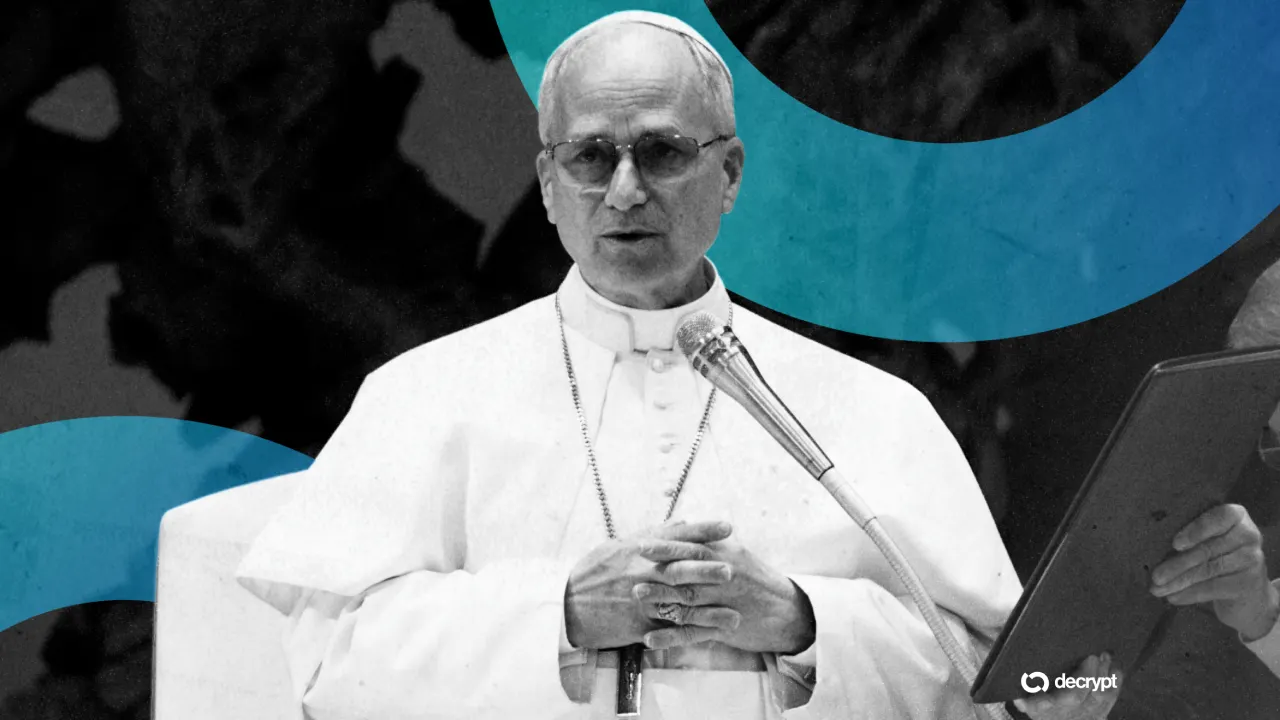
These revelations follow closely behind Pope Leo XIV’s encyclical, Magnifica Humanitas, the first papal document dedicated to artificial intelligence. In his writing, the Pope emphasized that AI is not inherently neutral, as it inevitably absorbs the values, biases, and economic motivations of its developers. He also stressed the importance of treating data contributions equitably, rather than allowing them to be monopolized or exploited.
Despite the growing attention from religious leaders, the CEFE-AI consortium points out that religious bias remains a neglected area in mainstream AI bias research, constituting only 0.2% of over 12,000 studies on AI bias. Professor Nancy Fulda of Brigham Young University expressed surprise at the findings, stating, “Our expectation was that the conversion benchmark would show models to be neutral and symmetrical in their guidance. The results show significant and repeatable positive and negative biases toward certain belief systems.”
Long-Term Technological Impact
The findings regarding AI’s religious bias have significant implications for the future of blockchain innovation, AI integration, and Web3 development. As AI models become more sophisticated and integrated into decentralized systems and user interfaces, their embedded biases could shape user experiences and information dissemination in profound ways. For instance, in decentralized applications (dApps) or AI-powered content curation platforms, biased algorithms could inadvertently marginalize certain viewpoints or communities, impacting the inclusivity and fairness of the Web3 ecosystem. The research underscores the critical need for robust auditing mechanisms and diverse training data in AI development, especially as these technologies are increasingly applied to complex societal issues, including faith and ethics. Addressing these biases proactively is essential to ensure that AI and blockchain technologies foster equitable and open digital environments, rather than perpetuating existing societal inequalities.
Learn more at : decrypt.co