

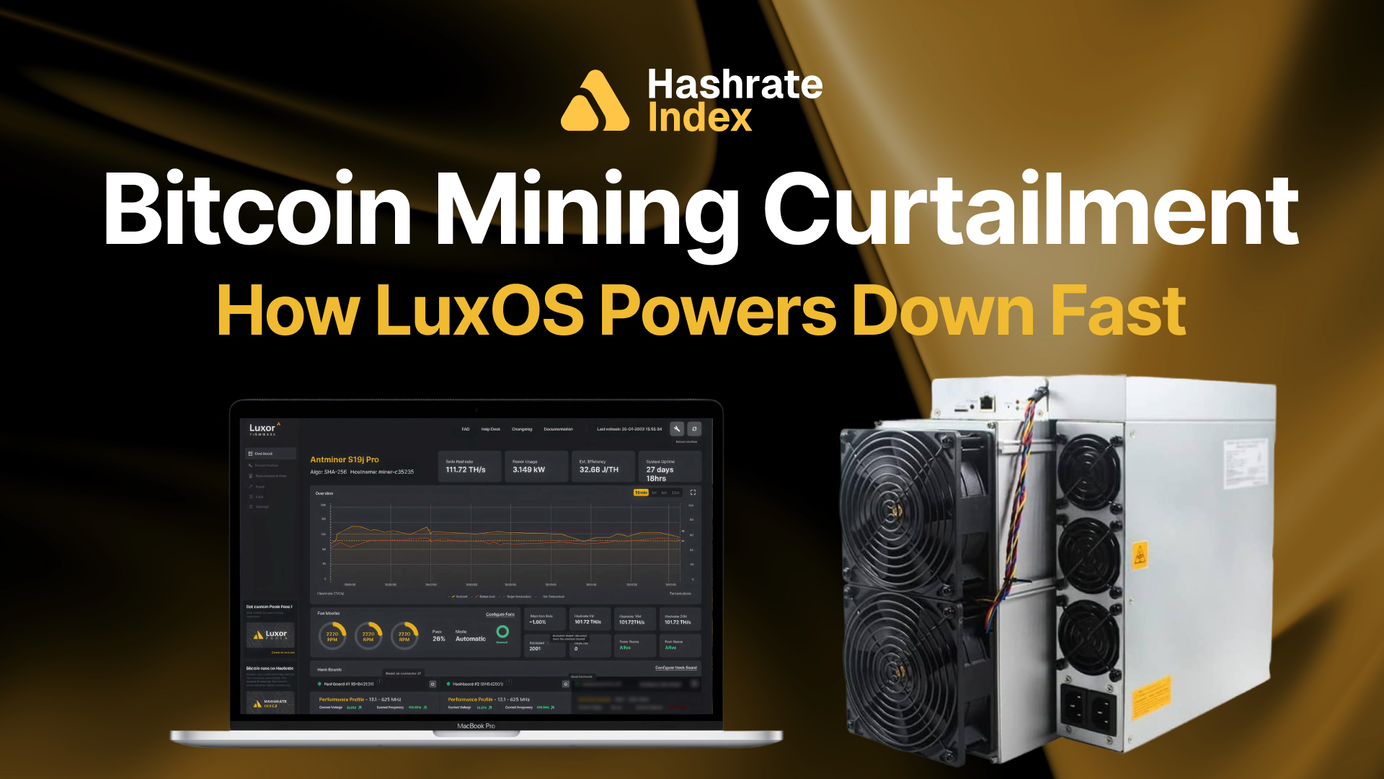
The integration of Bitcoin mining operations with electrical grid infrastructure is evolving, with a focus on demand-response programs and sophisticated load management. This evolution centers on the concept of curtailment, the controlled reduction or pausing of a mining load in response to external signals such as grid operator requests or fluctuating energy prices. Bitcoin mining’s inherent characteristics—its interruptible nature, geographical flexibility, and rapid response capability—position it as a highly controllable and valuable asset for grid stability.
Key Takeaways
- Curtailment enables mining operations to generate revenue by responding to grid signals or market price fluctuations through controlled load reduction.
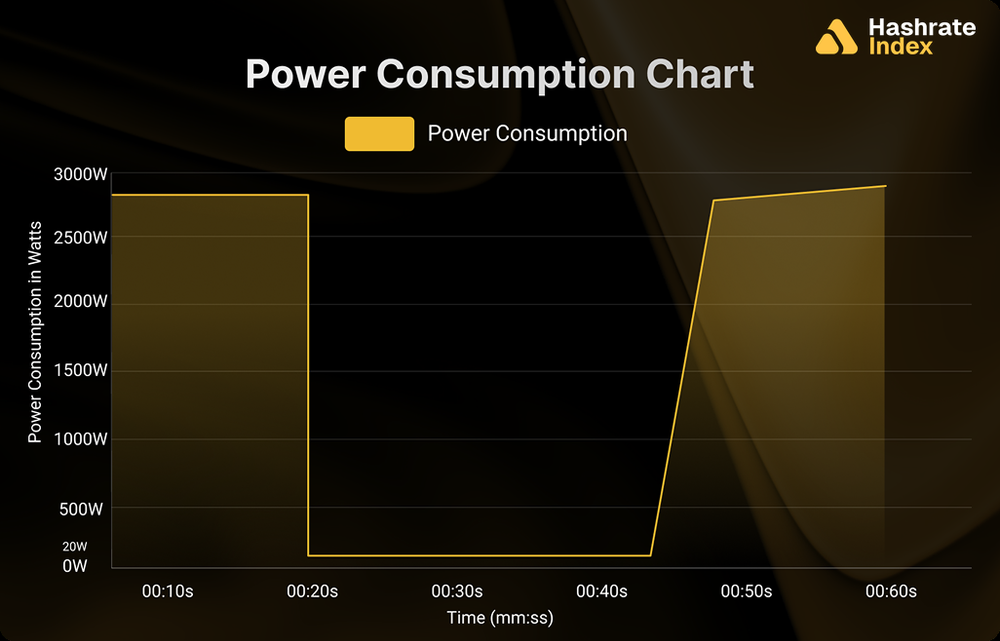
- Advanced firmware solutions, like LuxOS, can reduce a miner’s power consumption to approximately 25 watts in under five seconds and restore full operation in under ten seconds.
- Gradual power restoration, facilitated by customizable wakeup steps, mitigates thermal and electrical stress on mining hardware.
- Underclocking a portion of the mining fleet offers an alternative to complete shutdown, allowing for load shedding with a minimized reduction in hashrate.
- Precise power control at the watt level is foundational for implementing demand-response strategies and interval energy trading, often referred to as “Intelligent Mining.”
The ability to rapidly shed load in response to grid needs is becoming a critical revenue stream for grid-tied mining operations. This capability transforms downtime into an income-generating service, particularly within demand-response programs managed by entities like ERCOT, MISO, and NYISO. The speed and efficiency with which a mining facility can power down and subsequently power back up directly correlates to its value to the grid operator.
LuxOS firmware is engineered for rapid curtailment, capable of reducing a miner’s power draw to roughly 25 watts in less than five seconds. The restoration process is equally swift, returning the equipment to full operational capacity in under ten seconds. To minimize hardware strain during these cycles, the “wakeup” process is managed through customizable, incremental steps rather than an abrupt surge of power. During curtailment periods, fan speeds are throttled to 20%, indicating a true idle state rather than a mere pause.
The strategic implementation of curtailment offers several advantages for mining entities:
- Compliance and Revenue: Curtailment is not only a compliance requirement for grid participation but also a source of revenue through demand-response payments and avoidance of peak charges, such as ERCOT’s 4CP transmission costs.
- Load Shedding Efficiency: Operations can shed load either by powering down specific machines or by underclocking the entire fleet. Underclocking often presents a more favorable trade-off, allowing for significant power reduction with a proportionally smaller loss in hashrate.
- Operational Continuity: Features like “Power Targeting” enable miners to operate at a low, idle wattage during curtailment windows, avoiding a full shutdown and eliminating the “cold-start tax” associated with restarting from a powered-off state.
- Enabling Intelligent Mining: Precise watt-level control is the bedrock of advanced load management strategies, including demand response, interval energy trading, and other sophisticated optimization techniques.
Configuring curtailment within LuxOS is managed through its “Power Targeting” function, allowing operators to specify an exact wattage draw that the firmware will maintain. These targets can be set and adjusted via the Commander interface, Web UI, or API commands, facilitating integration with automated dispatch systems. When combined with Advanced Thermal Management (ATM), miners can self-regulate their temperature during curtailment events. For formal demand-response programs or energy markets, the economic implications and enrollment procedures require careful consideration and consultation with specialized teams.
Impact on Network Security and Miner ROI
The development and adoption of advanced curtailment technologies like LuxOS have significant implications for both the economic viability of mining operations and the overall security of the Bitcoin network. For industrial-scale mining farms, the ability to monetize grid flexibility through demand-response programs represents a substantial enhancement to their return on investment (ROI). By generating revenue streams beyond block rewards and transaction fees, these farms can offset operational costs, including electricity and hardware depreciation, more effectively. This financial predictability can encourage further investment in state-of-the-art Application-Specific Integrated Circuit (ASIC) miners, which generally offer higher energy efficiency and thus better profitability, especially when coupled with optimized firmware. The rapid response capabilities allow these large operations to act as a grid stabilization resource, potentially leading to more favorable long-term power purchase agreements.
Conversely, small-scale or home miners may find it more challenging to directly participate in the complex energy markets and demand-response programs that require sophisticated automation and large, consistent load capacities. While the firmware itself offers efficiency gains for any user, the economic benefits derived from curtailment are primarily accessible to entities with the infrastructure and operational capacity to engage with grid operators. This disparity could exacerbate the trend of mining consolidation, favoring larger industrial players. However, any improvements in miner efficiency that reduce energy consumption indirectly benefit the entire network by lowering the overall energy footprint and potentially increasing the profitability of mining across the board. A more profitable mining ecosystem, regardless of scale, can incentivize more participants to secure the network, contributing to its decentralization and robustness. The increased hash rate resulting from investment in more efficient hardware ultimately enhances Bitcoin’s security against 51% attacks.
How fast can a Bitcoin miner curtail? With LuxOS, a miner can reach approximately 25 watts in under five seconds and restore full power in under ten seconds.
Is curtailment the same as turning miners off? Curtailment can involve partial load reduction, such as underclocking, and allows for reversible operation without the strain of a cold restart after a full shutdown.
Does frequent curtailment damage miners? Firmware features like stepped wakeup and the preservation of internal heat are designed to minimize the stress associated with repeated power cycling.
Which grids support mining demand response? Programs are available across grids such as ERCOT, MISO, and NYISO, with specific program details varying by market.
Curtailment signifies a critical intersection between Bitcoin mining and energy grid management. Enhanced speed and efficiency in shedding and restoring electrical load directly translate to greater monetization potential within the energy market and increased value to the power grid. LuxOS firmware provides operators with granular control over this capability, enabling rapid load adjustments.
To leverage your mining fleet’s flexibility for energy market participation, consider consulting with Luxor’s energy solutions team regarding curtailment and demand-response strategies.
For additional information on Luxor’s comprehensive Bitcoin mining services, please contact [email protected] or visit the Luxor website.
About Luxor Technology Corporation
Luxor Technology Corporation offers a suite of hardware, software, and financial services essential to the global compute and energy sectors. Its offerings include Bitcoin Mining Pools, ASIC Firmware, Hardware trading, Hashrate Derivatives, Energy services, Miner Management software (Commander), and the Bitcoin mining data platform, Hashrate Index.
Original article : hashrateindex.com