


Bipartisan Senate Duo Calls for Immediate AI Export Halt to Southeast Asia
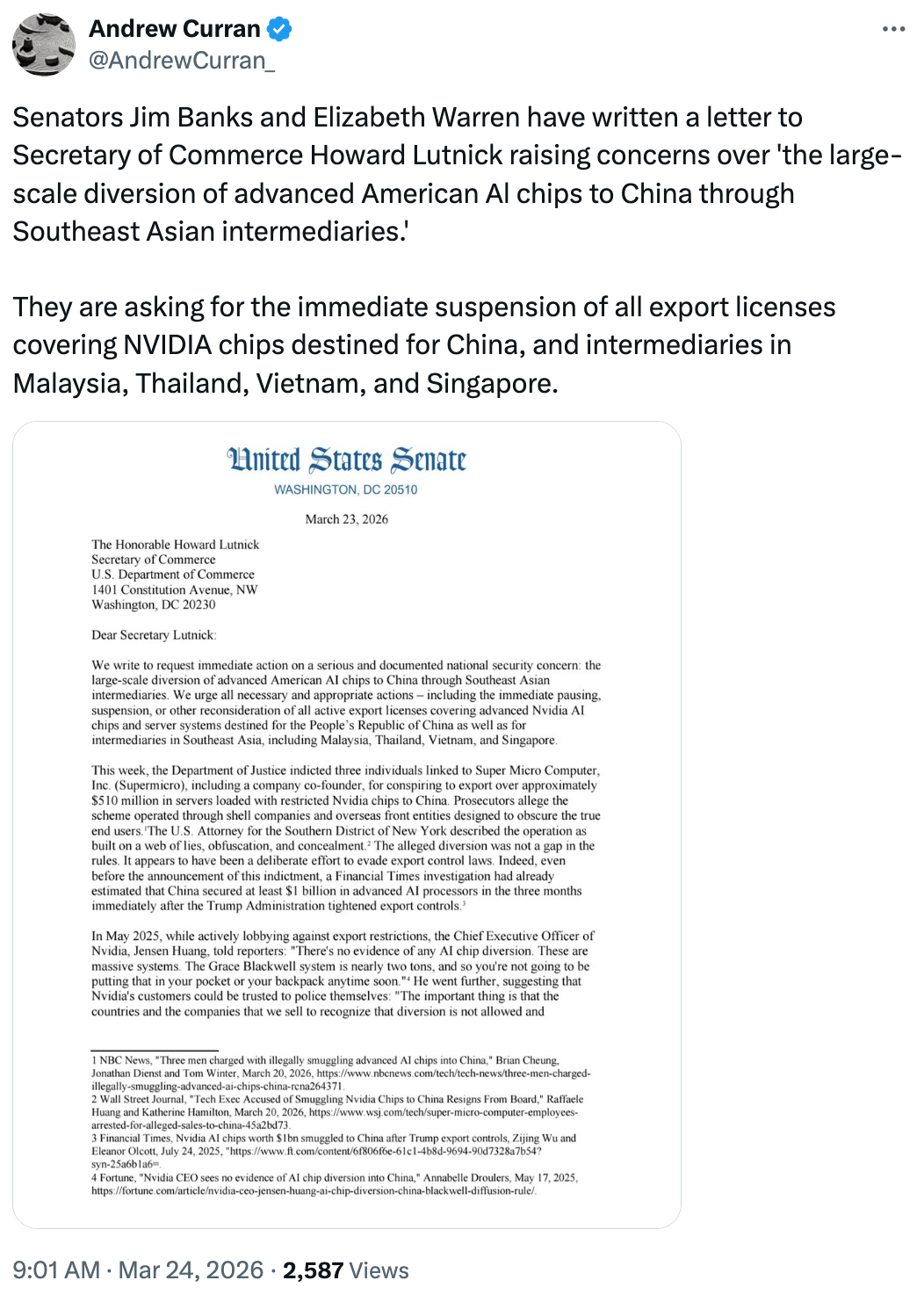
A bipartisan push from Senators Elizabeth Warren (D-MA) and Jim Banks (R-IN) is urging the Secretary of Commerce to immediately suspend export licenses for advanced technology manufacturers targeting certain Asian nations. The senators are concerned that China could be gaining access to cutting-edge AI technologies through these channels.
Key Takeaways
- Senators Warren and Banks have formally requested a complete freeze on AI chip and server exports to “intermediaries” in Southeast Asia (including Malaysia, Thailand, Vietnam, and Singapore).
- The request stems from evidence suggesting China is illicitly acquiring advanced AI hardware.
- The senators aim to prevent the diversion of U.S.-developed AI chips to China until more robust control measures are established.
- This action follows recent indictments against Super Micro Computer (SMCI) affiliates for allegedly violating export controls and diverting billions in AI equipment to China.
The senators’ letter specifically targets NVIDIA chips and servers, seeking to block their export to Chinese “intermediaries” operating in countries like Malaysia, Thailand, Vietnam, and Singapore. This proposed suspension is intended to remain in effect until stronger safeguards are implemented to prevent the illicit transfer of American AI technology to China.
This urgent request comes at a critical juncture, underscored by recent legal action. Last week, the U.S. government indicted three affiliates of Super Micro Computer (SMCI), including its co-founder and third-largest shareholder. They are accused of fraudulently obtaining chips and violating export controls by allegedly diverting billions of dollars worth of AI server equipment to China.
Potential Impact Analysis
The implications of such an export suspension could be significant for the AI hardware supply chain. While intended to bolster national security and prevent technological advantage for adversaries, it could also create ripple effects:
- For AI Developers: Companies relying on NVIDIA chips and SMCI servers for their operations in Southeast Asia might face immediate disruptions. This could slow down AI development and deployment in the region.
- For Chip Manufacturers: NVIDIA and other advanced chip makers could see a temporary reduction in sales to these specific markets, potentially impacting revenue projections.
- For Southeast Asian Markets: Countries that serve as intermediaries or hubs for AI development could experience a slowdown in investment and growth in the sector.
- For China: The move aims to directly impede China’s access to high-end AI capabilities, forcing them to seek alternative or domestic solutions, which may take considerable time and investment.
The senators’ stance highlights the ongoing geopolitical tension surrounding advanced technologies and national security. The effectiveness of such export controls will likely depend on the strictness of enforcement and the ability of affected nations and companies to adapt to these new restrictions.
Original article : www.bankless.com