

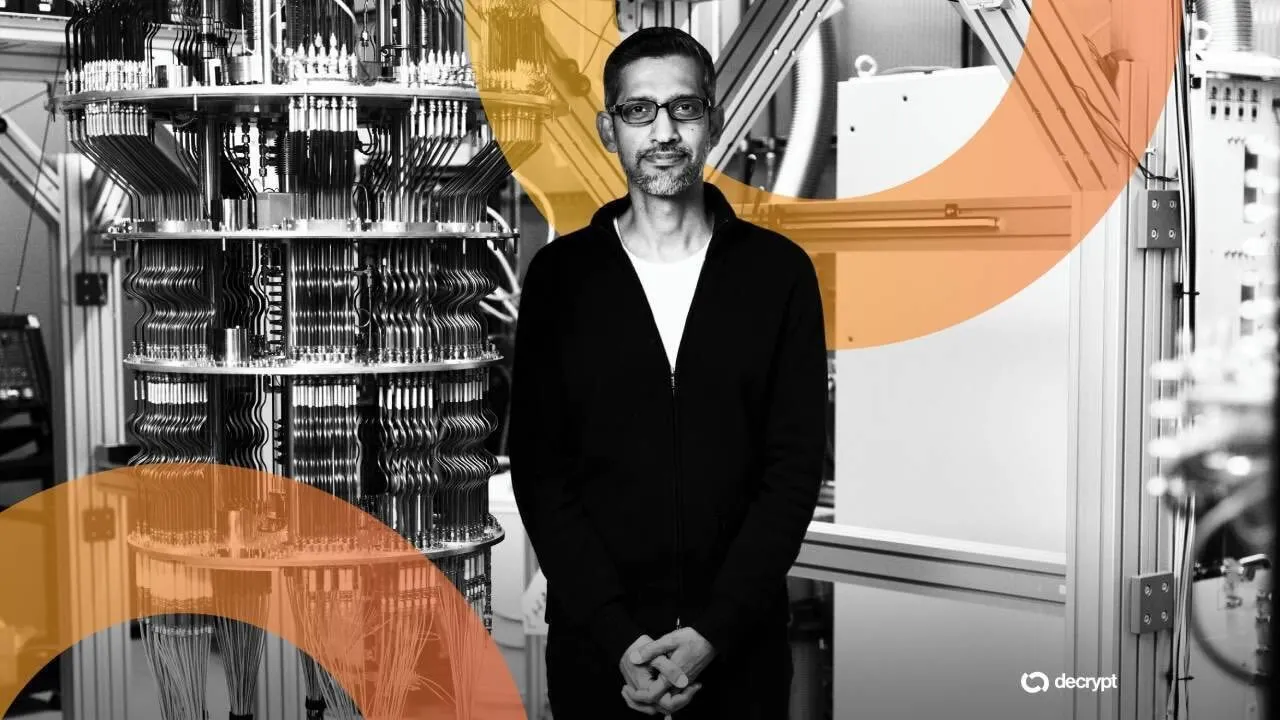
Google has publicly declared its commitment to a significant cryptographic overhaul, setting a firm deadline of 2029 for its systems to transition to post-quantum cryptography (PQC). This proactive stance underscores the escalating concerns within the tech industry regarding the potential threat posed by advanced quantum computing to current encryption standards. The company’s announcement highlights the urgency of this migration, suggesting that quantum advancements may be closer than anticipated and pose a tangible risk to digital security.
Key Takeaways
- Google has established a 2029 target to implement post-quantum cryptography across its infrastructure.
- The rapid progress in quantum computing presents a long-term cryptographic risk to blockchain networks like Bitcoin.
- The cryptocurrency industry faces the challenge of coordinating a decentralized, phased migration to quantum-resistant cryptographic standards.
Google’s initiative to integrate PQC is a clear signal that the era of quantum threats is no longer a distant theoretical concern but an imminent reality demanding immediate attention. The company’s blog post emphasizes its responsibility, as a leader in quantum research and PQC development, to set an ambitious example. The core message is that quantum computers possess the potential to undermine current cryptographic methods, particularly in encryption and digital signatures, necessitating a swift and comprehensive transition.
This timeline, co-authored by Google’s VP of Security Engineering, Heather Adkins, and Senior Cryptography Engineer, Sophie Schmieg, is informed by rapid advancements in quantum hardware, error correction techniques, and refined estimates of the computational resources required for cryptanalysis. In essence, the development of machines capable of breaking current encryption is accelerating, closing the window of security much faster than previously projected.
Google identifies two primary quantum threats. The first is the “harvest now, decrypt later” scenario, where encrypted data is stolen today with the expectation that it can be decrypted once sufficiently powerful quantum computers become available. This represents a present danger. The second threat concerns digital signatures, which are fundamental to online authentication. These will require replacement before a cryptographically relevant quantum computer (CRQC) emerges.
As a demonstration of its commitment, Google announced that Android 17 will incorporate post-quantum digital signature protection using ML-DSA, an algorithm recently standardized by the U.S. National Institute of Standards and Technology (NIST). Furthermore, PQC implementation is being pushed across Google Cloud and internal communication systems.
The 2029 deadline aligns with similar roadmaps from other industry leaders, such as IBM’s target for fault-tolerant quantum systems. Significant breakthroughs in error correction, novel processor architectures, and experiments like the trapping of over 6,000 atomic qubits have shifted the discourse in the quantum field from a question of possibility to one of timing.
Long-Term Technological Impact on the Blockchain Industry
Google’s declaration of a 2029 PQC deadline casts a long shadow over the blockchain and cryptocurrency space, particularly for foundational protocols like Bitcoin. Bitcoin’s security relies heavily on elliptic curve cryptography (ECDSA signatures), a mathematical framework that Shor’s algorithm, executable on powerful quantum computers, could potentially reverse. This implies that a sufficiently advanced quantum machine could derive a user’s private key from their public key, compromising the security of their assets.
While classical computers would require millennia to perform such a feat, quantum computers could reduce this timeframe to something practically achievable. The extent of this vulnerability is considerable. Reports suggest that millions of Bitcoin, representing hundreds of billions of dollars, are held in addresses theoretically susceptible to quantum attacks. This includes a significant portion of the total Bitcoin supply, particularly older address formats.
Recent research indicates that the number of qubits required to break RSA encryption, a benchmark for quantum computational needs, might be substantially lower than previously estimated. This revision compresses the timeline for all systems relying on similar cryptographic underpinnings, including Bitcoin. Estimates for the qubit count needed to crack Bitcoin have been reduced from tens of millions to potentially around 100,000, reflecting the rapid pace of quantum hardware development.
Despite these concerns, a complete panic sell-off is not immediately warranted, but heightened awareness and strategic planning are essential. It is crucial to understand that Google’s 2029 deadline is a preparedness target, not a prediction of an imminent quantum attack.
The Bitcoin development community is actively addressing this challenge. A proposal for a quantum-resistant address format, known as Pay-to-Merkle-Root (BIP 360), has been integrated into Bitcoin’s improvement proposal repository, signaling the initiation of discussions and preparations for a fundamental upgrade.
Transitioning a decentralized network like Bitcoin to quantum-resistant cryptography is a complex, multi-year undertaking. Experts estimate that migrating the protocol and securing billions in user funds could take between five to ten years. This process requires consensus and coordinated action from miners, wallet developers, exchanges, and the broader user base.
Unlike centralized entities like Google, which can unilaterally implement system-wide changes, Bitcoin’s decentralized governance means that any cryptographic transition necessitates broad community agreement and participation. This inherent asymmetry highlights the significance of Google’s announcement: it serves not as a doomsday prophecy for cryptocurrencies, but as a critical external impetus, urging the decentralized ecosystem to confront and prepare for the undeniable quantum threat.
Based on materials from : decrypt.co