

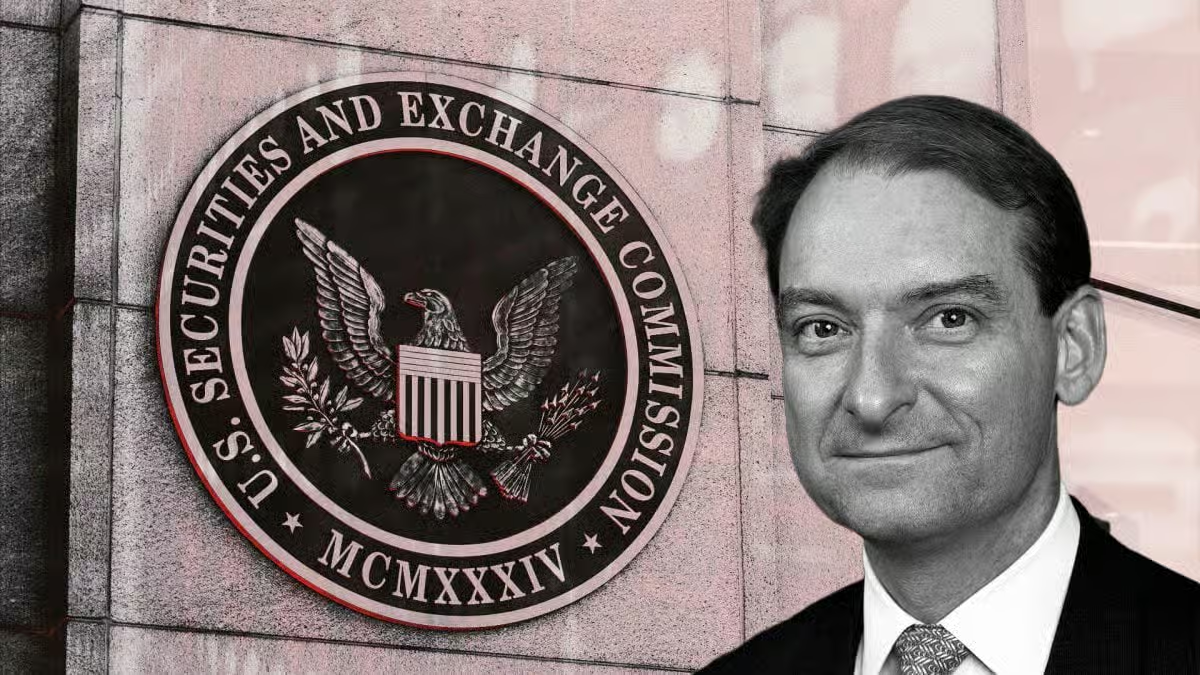
Securities and Exchange Commission (SEC) Chair Paul Atkins has outlined a new strategic direction for the agency’s engagement with the digital asset sector, emphasizing a shift from punitive measures to a more constructive and clarifying approach. Under the initiative branded “Advance, Clarify, and Transform” (ACT), the SEC aims to foster innovation and encourage the repatriation of crypto businesses to the United States, moving away from the prior administration’s “regulation by enforcement” model.
Key Takeaways
- SEC Chair Paul Atkins is spearheading a new initiative, “Advance, Clarify, and Transform” (ACT), to reshape crypto regulation.
- The agency is pivoting from an enforcement-heavy strategy to one that seeks to clarify rules and embrace innovation.
- Recent efforts include the launch of “Project Crypto” and the development of a digital asset taxonomy.
- The SEC is also examining the regulatory landscape of prediction markets due to concerns over manipulation and insider trading.
- Collaboration with other agencies like the CFTC and DOJ is underway to address issues surrounding prediction markets.
Atkins stated in a recent interview that the SEC’s objective is to create an environment where innovative technologies are embraced rather than opposed. This strategic pivot is intended to attract offshore crypto businesses back to the U.S. and facilitate their development within a more supportive regulatory framework. To support this goal, Atkins has initiated “Project Crypto” to modernize the SEC’s digital asset regulations and has overseen the release of a digital asset taxonomy, with plans for an innovation exemption forthcoming.
This approach marks a significant departure from the tenure of former Chair Gary Gensler, during which the SEC adopted a more restrictive stance on cryptocurrencies, frequently classifying them as securities and initiating numerous legal actions against prominent crypto firms. Many of these enforcement actions have since been discontinued, signaling a potential reevaluation of past regulatory strategies.
Regulatory Precedent for Prediction Markets
Concurrently, regulatory bodies are scrutinizing the burgeoning field of prediction markets. These platforms, which allow users to speculate on future events such as elections, economic indicators, and sporting outcomes, have seen a surge in popularity. Companies like Polymarket and Kalshi have gained significant traction, particularly following the 2024 election cycle.
While the Commodity Futures Trading Commission (CFTC) has asserted its jurisdictional authority over these markets, the framework remains contested, with some states citing violations of local gaming and gambling laws, especially concerning sports-related wagers.
Concerns have been raised regarding the potential for manipulation and insider trading within prediction markets, especially in light of market-moving commentary from political figures. Lawmakers have responded by proposing legislation to prohibit event contracts tied to conflict and to restrict elected officials from participating in prediction markets that involve government policy or political outcomes.
Chair Atkins acknowledged these concerns, stating that the SEC is actively examining the prediction market sector. He indicated that the agency is coordinating with the Department of Justice and the CFTC to address these issues comprehensively, highlighting the traceability of transactions on these platforms as a key factor in their investigations. This coordinated effort suggests a developing regulatory consensus, potentially setting a precedent for how decentralized prediction platforms will be governed across multiple jurisdictions.
Learn more at : www.theblock.co