

Tencent has made a significant stride in the AI landscape with the open-sourcing of its latest model, Hy3 preview. This advanced AI, developed with a focus on coding assistance, reasoning capabilities, and web search, was built and released in an remarkably short timeframe of under three months. The model leverages a Mixture-of-Experts (MoE) architecture, enabling efficient operation with a substantial parameter count while maintaining cost-effectiveness.
Key Takeaways
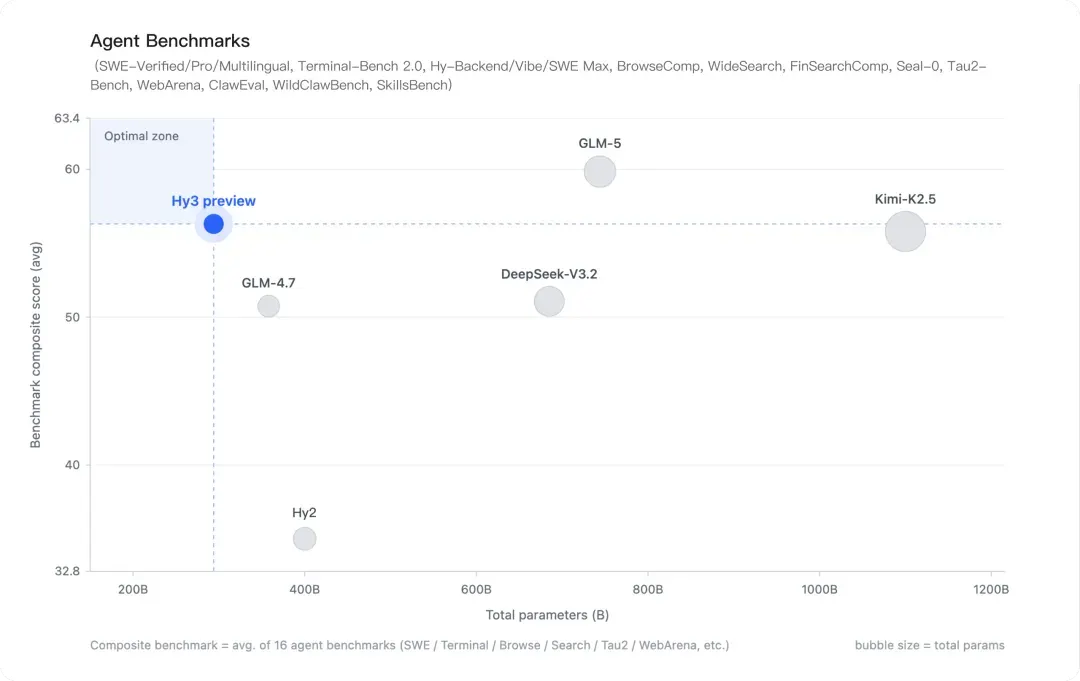
- Hy3 preview is a 295 billion parameter Mixture-of-Experts model, featuring 21 billion active parameters for enhanced efficiency and reduced operational costs compared to similar-capacity models.
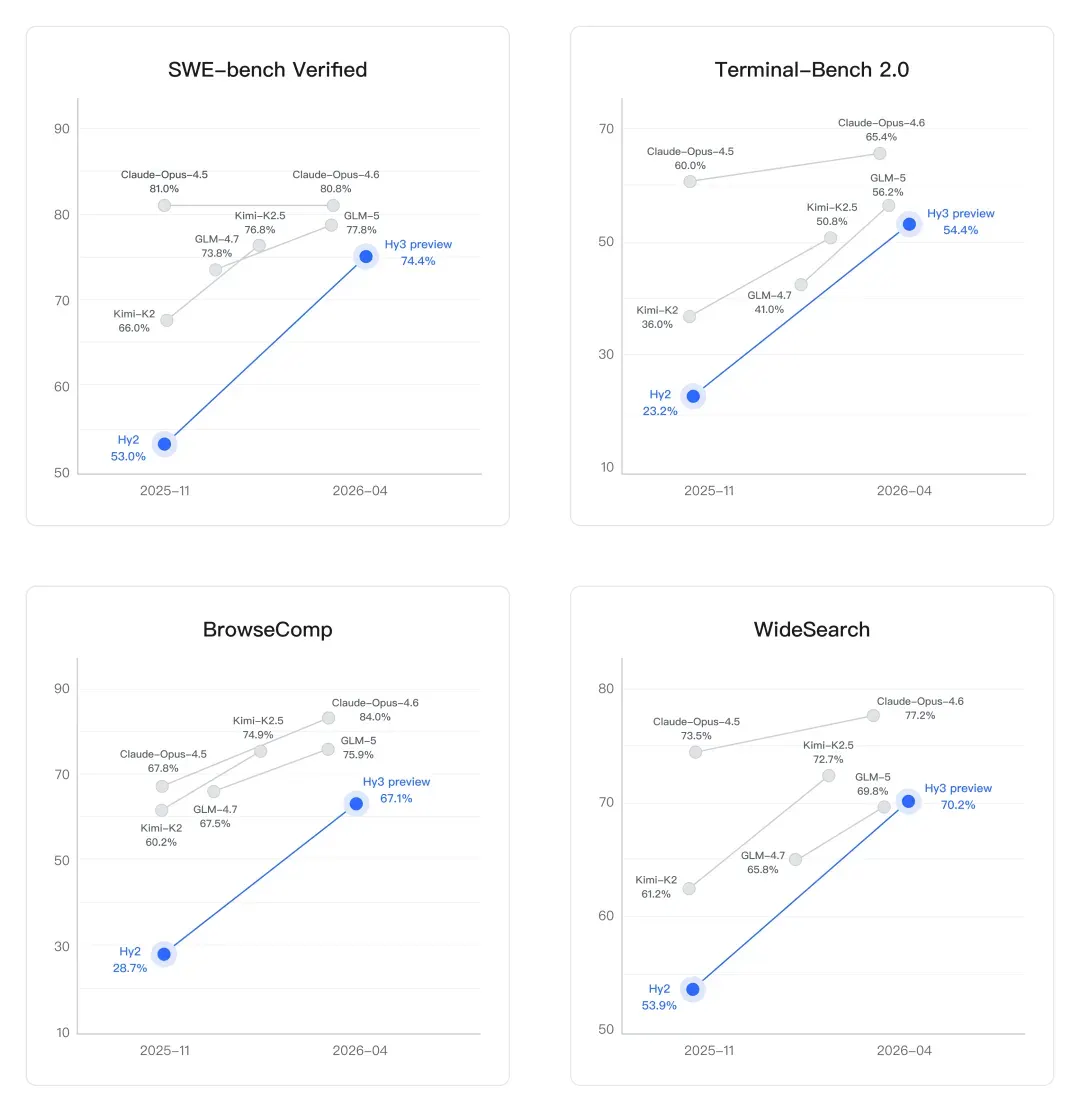
- Significant improvements in coding benchmarks are evident, with Hy3 preview achieving a 74.4% success rate on SWE-bench Verified, a substantial 40% increase from its predecessor, Hy2.
- The model demonstrates strong performance in autonomous task execution and complex web research, indicating advanced agentic capabilities.
- Tencent has integrated Hy3 preview across its existing product ecosystem, including Yuanbao, QQ, and Tencent Docs, and is offering API access via Tencent Cloud.
- The rapid development cycle of Hy3 preview, from inception to open-source release in under three months, highlights Tencent’s accelerated AI infrastructure and development capabilities.
Hy3 preview boasts a total of 295 billion parameters, but critically, only 21 billion are active for any given task. This MoE design allows the model to selectively engage specialized sub-networks, dramatically reducing computational requirements and associated costs without compromising output quality. It also supports an extensive context window of up to 256,000 tokens, enabling it to process and understand vast amounts of information in a single prompt.
Tencent has deliberately optimized Hy3 preview for a balance between broad capability, accurate evaluation, and cost efficiency. Unlike its previous model, Hy2, which featured over 400 billion parameters, Tencent has focused on what it considers an “optimal sweet spot” for model performance and economic viability. This strategic adjustment underscores a growing industry trend where optimized training and parameter efficiency can surpass sheer model size.
The advancements in coding are particularly notable. On the SWE-bench Verified benchmark, which evaluates a model’s ability to fix real-world bugs in GitHub repositories, Hy3 preview achieved a score of 74.4%. This represents a substantial 40% improvement over Hy2’s 53.0%, positioning it competitively with leading models like Claude Opus 4.6 and GLM-5. Furthermore, its performance on Terminal-Bench 2.0, assessing autonomous command-line task execution, saw a dramatic increase from 23.2% to 54.4%.
The capabilities of Hy3 preview are particularly relevant for the development of AI agents, a rapidly evolving area in Web3 and beyond. Agents require sophisticated instruction handling, memory management, and tool integration. Hy3 preview’s enhanced reasoning and task execution abilities make it well-suited for building more robust and reliable agents. Its availability on platforms like Openclaw further facilitates its adoption by developers in this burgeoning field.
We’re now live on @openclaw https://t.co/yfytwvZSe6
— Tencent Hy (@TencentHunyuan) April 23, 2026
The model also shows marked improvement in search and browsing agent tasks, which involve complex web data retrieval and synthesis. On the BrowseComp benchmark for web research, Hy3 preview scored 67.1%, a significant leap from Hy2’s 28.7%. Its performance on WideSearch reached 70.2%, demonstrating a strong capacity for handling extensive information gathering.
In terms of reasoning, Hy3 preview excelled in academic benchmarks, achieving an 88.4 average score on Tsinghua University’s math PhD qualifying exam and an 87.8 on China’s national high school biology olympiad. These results, obtained on real-world examinations rather than curated datasets, align with Tencent’s commitment to rigorous and honest model evaluation, helping to mitigate issues of benchmark gaming.
The swift development of Hy3 preview, initiated in late January 2026 and released in under three months, is attributed to a significant overhaul of Tencent’s AI infrastructure. This accelerated development cycle, spearheaded by Chief AI Scientist Yao Shunyu, indicates a streamlined and highly efficient pretraining and reinforcement learning pipeline, setting a new pace for frontier model development.
While Hy3 preview may still trail the absolute top-tier models from OpenAI and Google DeepMind, its performance-to-size ratio is exceptionally compelling. On agent benchmarks, it achieves optimal results with its 295 billion parameters, outperforming larger models like DeepSeek-V3.2 and matching Kimi-K2.5, all while utilizing a fraction of the computational resources.
The integration of Hy3 preview into Tencent’s existing product suite, including Yuanbao, CodeBuddy, WorkBuddy, QQ, and Tencent Docs, is already yielding tangible benefits. Users are experiencing reduced latency and faster generation times, with agent workflows running up to 495 steps. Tencent Cloud offers API access at competitive rates, with input tokens priced at approximately $0.18 per million and output tokens at $0.59 per million, alongside affordable personal token plans.
Long-Term Technological Impact
Tencent’s release of Hy3 preview signifies a pivotal moment in the evolution of large language models, particularly concerning efficiency, cost-effectiveness, and agentic capabilities. The successful implementation of the Mixture-of-Experts architecture with a focus on active parameters rather than total count demonstrates a mature understanding of optimizing AI resource utilization. This approach is crucial for wider adoption and scalability, especially as AI integrates more deeply into decentralized systems and blockchain applications.
The emphasis on agent performance and the rapid development cycle suggest a future where AI models are not just powerful but also agile and adaptable. This could accelerate innovation in areas like AI-powered smart contracts, decentralized autonomous organizations (DAOs), and complex on-chain operations. By prioritizing real-world task completion and complex reasoning over sheer parameter count, Tencent is setting a precedent for how frontier AI models can be developed and deployed efficiently, potentially lowering the barrier to entry for advanced AI integration in the Web3 space.
Original article : decrypt.co