

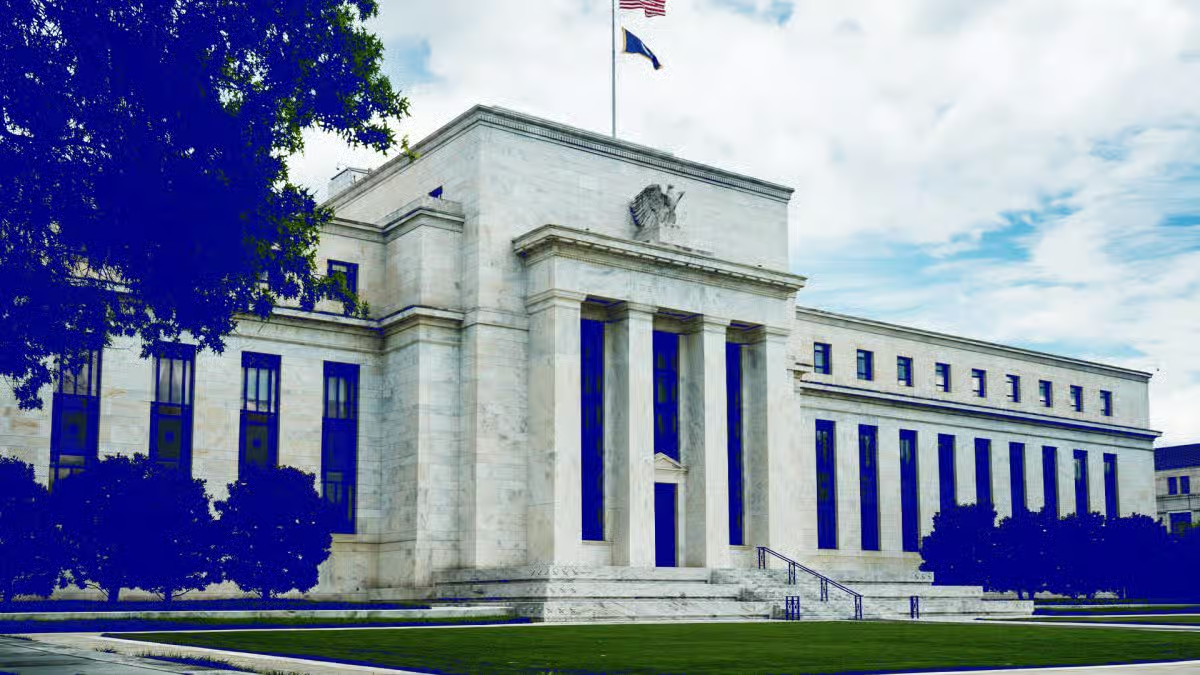
The U.S. Federal Reserve has initiated a public consultation period for a novel proposal concerning “master accounts,” which could grant eligible cryptocurrency firms direct access to the nation’s payment systems. This move comes in the wake of an executive order from President Donald Trump, which specifically directed the Federal Reserve to examine and modernize regulations to better incorporate digital assets and emerging financial technologies into established financial infrastructure.
Key Takeaways
- The Federal Reserve is soliciting public feedback on a new proposed payment account structure.
- This proposed account aims to provide access to Fed payment services for certain non-federally insured institutions, including crypto firms.
- The initiative aligns with President Trump’s recent executive order calling for the integration of digital assets into traditional financial systems.
- The Fed encourages a temporary moratorium on new applications from certain non-bank institutions while the policy development is underway.
- The proposed accounts would offer access to payment services and automated controls but would not include intraday credit, discount window access, or interest on balances.
In a statement released on Wednesday, the central bank indicated that it has observed a growing number of access requests from entities operating outside the federally insured depository institution framework. The statement articulated that the “proposed payment account would be tailored to support innovation by serving the clearing and settlement needs of certain eligible institutions while also mitigating material risks to the Reserve Banks and payment system.”
Under the existing Federal Reserve Act, Reserve Banks possess the authority to approve or deny applications for access to Fed accounts. Typically, eligible applicants are licensed depository institutions. The Fed noted that the current proposal bears significant resemblance to one introduced in December 2025, with adjustments made, such as an increased maximum closing balance limit.
Direct access to these “master accounts” would empower cryptocurrency firms to connect directly with core U.S. payment infrastructure, potentially reducing reliance on intermediary traditional banks.
Regulatory Precedent and Legal Stakes
This development signifies a critical juncture for the regulatory landscape of digital assets in the United States. The Fed’s willingness to explore direct access for non-bank entities, particularly crypto firms, could establish a significant regulatory precedent. It suggests a potential pathway for these firms to operate with greater integration into the traditional financial system, subject to stringent risk mitigation and compliance measures. The legal stakes are substantial, as successful integration could legitimize certain crypto business models within the U.S. financial framework, while failure to meet regulatory expectations could lead to heightened scrutiny and potential enforcement actions. The Fed’s cautious approach, encouraging a pause on new applications, underscores the complexity of balancing innovation with financial stability and consumer protection, mirroring regulatory strategies seen in jurisdictions like the European Union with its Markets in Infrastructure Regulation (MiCA).
The Fed’s recent call for public comment directly follows President Trump’s executive order on Tuesday. This order mandated a review and update of regulations to “allow integration of digital assets and innovative technology into traditional financial services and payment systems.” The President specifically directed the Fed to undertake a thorough assessment of its existing regulatory framework for Reserve Bank payment accounts and services, and to investigate possibilities for extending such access to fintech and cryptocurrency firms.
While this policy development is in progress, the Fed’s Board has advised Reserve Banks to temporarily suspend decisions on applications from what it terms “Tier 3 institutions”—a classification that encompasses crypto firms. This pause is intended to allow the Board to finalize its policy considerations regarding the master account proposal.
Original article : www.theblock.co