

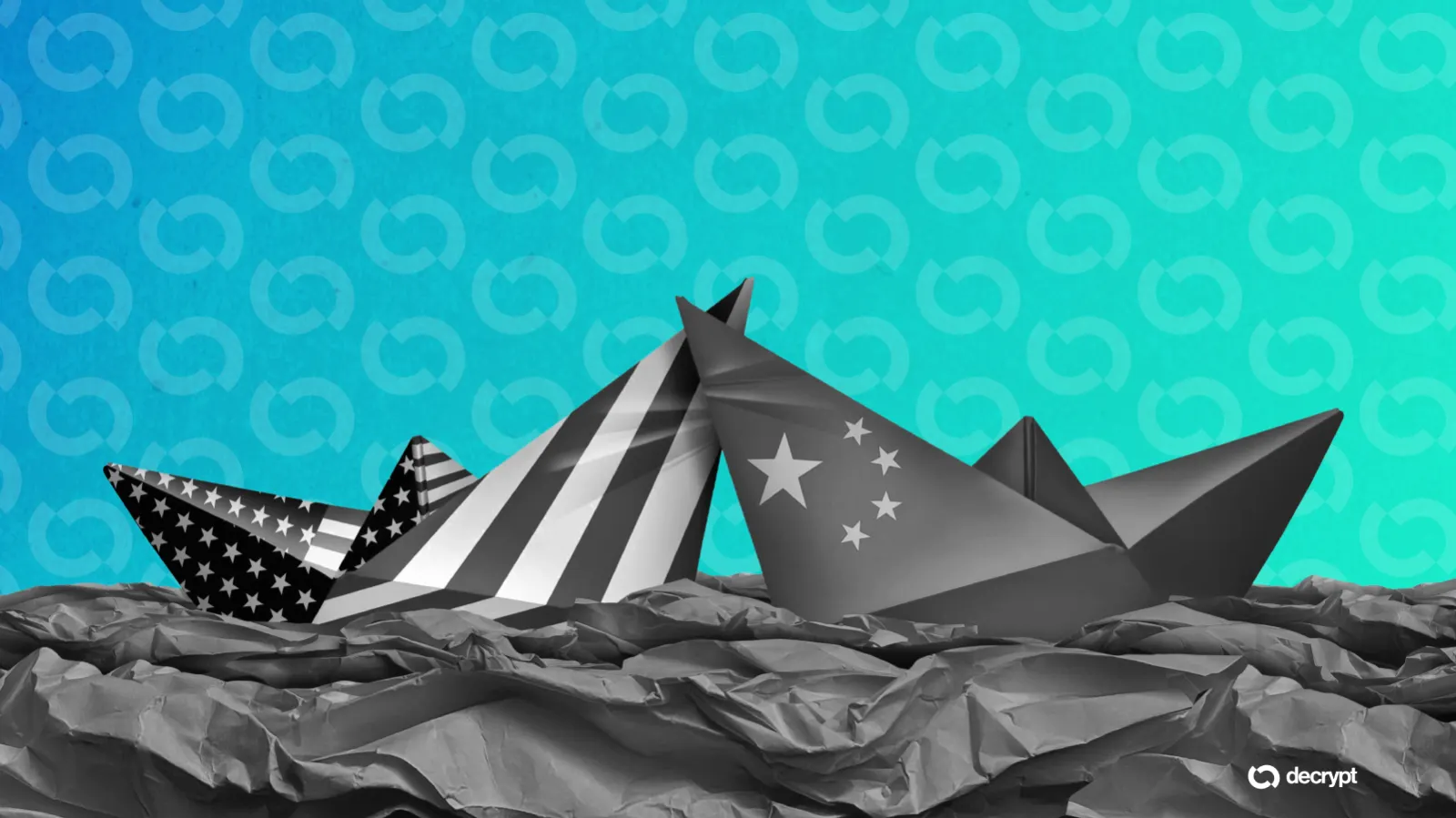
 The artificial intelligence landscape is experiencing a dramatic price shift, driven by aggressive cost reductions from leading Chinese AI labs. DeepSeek and Xiaomi have significantly slashed API prices for their advanced models, making them a fraction of the cost of comparable offerings from US-based competitors like OpenAI and Anthropic. This strategic move not only democratizes access to powerful AI capabilities but also signals a potential paradigm shift in the economics of AI development and deployment.
Key Takeaways
- DeepSeek has made a 75% discount on its V4-Pro model permanent, setting the output price at $0.87 per million tokens.
- Xiaomi has reduced MiMo-V2.5 API prices by up to 99%, with cached inputs for the Pro model now costing $0.0036 per million tokens.
- These price cuts contrast sharply with recent increases from US AI labs; OpenAI’s GPT-5.5 doubled output prices, and Anthropic’s Claude Opus 4.7 may indirectly increase costs through tokenizer changes.
- The reduced pricing is attributed to architectural innovations, such as optimized KV cache and efficient attention mechanisms, which lower computing power requirements.
- Chinese AI models are demonstrating a strong price-to-performance ratio, offering competitive capabilities at significantly lower costs compared to their Western counterparts.
For developers and businesses integrating AI into their products, the cost per token is a critical factor determining economic viability. A token, roughly equivalent to three-quarters of a word, represents the fundamental unit of processing for AI models. Every interaction, from generating text to analyzing documents, consumes tokens, and their pricing directly impacts operational expenses. The API, or Application Programming Interface, acts as the conduit through which applications access these AI models, making token pricing a cornerstone of AI-powered service affordability. Xiaomi’s updated billing structure, for instance, now offers 5 to 8 times more tokens for the same price. Their $100 Max plan now provides 82 billion tokens, a substantial increase from the previous 1.6 billion, translating to more than 60 billion words of processing capacity. The substantial price reductions are rooted in technological advancements. Fuli Luo, head of Xiaomi’s MiMo team, detailed how hierarchical KV cache optimization allows their system to retain and reuse processed information more effectively, reducing the need for redundant computation and cutting storage and processing costs by approximately 80%. This efficiency enables their inference engine to operate at near full capacity while remaining profitable. DeepSeek’s V4 architecture achieves similar cost savings through interleaved attention mechanisms that compress information for selective and global context with minimal computational overhead. The result is a model that offers comparable performance to premium US models at a significantly lower cost. In contrast, the US AI market appears to be moving in the opposite direction. Claude Opus 4.7, while maintaining a flat rate card, introduced a new tokenizer that can inflate actual token usage, potentially increasing bills. OpenAI’s GPT-5.5 more than doubled its predecessor’s output price. While Gemini 2.5 Pro offers a more competitive price point among US models, it still lags significantly behind the newly reduced rates from Chinese competitors. DeepSeek V4-Pro, a 1.6 trillion parameter model, now offers its advanced capabilities at $0.435 per million input tokens and $0.87 per million output tokens. This represents a roughly 34x price difference in output tokens compared to GPT-5.5 Pro, despite achieving comparable performance on benchmarks like SWE-Verified, which assesses real-world coding issue resolution. MiMo-V2.5-Pro matches these aggressive pricing levels, with cached inputs becoming exceptionally inexpensive at $0.0036 per million tokens. These developments occur in a market where Chinese AI models were already positioned as more cost-effective. Models like MiniMax M2.7 and Kimi K2.5 have historically offered a superior price-to-performance ratio. The recent price cuts from DeepSeek and Xiaomi further solidify this advantage, particularly for workloads that benefit from efficient context management, such as agent pipelines and document processing. The current gap between leading Chinese and American frontier models in terms of price-to-quality ratio ranges from 15x to 30x, a disparity that is only widening with these new pricing strategies.
The Long-Term Technological Impact on Blockchain and Web3
This aggressive pricing in the AI sector, particularly the focus on efficiency gains through architectural innovation, has profound implications for the future of blockchain technology and the broader Web3 ecosystem. As AI models become more accessible and cost-effective, their integration into decentralized applications (dApps), smart contracts, and blockchain infrastructure will accelerate. The technical advancements enabling these price cuts—optimized memory management (like KV cache), efficient attention mechanisms, and modular architectures—are directly relevant to blockchain scalability. Innovations that reduce computational overhead and data storage requirements for AI can inspire similar solutions for Layer 2 scaling solutions, sharding, and other blockchain optimization efforts. For instance, techniques used to compress contextual information in AI could be adapted to create more efficient data compression for blockchain transactions or state storage. Furthermore, the increasing affordability of sophisticated AI tools will empower developers to build more intelligent and autonomous agents within Web3. These agents, powered by AI, could automate complex tasks on-chain, manage decentralized autonomous organizations (DAOs) more effectively, provide sophisticated analytics for decentralized finance (DeFi) protocols, or even act as decentralized identity verifiers. The ability to process large amounts of data and make complex decisions at a low cost is crucial for the evolution of intelligent smart contracts and fully autonomous decentralized systems. The accessibility of AI also opens new avenues for AI-blockchain synergy, often referred to as “AI-Web3” or “AI DAOs.” Imagine AI models that are trained and governed in a decentralized manner, with their usage and contributions tracked immutably on a blockchain. This could lead to more transparent, secure, and equitable development of AI technologies. The economic models demonstrated by DeepSeek and Xiaomi, where compute efficiency directly translates to lower service costs, could also inform tokenomic models within Web3, incentivizing efficient node operation and data processing. Ultimately, this trend suggests that the barriers to entry for sophisticated AI integration are rapidly lowering. For the blockchain and Web3 space, this means a future where AI-powered intelligence is not a niche, expensive add-on, but a fundamental, cost-effective component of decentralized applications and infrastructure, driving innovation in scalability, automation, and new forms of decentralized intelligence.
According to the portal: decrypt.co