

US Rejects Central Bank Digital Currency, Pushes for Onshore Digital Asset Regulation
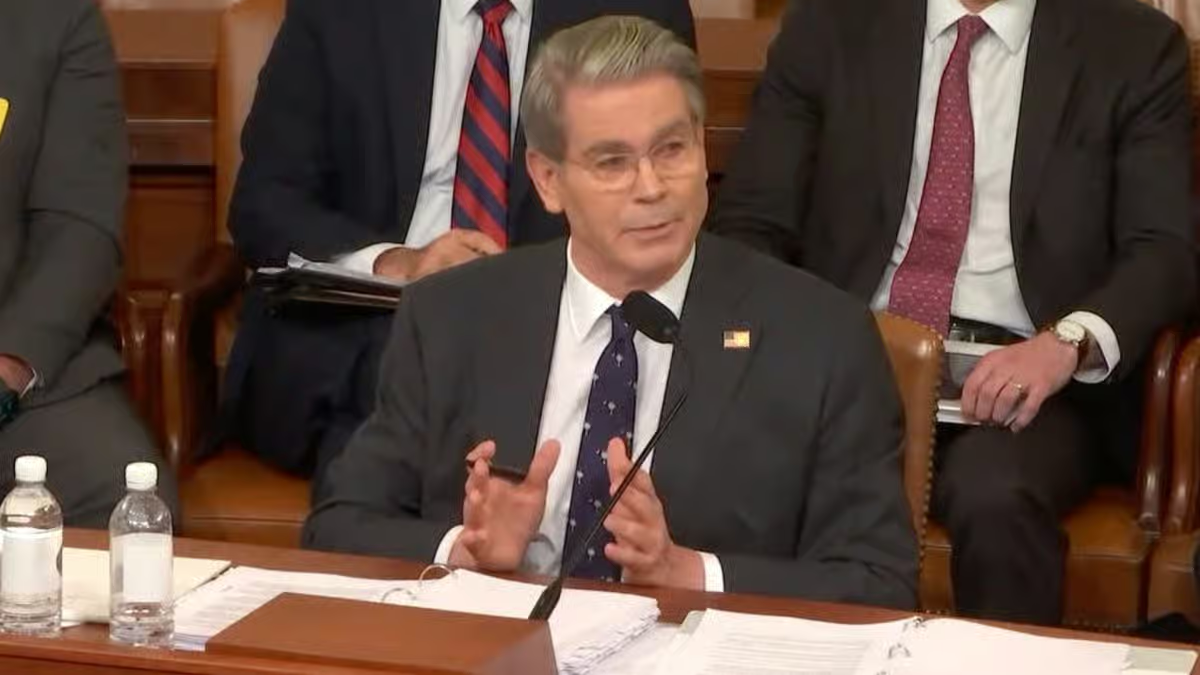
U.S. Treasury Secretary Scott Bessent has definitively stated that the current administration will not pursue a central bank digital currency (CBDC). In a press briefing on Thursday, Bessent emphasized that CBDCs are “off the table,” citing concerns that such a digital currency could serve as a precursor to government tracking of financial transactions. This stance aligns with the administration’s broader objective to establish the United States as a leading hub for digital asset innovation and regulation.
Key Takeaways
- The U.S. administration has officially ruled out the development of a central bank digital currency (CBDC).
- Treasury Secretary Scott Bessent views CBDCs as a potential tool for excessive government tracking.
- The administration aims to bring digital asset activities onshore to foster a regulated environment.
- Legislative efforts, such as the Clarity Act, are being encouraged to establish a clear framework for the digital asset sector.
- This policy direction seeks to differentiate the U.S. approach from perceived “wild west” scenarios offshore.
Bessent articulated that the primary goal is to encourage the migration of digital asset activities into the United States. “The most important thing we could do is to make digital assets come into the United States,” he stated, contrasting this with offshore markets often characterized by a lack of oversight. He also highlighted the growing legislative momentum behind initiatives like the GENIUS stablecoin legislation and the Clarity Act, both of which have garnered bipartisan support and are seen as crucial steps in creating a robust and compliant digital asset ecosystem.
The opposition to a U.S. CBDC is not new. Bessent previously expressed skepticism during his nomination hearing, suggesting that CBDCs are more suited for nations lacking diverse investment avenues. Many Republican lawmakers share these concerns, arguing that a government-issued digital currency could facilitate unwarranted surveillance of citizens’ financial activities. This perspective underscores a fundamental disagreement on the role and potential risks of central bank digital currencies.
Simultaneously, the Clarity Act is progressing through Congress, aiming to codify rules for the digital asset industry. The bill recently passed the Senate Banking Committee, though its journey has been marked by delays due to debates over stablecoin remuneration and ethical considerations within its language. Analysts suggest that further amendments, particularly concerning conflicts of interest related to the U.S. Presidency, may be necessary to secure sufficient Democratic support for its final passage.
President Trump has also affirmed his administration’s commitment to leading in the global regulation of digital assets. He recently indicated via social media his intention to establish a “future-proof” digital asset market structure designed to withstand opposition from those skeptical of the sector. This signals a proactive approach to shaping the future of digital finance, prioritizing domestic regulatory clarity and stability.
Potential Regulatory Precedent
The U.S. administration’s firm stance against a CBDC and its push for domestic digital asset regulation, exemplified by support for the Clarity Act, could establish a significant regulatory precedent. By actively rejecting a state-controlled digital currency and instead advocating for a framework that encourages private sector innovation under clear rules, the U.S. is signaling a preference for a market-driven approach to digital assets. This contrasts with the path taken by some other nations that are exploring or implementing state-issued CBDCs. The success of the Clarity Act could lead to a globally influential model for digital asset legislation, influencing how other jurisdictions approach the balancing act between fostering innovation, ensuring financial stability, and protecting consumers. It also sets a clear direction for companies operating in the digital asset space, indicating that the future in the U.S. lies in compliance and integration within a defined legal structure, rather than operating in regulatory grey areas.
Original article : www.theblock.co