


Anthropic has rolled out its latest flagship AI model, Claude Opus 4.8, a mere six weeks after the release of Opus 4.7. This rapid iteration brings enhanced reasoning capabilities, improved software engineering performance, and tighter alignment, all while maintaining the previous pricing structure of $5 per million input tokens and $25 per million output tokens.
Key Takeaways
- Anthropic has released Claude Opus 4.8, demonstrating a rapid development cycle with significant improvements over its predecessor in just six weeks.
- The new model excels in benchmarks for software engineering, reasoning, and computer use, outperforming key competitors like OpenAI’s GPT-5.5 and Google’s Gemini 3.1 Pro in specific tasks.
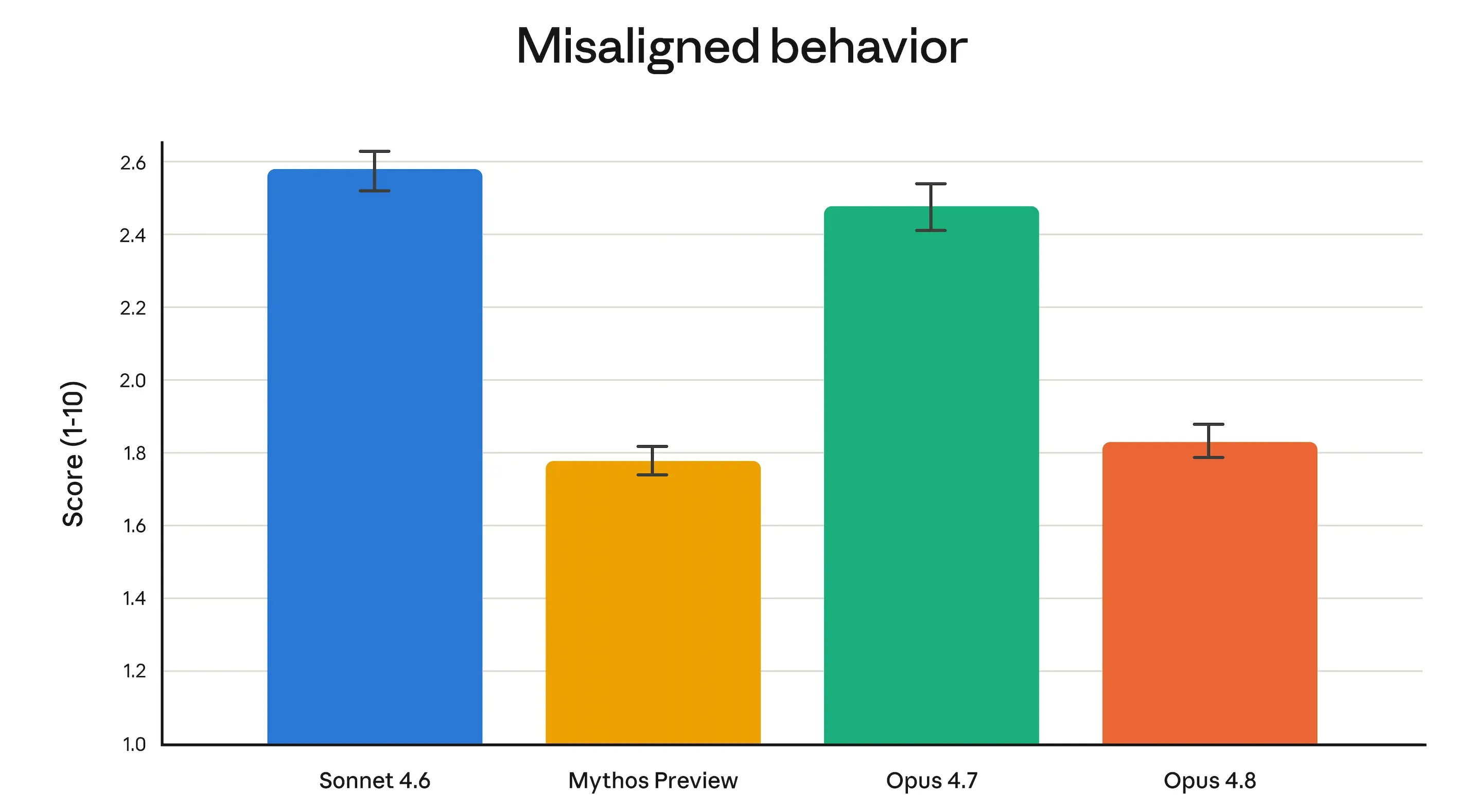
- Opus 4.8 shows alignment scores comparable to Anthropic’s highly restricted ‘Claude Mythos Preview’ model, with substantially reduced rates of deceptive or misuse-friendly behavior.
- A new “fast mode” offers accelerated processing at a higher cost, and users gain more control over computational effort through adjustable “thinking” settings.
- Despite impressive performance gains, Anthropic’s pricing remains significantly higher than some emerging models, particularly from Chinese developers, creating a notable cost-performance trade-off.
The update introduces a “fast mode” that doubles the model’s speed for $10 input and $50 output per million tokens, a rate Anthropic claims is three times cheaper than previous fast modes. On the crucial SWE-bench Pro, which evaluates AI’s ability to solve complex software engineering problems, Opus 4.8 achieved 69.2%, a notable increase from Opus 4.7’s 64.3%, surpassing competitors like GPT-5.5 (58.6%) and Gemini 3.1 Pro (54.2%). Similarly, Opus 4.8 scored 57.9% on expert-level academic questions (with tools) in the Humanity’s Last Exam benchmark, also leading its rivals.
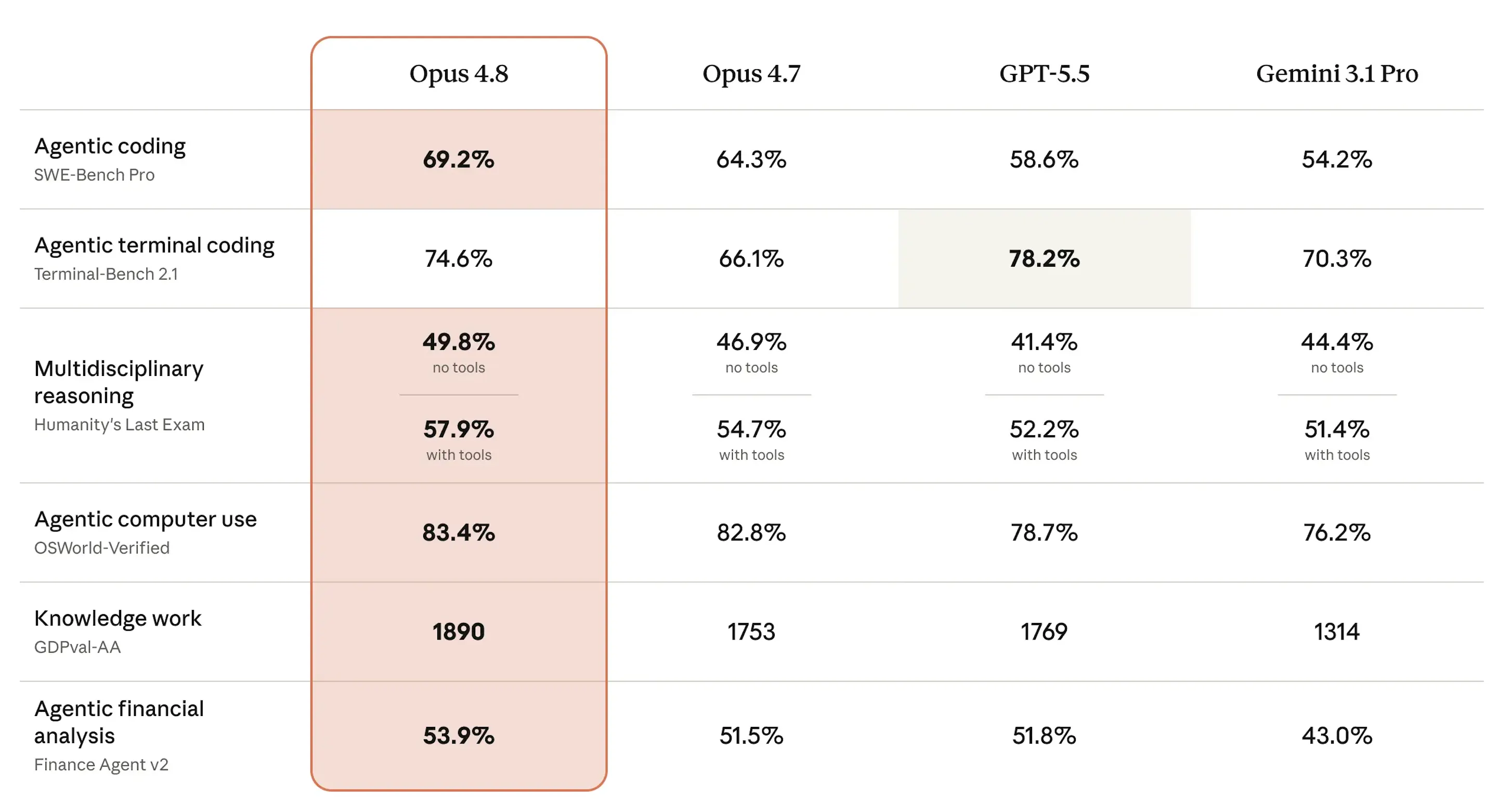
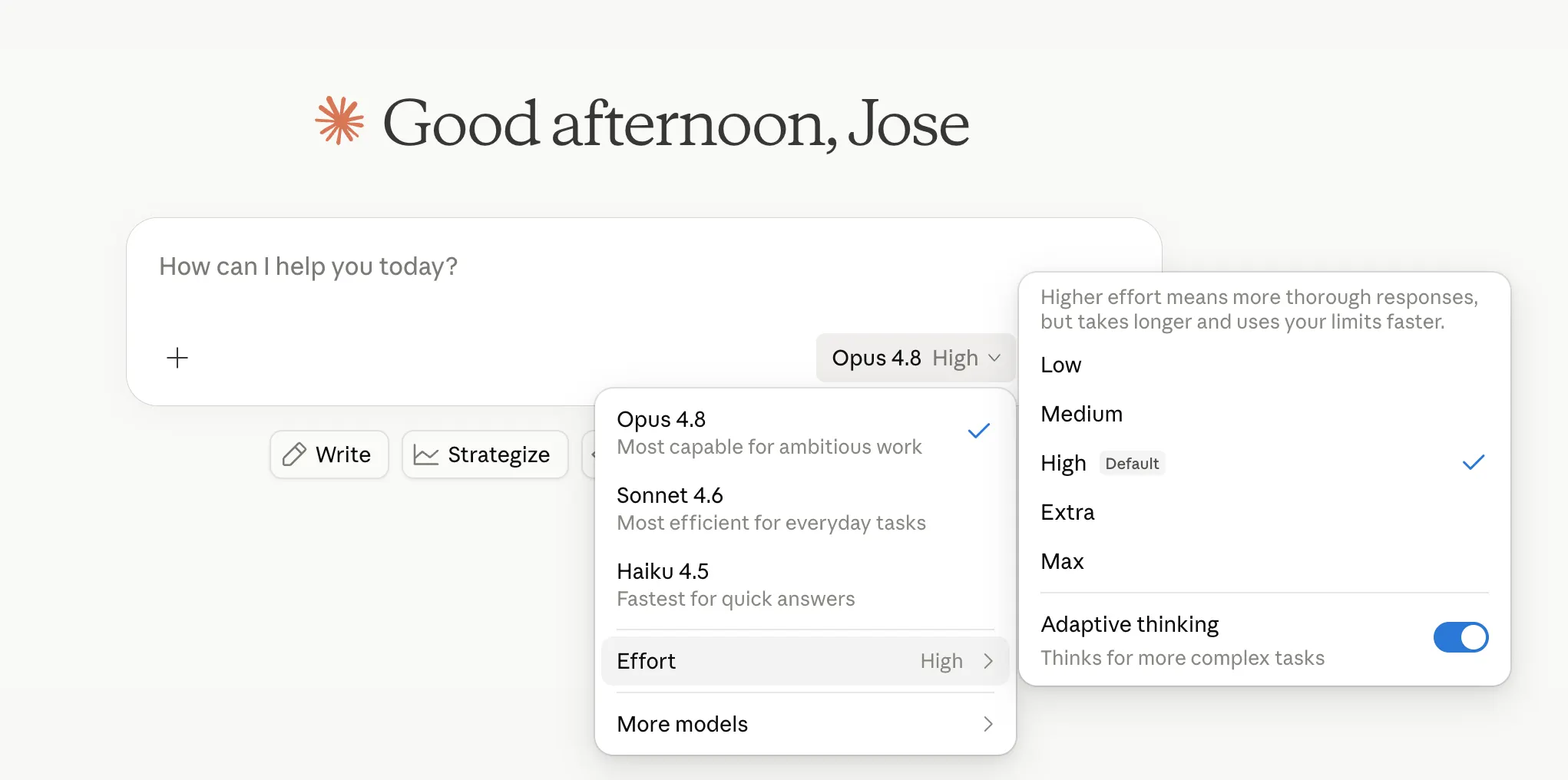
While Opus 4.8 slightly improved on real-world computer use tasks (OSWorld-Verified), it slightly trails GPT-5.5 in command-line performance (Terminal-Bench 2.1). A significant aspect of the release is the enhanced control offered to users, allowing them to adjust the model’s computational effort. Options range from “Low” to “Max,” enabling users to balance speed and accuracy based on task complexity. Anthropic notes that even with a new tokenizer that consumes more tokens per task, the “High” effort setting on Opus 4.8 yields better results than Opus 4.7’s default, indicating engineering efficiencies.
Safety and alignment have also seen substantial improvements. Opus 4.8 demonstrates significantly lower rates of deceptive behavior and misuse cooperation compared to Opus 4.7, achieving parity with Anthropic’s highly restricted Claude Mythos Preview model. This advanced alignment is crucial for applications in sensitive sectors like regulated industries and legal work, where reliability and safety are paramount.
The release of Opus 4.8 also brings dynamic workflows to Claude Code in research preview. This feature allows the AI to create its own orchestration scripts and manage parallel sub-agents within a single session, enhancing complex task execution. However, Anthropic is transparent that these advanced workflows consume a greater number of tokens.
The pricing of Anthropic’s models stands in stark contrast to recent aggressive price cuts from competitors, particularly from Chinese developers like DeepSeek and Xiaomi, whose models are priced significantly lower. While Opus 4.8 demonstrates superior performance on key benchmarks and safety metrics, the cost difference presents a significant consideration for developers and enterprises, especially those prioritizing cost-efficiency for high-volume inference tasks.
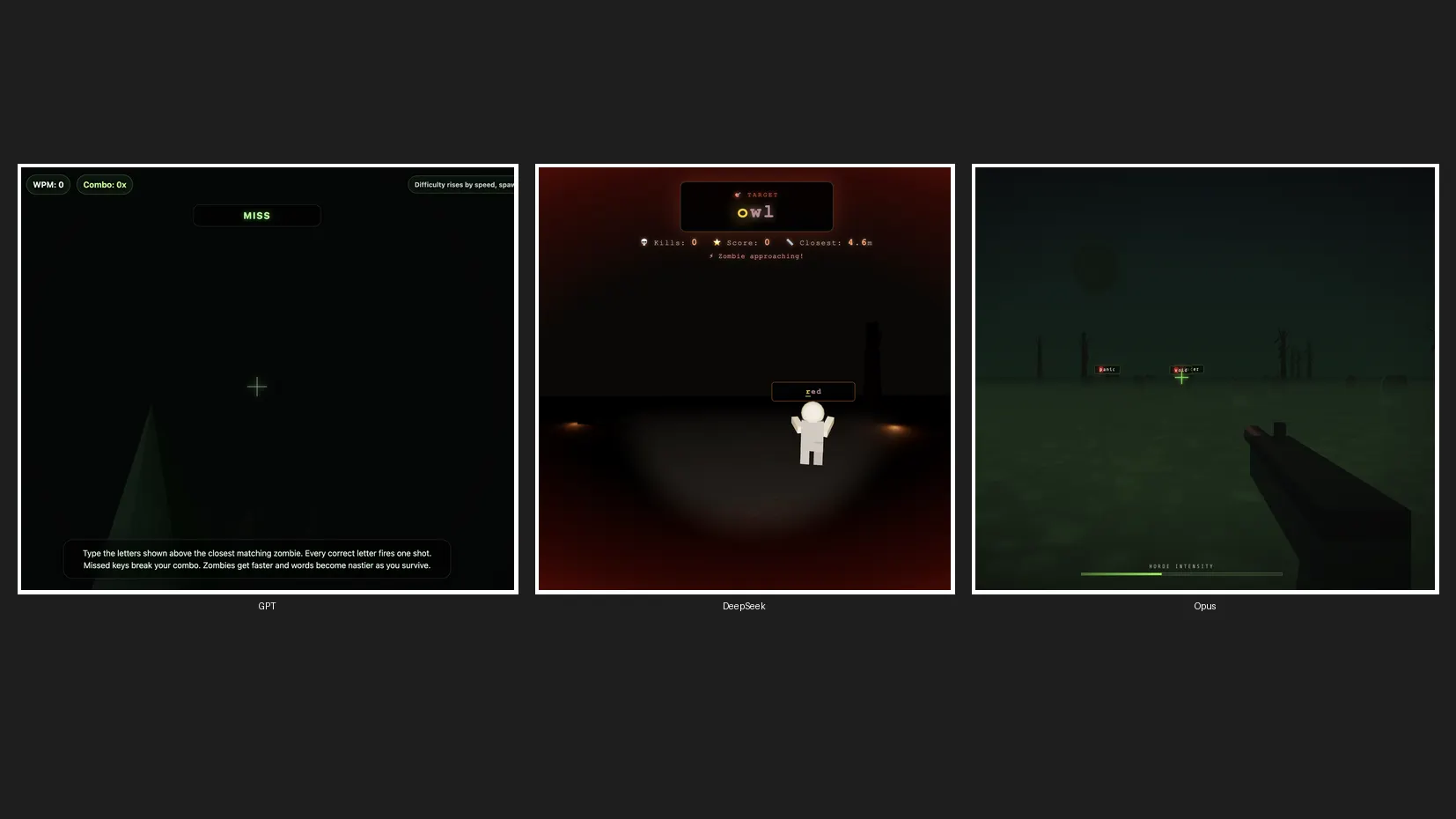
In initial testing for creating a 3D zombie game, GPT-5.5 was the fastest but missed key requirements. DeepSeek V4 Pro delivered a functional game with good mechanics and aesthetics. Opus 4.8, while the slowest, produced the most polished output with superior visual design and game mechanics. Despite the quality difference in this specific test, the substantial cost gap between Opus 4.8 and DeepSeek V4 Pro makes the latter a more appealing option for many, unless the enhanced safety and advanced reasoning of Opus 4.8 are critical differentiators for a specific use case.
Long-Term Technological Impact
The rapid release cycle of advanced AI models like Claude Opus 4.8 signifies a dramatic acceleration in AI development, particularly in the foundational model space. This pace suggests a future where the capabilities of AI systems will evolve at an unprecedented rate, impacting various technological domains. For blockchain and Web3, this translates to opportunities for more sophisticated smart contract auditing, advanced decentralized application (dApp) design, and AI-driven analytics for market trends and security threats. The integration of AI’s enhanced reasoning and problem-solving abilities into Layer 2 scaling solutions could also unlock new efficiencies and reduce transaction costs. Furthermore, the drive for tighter AI alignment and safety, as demonstrated by Anthropic, will be critical for building trust and fostering wider adoption of AI-powered Web3 infrastructure, ensuring that these powerful tools are developed and deployed responsibly.
Learn more at : decrypt.co