

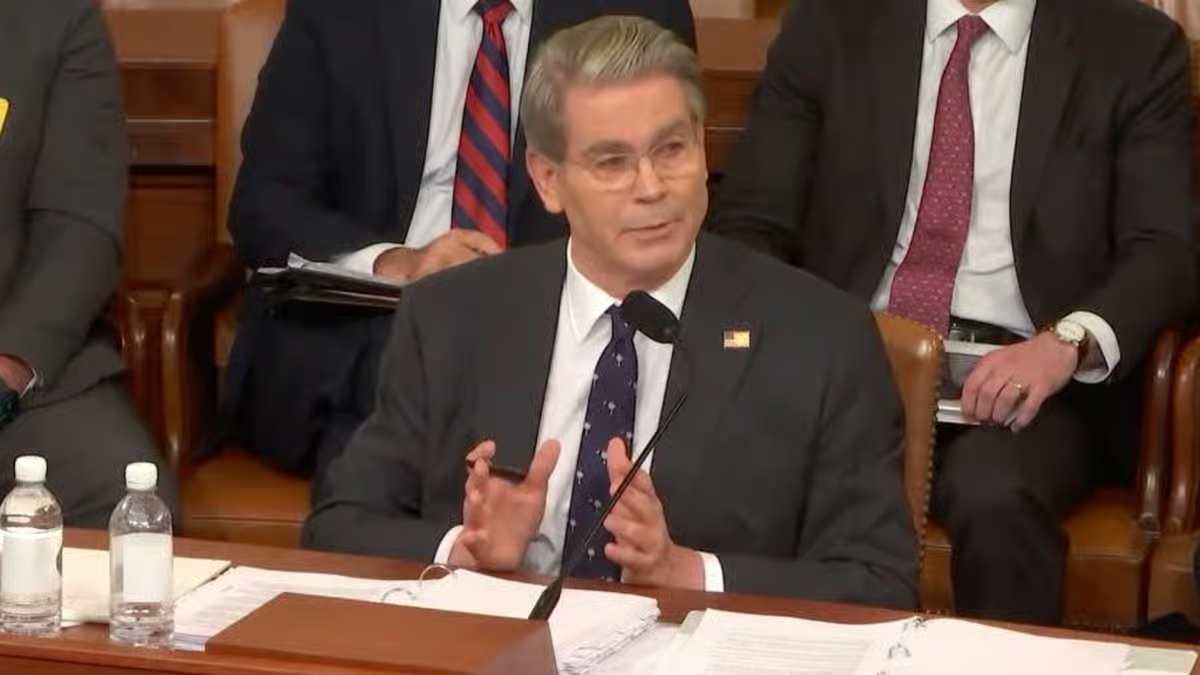
Treasury Secretary Scott Bessent has urged lawmakers to expedite the passage of the Clarity Act, a significant piece of legislation aimed at establishing a regulatory framework for the cryptocurrency market in the United States. Bessent indicated a desire for the bill to be enacted this summer and revealed that the Treasury Department is actively progressing with the establishment of a strategic Bitcoin reserve.
Key Takeaways
- Treasury Secretary Scott Bessent is actively advocating for the swift passage of the Clarity Act, aiming for its enactment this summer.
- The Clarity Act represents a crucial step towards federally regulating the digital asset industry in the U.S.
- The Treasury Department is proceeding with the creation of a strategic Bitcoin reserve, funded by government-held digital assets.
During a Senate Finance Committee hearing concerning the 2027 budget, Secretary Bessent emphasized the necessity of the Clarity Act for onshore U.S. best practices and positioning the nation as a hub for financial innovation. He stated, “It’s very necessary to bring U.S. best practices onshore, and we work tirelessly in terms of custodying these assets and making the U.S. the innovation capital of the world.”
The Clarity Act has been a subject of legislative discussion for the past year, intended to provide the first comprehensive federal regulations for the digital asset sector. While a version of the bill previously passed the House of Representatives, its progress has been impeded in the Senate due to ongoing debates surrounding stablecoin reward treatments, protections for software developers, and potential conflicts of interest arising from high-profile ventures in the crypto space.
With the legislative calendar increasingly focused on budget appropriations and the approaching midterm elections, the window for passing the Clarity Act before year-end is narrowing. Despite these legislative challenges, Bessent confirmed that the Treasury Department is moving forward with its plan to establish a strategic Bitcoin reserve.
This initiative, initially spurred by an executive order from President Trump early in his administration, aims to utilize Bitcoin assets acquired through government seizures in civil or criminal cases, alongside a separate digital asset stockpile. In April, an executive director from the President’s Council of Advisors for Digital Assets indicated that significant announcements regarding the reserve’s next steps were imminent.
Bessent acknowledged the complexity of the reserve’s establishment but affirmed the department’s commitment to progress. He stated, “We are proceeding with all deliberate speed, and we are making sure that as we are doing this in this complicated process, we use best practices and things will be durable for the future.”
Potential Regulatory Precedent
The dual actions of pushing for comprehensive legislative clarity via the Clarity Act and establishing a government-backed strategic Bitcoin reserve could set a significant regulatory precedent for the United States. If enacted, the Clarity Act would move the U.S. closer to aligning with international regulatory frameworks like Europe’s Markets in Crypto-Act (MiCA), providing a much-needed legal structure for digital asset businesses operating within its borders. The establishment of a strategic Bitcoin reserve by the Treasury, particularly if funded through forfeiture, also signals a growing official recognition of Bitcoin’s utility beyond a speculative asset, potentially influencing future government asset management strategies and international discussions on digital currency reserves.
Source: : www.theblock.co