

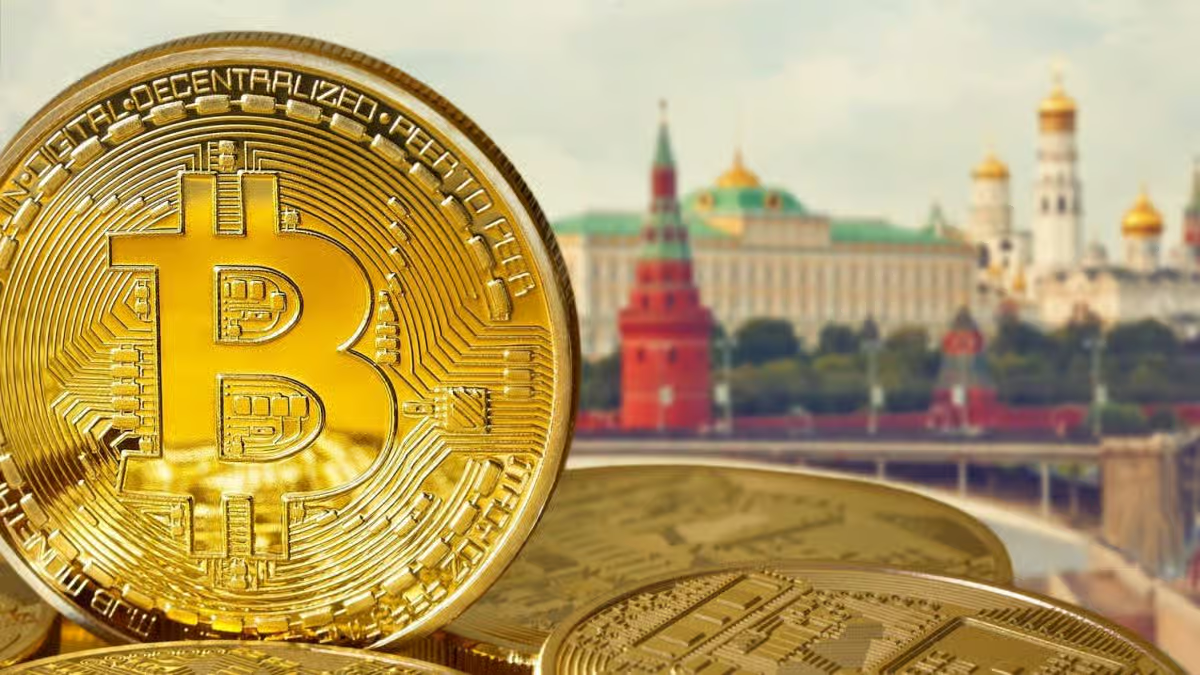
The European Union has put forth new proposals to broaden sanctions against Russia, specifically targeting cryptocurrency platforms that facilitate sanctions evasion. This move, announced as part of the European Commission’s 21st package of restrictive measures against Russia, aims to close potential loopholes that allow sanctioned entities and individuals to circumvent existing financial restrictions.
Key Takeaways
- The European Commission has proposed the 21st sanctions package against Russia, which includes enhanced restrictions on crypto platforms.
- These expanded measures may introduce a comprehensive ban on crypto services from non-EU countries if their platforms are found to be aiding Russia in evading sanctions.
- The initiative seeks to deter third countries from hosting entities that support Russia’s circumvention of international financial measures.
- This action is part of a broader EU effort to weaken Russia’s economic capacity to sustain its military operations.
Ursula von der Leyen, President of the European Commission, detailed the expanded sanctions, highlighting a focus on high-impact sectors including finance and cryptocurrency. The executive arm of the EU intends to extend transaction bans to an additional 20 non-EU entities, encompassing banks, cryptocurrency exchanges, and oil traders that have continued to provide services to sanctioned Russian entities and individuals.
Significantly, the Commission is considering the unprecedented step of imposing a complete ban on crypto services originating from non-EU countries that harbor platforms enabling Russia to evade sanctions. President von der Leyen stated that such a measure would serve as a potent deterrent against countries that permit their platforms to be utilized for sanctions circumvention.
Analysis of Regulatory Precedent
This proposed country-level ban on crypto services from specific non-EU jurisdictions could establish a significant regulatory precedent within the global crypto landscape. It signals a more assertive approach by major regulatory blocs, such as the EU, to exert extraterritorial influence over digital asset activities when those activities are perceived to undermine international policy objectives like sanctions enforcement. Should this measure be enacted, it could compel non-EU countries and their regulatory bodies to either strengthen their own oversight of crypto platforms to prevent sanctions evasion or face potential exclusion from EU-sanctioned financial activities. This could lead to a bifurcated global regulatory environment for crypto, with stricter compliance requirements for platforms operating in or servicing jurisdictions that have been identified as high-risk for sanctions evasion.
The timing of this announcement follows reports earlier in the year indicating the EU’s consideration of a blanket ban on crypto transactions with Russian entities. The current proposal appears to be a more targeted, yet potentially more impactful, approach by focusing on the service providers facilitating illicit flows.
Data from blockchain analytics firm Chainalysis suggests that the value of transactions directed to illicit crypto addresses reached $154 billion in 2025, with a substantial portion linked to Russia. The significant transaction volume associated with A7A5, a stablecoin backed by the ruble, further underscores the role of digital assets in Russian financial activity, including potentially for evading sanctions.
Prior to this proposal, blockchain research firm Elliptic had identified five crypto exchanges that allegedly provided financial channels, circumventing traditional banking oversight, to aid Russia in evading sanctions. Furthermore, the UK’s Financial Conduct Authority recently sanctioned HTX (formerly Huobi Global) for its alleged support of the Russian government. Concurrently, Russia is reportedly preparing its own comprehensive regulatory framework for digital assets, expected in July, which is intended to establish licensed domestic trading platforms.
Beyond the cryptocurrency sector, the 21st sanctions package also aims to extend restrictions on Russia’s energy and trade industries, targeting oil vessels and, for the first time, imposing restrictions on Russian fisheries. President von der Leyen emphasized the cumulative impact of these sanctions, stating they are “weakening the economic foundations of Russia’s war effort.”
Learn more at : www.theblock.co