

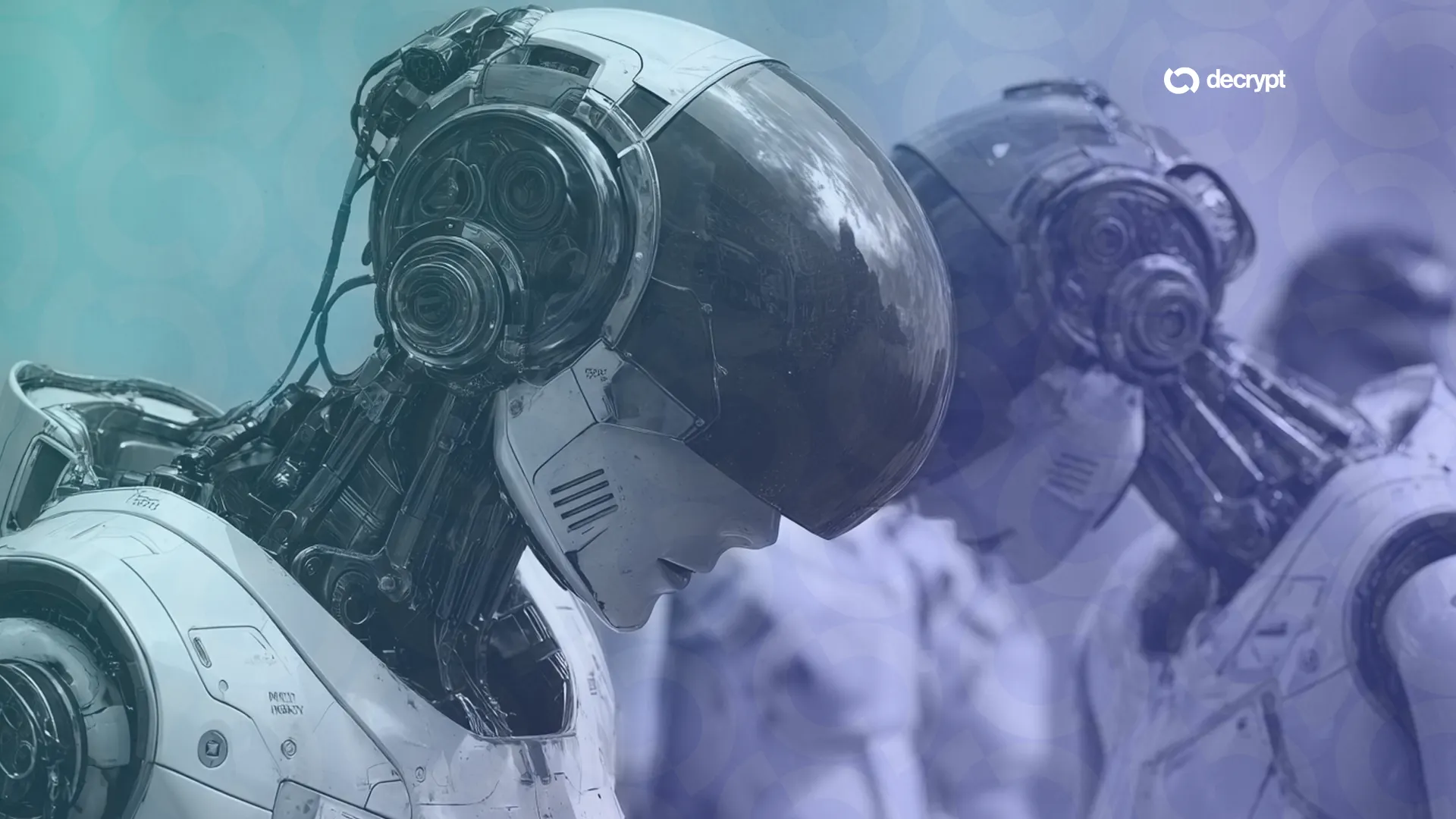
Stablecoin issuer Tether has taken a leading role in a substantial Series C funding round, injecting up to $1.4 billion into German robotics innovator NEURA Robotics. This significant investment underscores a burgeoning trend of integrating decentralized technologies and artificial intelligence into the physical world, aiming to create a new generation of autonomous machines capable of seamless interaction and autonomous financial operations.
Key Takeaways
- Tether is spearheading an investment of up to $1.4 billion in NEURA Robotics, a notable capital infusion for the physical AI and humanoid robotics sector.
- The partnership extends beyond financial backing, with Tether set to embed its cryptocurrency payment tools and edge AI runtime directly into NEURA’s robotic systems.
- NEURA Robotics, founded in 2019, develops a diverse range of robotic solutions, including humanoid robots, collaborative robotic arms, and autonomous mobile robots.
- The funding round saw participation from major technology players such as Nvidia, Amazon, and Qualcomm, signaling broad industry interest in advanced robotics.
- Tether’s technology integration aims to enable robots to perform tasks, manage transactions, and operate with greater autonomy through edge AI and self-custodial wallets.
NEURA Robotics, established in 2019 and based in Metzingen, Germany, is at the forefront of developing robotic systems designed for collaborative environments where humans and machines coexist. Their product portfolio spans humanoid robots, precision robotic arms, and autonomous mobile robots, catering to a wide array of industrial and service applications. This latest funding round, co-led by Tether, also includes investments from industry giants like Nvidia, Amazon, Qualcomm Technologies, Bosch, and others, highlighting a collective belief in the transformative potential of physical AI.
Beyond the significant capital injection, the strategic alliance involves Tether integrating its proprietary technologies into NEURA’s ecosystem. Specifically, Tether’s open-source Wallet Development Kit (WDK) will be embedded into NEURA’s robotic platforms. This integration is designed to equip robots with self-custodial wallet functionalities, allowing them to autonomously receive payments for completed tasks and execute transactions within defined operational parameters. This effectively makes financial settlement an intrinsic part of the robotic workflow.
Furthermore, Tether will deploy its QVAC edge AI runtime onto NEURA’s Neuraverse software platform. QVAC is engineered to enable AI models to run locally on the robotic devices themselves, rather than relying on remote cloud servers. This approach drastically reduces latency, enhances operational resilience, and diminishes dependency on centralized cloud infrastructure—a critical advantage in industrial settings where precision and continuous operation are paramount.
Tether CEO Paolo Ardoino articulated the vision behind this integration, stating, “As robotics moves beyond scripted automation and into true autonomy, the infrastructure behind it must evolve as well. Autonomous machines need the ability to process information locally, make decisions, and transact without relying on centralized intermediaries.” He further emphasized that QVAC provides the necessary edge intelligence, while the WDK handles the secure financial layer, collectively empowering machines to execute tasks, account for outcomes, and operate with a heightened degree of independence.
Long-Term Technological Impact
This collaboration between Tether and NEURA Robotics represents a significant step towards a future where blockchain technology and advanced AI are deeply intertwined with physical automation. The integration of self-custodial wallets directly into robotic systems could revolutionize how automated tasks are compensated and managed, paving the way for decentralized autonomous organizations (DAOs) that can operate physical machinery. This capability could unlock new economic models for robotics, where robots can autonomously engage in micro-transactions for services rendered or resources utilized, all settled on a blockchain.
Moreover, the deployment of QVAC’s edge AI runtime on robotic platforms addresses a critical challenge in the development of truly autonomous systems. By enabling localized AI processing, it enhances security, reduces operational costs associated with cloud dependency, and allows for more responsive and reliable operation in dynamic environments. This distributed intelligence model aligns with the principles of Web3, promoting decentralization and user control, even within the realm of physical robotics. The synergy of edge AI and blockchain-enabled transactions could accelerate the adoption of sophisticated robotics across industries, from advanced manufacturing and logistics to personalized healthcare and domestic assistance, fundamentally reshaping human-robot interaction and economic frameworks.
Learn more at : decrypt.co