

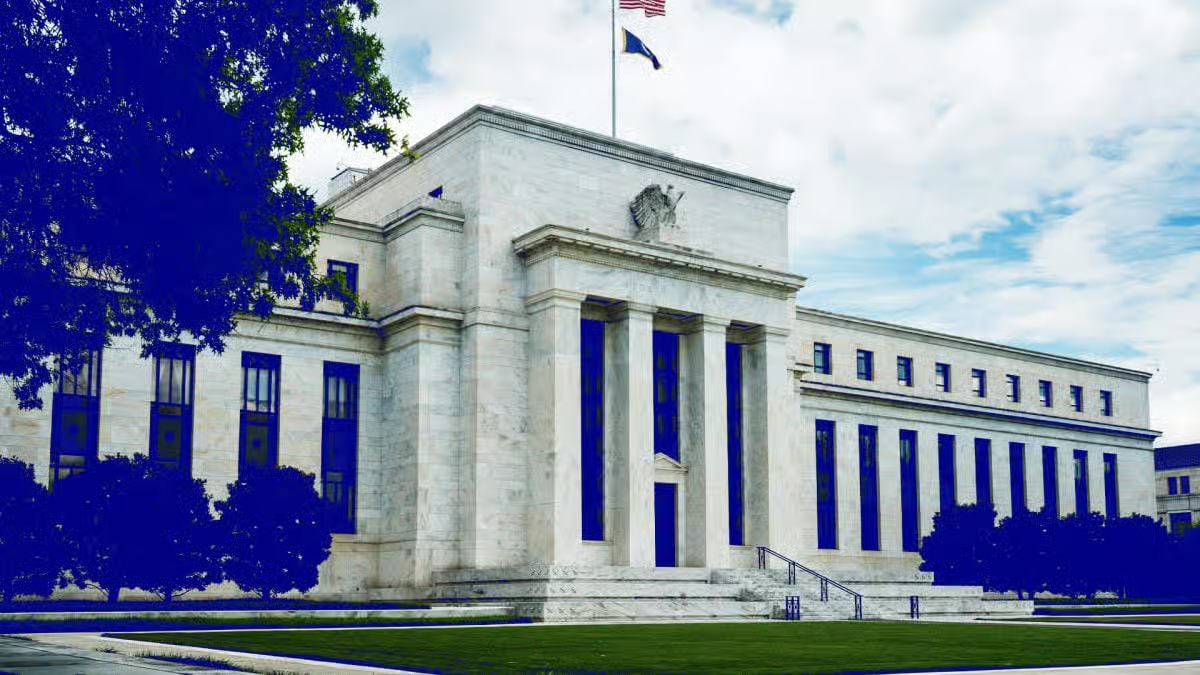
The Federal Reserve has issued a proposed rule that would mandate stablecoin issuers to establish customer identification programs, aiming to curb illicit financial activities. This initiative stems from the recently enacted Guiding and Establishing National Innovation for U.S. Stablecoins Act, commonly referred to as the GENIUS Act.
- Key Takeaways
- The Federal Reserve has proposed a new rule requiring stablecoin issuers to implement customer identification programs.
- This proposal is part of the implementation of the GENIUS Act, a stablecoin bill recently passed into law.
- The rulemaking aligns stablecoin issuer standards more closely with the Bank Secrecy Act requirements for traditional financial institutions.
- The proposal received approval from five members of the Federal Reserve, with new Chair Kevin Warsh abstaining.
- Concerns remain regarding the sufficiency of the GENIUS Act in addressing illicit finance risks within secondary market transactions for digital assets.
The proposed rulemaking, a comprehensive 130-page document, seeks to integrate stablecoin issuers into existing frameworks designed to combat money laundering and terrorist financing. This effort involves collaboration with other regulatory bodies, including the Office of the Comptroller of the Currency, the Federal Deposit Insurance Corporation, and the National Credit Union Administration, underscoring a unified approach to digital asset regulation.
Federal Reserve Governor Michael Barr expressed support for the proposal’s issuance but voiced reservations about the scope of the GENIUS Act. He highlighted that while some digital asset service providers operate under anti-money laundering (AML) and counter-terrorist financing (CTF) regulations in their home jurisdictions, significant loopholes persist, enabling illicit actors to operate undetected. Barr’s statement points to the ongoing challenge of ensuring comprehensive compliance within the rapidly evolving digital asset landscape.
Potential Regulatory Precedent
This proposed rulemaking by the Federal Reserve, in conjunction with other U.S. financial regulators, sets a significant precedent for the oversight of stablecoin issuers. By mandating customer identification programs that mirror those required under the Bank Secrecy Act, regulators are signaling an intent to treat stablecoin operations with a level of scrutiny comparable to traditional financial institutions. This approach could influence regulatory developments in other jurisdictions considering similar frameworks, such as the European Union’s Markets in Crypto-Assets (MiCA) regulation, which also imposes AML/CTF obligations on crypto-asset service providers.
The legal stakes for stablecoin issuers are considerable. Failure to comply with customer identification requirements could result in substantial fines, operational restrictions, and reputational damage. Furthermore, the explicit acknowledgement of risks associated with secondary market transactions suggests that future regulatory actions might extend to encompassing the broader ecosystem in which stablecoins operate. This move represents a clear step towards integrating digital asset regulations into the established financial compliance architecture, aiming to enhance transparency and security within the digital economy.
Based on materials from : www.theblock.co